Français (France)
  Nederlands (nl-NL)
 Sung Sot Cave is one of the most frequently visited sites in Vietnam’s Ha Long Bay. It consists of two expansive chambers featuring impressive limestone formations. Located on Bo Hòn Island, the cave is reached by boat followed by a short walk. The interior is equipped with lighting systems that highlight its natural contours. Since the late 20th century, it has become a popular destination on organized boat tours. The cave is among the most recognized features of the UNESCO-listed natural heritage of Ha Long Bay.
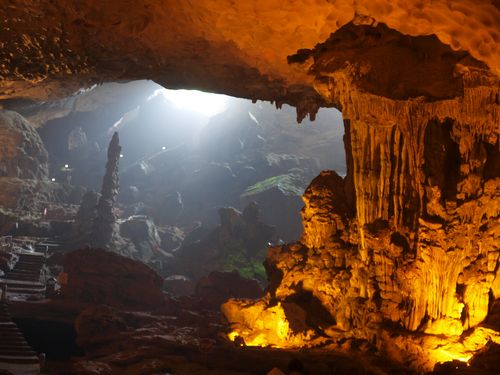
Halong • Sung Sot Cave
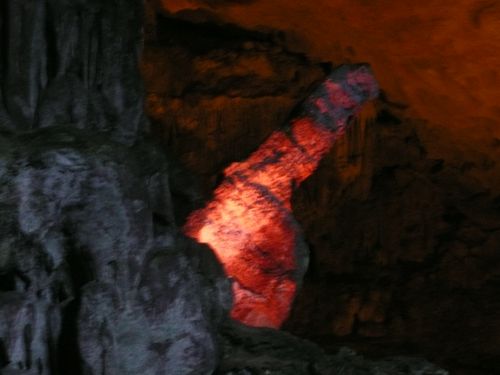
Halong • Sung Sot Cave

Halong • Sung Sot Cave
Natural site profile
Sung Sot Cave
Natural site category: Cave
Natural site family: Caves and caverns
Natural site genre: Terrestrial
Geographic location: Halong Bay • Vietnam
This natural site in Halong Bay is inscribed on the UNESCO World Heritage List since 1994 and is part of the serial property "Ha Long Bay - Cat Ba Archipelago".See the UNESCO natural sites featured on this site
• Links to •
• List of videos about Halong Bay on this site •
Halong Bay • Vietnam
• References •
UNESCO: Ha Long Bay - Cat Ba Archipelago
Historical and Sociological Context of Sung Sot Cave, Ha Long Bay (Vietnam)
Discovery and early documentation
Sung Sot Cave, located on Bo Hòn Island in Ha Long Bay, was first identified by French explorers in the late 19th century during colonial surveys of the Gulf of Tonkin. The site was formally documented in 1901 by researchers from the École française d’Extrême-Orient. The name "Sung Sot," which translates to "surprise," refers to the unexpected grandeur of its interior chambers. Early maps from the colonial period show the location of the cave, but it remained largely inaccessible to the public due to limited transportation infrastructure.
Integration into tourism development
Until the 1980s, Sung Sot Cave remained relatively obscure, as Ha Long Bay itself was not yet a major tourist destination. Following Vietnam’s economic reforms (Đổi Mới) initiated in 1986 and the gradual opening to international tourism, the cave was included in standard cruise itineraries through Ha Long Bay. Beginning in 1995, local authorities undertook construction projects to support tourism at the site, including stairways, viewing platforms, and artificial lighting systems. These modifications were designed to accommodate increasing visitor numbers while preserving the cave’s accessibility.
Tourism growth and visitor demographics
The UNESCO World Heritage designation of Ha Long Bay in 1994 significantly increased international interest. By 2019, the cave welcomed over 1.2 million visitors annually, according to data from the Vietnam National Administration of Tourism. This represented nearly 45% of tourists participating in day or overnight cruises in the bay. Foreign visitors made up approximately 60% of the cave's annual footfall, with a noticeable rise in domestic tourism during national holidays and school vacations. The guided tour model, often involving fixed circuits and timed entries, was implemented to manage visitor flow more efficiently.
Cultural perception and economic relevance
While Sung Sot Cave does not hold significant religious or ritual meaning in Vietnamese tradition, it has become a cultural icon associated with national pride in Vietnam’s natural heritage. It frequently appears in educational materials, tourist brochures, and media coverage promoting the country’s scenic landscapes. For local residents, particularly in Quảng Ninh Province, the cave provides stable employment opportunities through roles such as tour guides, boat crew, security staff, and vendors operating near the docking points on Bo Hòn Island.
Management challenges and conservation strategies
The increase in visitation during the 2010s raised concerns about environmental degradation. In response, the Ha Long Bay Management Board implemented regulations limiting the number of boats allowed to anchor daily near the cave and introduced visitor caps. Maintenance of lighting systems and walkways is conducted during low season months to minimize disruption. Educational signage and guide briefings include reminders about ecological responsibility. Despite these efforts, continued growth in tourism poses challenges to maintaining the cave’s geological and aesthetic integrity over the long term.
Geographical and Natural Features of Sung Sot Cave, Ha Long Bay (Vietnam)
Geographical setting within Ha Long Bay
Sung Sot Cave is situated on Bo Hòn Island, one of the larger islands in the central zone of Ha Long Bay, Quảng Ninh Province, northeastern Vietnam. The cave lies approximately 15 kilometers southeast of Tuần Châu Port, the main departure point for tourist vessels. Bo Hòn Island is part of an archipelago comprising 1,969 limestone islands and islets, most of which are uninhabited and characterized by karst topography shaped by tectonic uplift and erosion.
Geological formation and internal structure
Sung Sot Cave is classified as a tropical karst cave, formed over an estimated period of 20 to 30 million years. Chemical weathering by slightly acidic groundwater led to the gradual dissolution of calcium carbonate in the limestone, creating chambers and vertical shafts. The cave consists of two primary chambers. The first is approximately 100 meters long and 30 meters high, while the second chamber expands to nearly 60 meters in height and contains several thousand square meters of floor area. The total surface area is estimated to exceed 10,000 m².
Speleological characteristics
The interior features numerous stalactites, stalagmites, and flowstone formations. Many of these structures display patterns typical of tropical karst environments, including conical towers and curtains. Some formations resemble animal or human shapes, a feature often highlighted during guided tours. The cave maintains high humidity levels (above 90%) and a stable internal temperature averaging 22–25°C year-round. Ventilation occurs naturally through vertical fissures and smaller side passages.
Climatic context and seasonal variations
Ha Long Bay experiences a humid subtropical climate, with an average annual temperature of 24°C and annual rainfall exceeding 2,000 mm. Seasonal patterns influence visitor access more than they affect the cave's geological processes. The wet season (May to September) can lead to increased vegetation around cave entrances, while the dry season (November to March) coincides with peak tourism. Internal conditions within the cave remain largely constant, independent of surface weather fluctuations.
Scientific monitoring and geomorphological value
Sung Sot Cave is recognized by Vietnamese geologists as a key example of mature karst development in Southeast Asia. It was included in a 2017 geoscientific inventory of Ha Long Bay as one of 33 locations of high geological significance. Studies by the Vietnam Institute of Geosciences have estimated the current rate of calcite deposition and erosion to be less than 1 mm per decade, indicating a relatively stable environment. Sensors installed in 2015 allow continuous monitoring of microclimatic variables, contributing to conservation research and sustainable site management.
Environmental protection and accessibility
The cave is part of a designated conservation zone within the Ha Long Bay World Heritage Site. Infrastructure within the cave is limited to a wooden walkway and a fixed lighting system, both maintained under strict guidelines to prevent damage to the rock surface. Entry and exit points are positioned to minimize congestion and physical wear on sensitive formations. Boat access is controlled through an allocation system, ensuring a maximum number of landings per day. These measures aim to preserve the geological features while allowing continued scientific observation and public education.
 Links to the main sections of the site