Français (France)
  Nederlands (nl-NL)
 The Wadi Rum desert, located in southern Jordan, is one of the most distinctive desert landscapes in the Middle East. The region is characterized by vast sandy plains, striking rock formations, and monumental cliffs shaped by long-term erosion. The area is widely recognized for the dramatic contrast between open desert spaces and towering sandstone massifs. Wadi Rum attracts international attention for its scenic value and for the opportunity it offers to observe desert environments typical of the Arabian region. Today the site is regarded as an important natural landscape, appreciated for its scale, visual impact, and the remarkable diversity of its desert scenery.
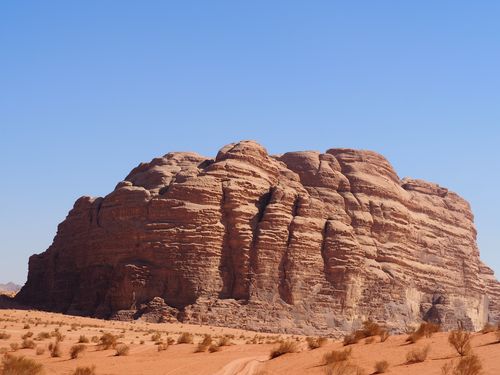
Wadi Rum • Wadi Rum desert
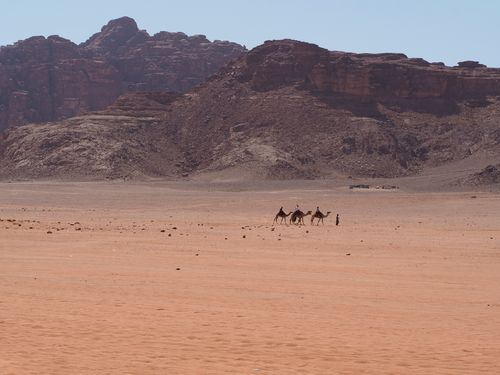
Wadi Rum • Wadi Rum desert
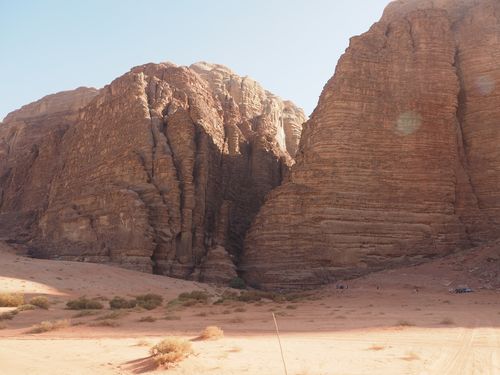
Wadi Rum • Wadi Rum desert
Natural site profile
Wadi Rum desert
Natural site category: Desert
Natural site family: Desert landscapes
Natural site genre: Terrestrial
Geographic location: Wadi Rum • Jordan
This natural site in Wadi Rum is inscribed on the UNESCO World Heritage List since 2011 and is part of the serial property "Wadi Rum Protected Area".See the UNESCO natural sites featured on this site
• Links to •
• List of videos about Wadi Rum on this site •
Wadi Rum, spectacular desert • Jordan
• References •
UNESCO: Wadi Rum Protected Area
The Wadi Rum Desert: Historical Motivations and the Evolution of Landscape Preservation
A Desert Landscape of Strategic and Cultural Importance
The Wadi Rum desert, located in southern Jordan near the border with Saudi Arabia, is one of the most striking desert landscapes of the Middle East. Its vast red sand plains, sandstone mountains, and dramatic rock formations have shaped both the natural and cultural history of the region. For centuries, the area was not viewed primarily as a protected natural landscape but rather as a territory used by nomadic communities, traders, and travelers moving across the Arabian Peninsula.
The motivations that eventually led to the preservation and international recognition of Wadi Rum developed gradually during the twentieth century. Political, cultural, and economic factors combined with growing global awareness of environmental conservation to transform the perception of the desert from a remote and marginal territory into a landscape of major ecological and symbolic value.
Traditional Use and the Role of Nomadic Societies
For much of its history, the Wadi Rum region was inhabited and traversed by Bedouin tribes who adapted their livelihoods to the harsh desert environment. These communities relied on seasonal grazing, limited agriculture near water sources, and knowledge of desert routes that connected the Arabian Peninsula with the Levant.
The desert functioned as an important corridor for caravan trade, linking inland Arabia with Mediterranean ports and regional markets. Although economic activity was limited by the arid climate, the landscape played a role in facilitating the movement of goods, people, and cultural exchanges across the region.
The traditional Bedouin way of life was generally compatible with the fragile desert ecosystem. Small populations and mobile lifestyles limited the long-term environmental impact on the landscape, allowing the natural features of Wadi Rum to remain largely intact for centuries.
Historical Events and Global Context
One of the most significant historical moments associated with Wadi Rum occurred during the early twentieth century in the context of the Arab Revolt against the Ottoman Empire during the First World War. The desert landscape became a strategic setting for military operations and troop movements. These events brought international attention to the region and contributed to its symbolic association with the emergence of modern Arab political identity.
The reorganization of the Middle East after the war, including the creation of new states and political borders, reshaped the regional context in which Wadi Rum existed. The newly formed state of Jordan gradually developed strategies to promote national identity and economic development, and the desert landscape became part of that broader cultural narrative.
During the mid-twentieth century, increasing global interest in exploration, archaeology, and desert landscapes also brought researchers and travelers to the region. Scientific studies revealed that the area contained important geological formations as well as archaeological evidence of ancient human presence, including rock inscriptions and petroglyphs dating back thousands of years.
The Emergence of Conservation Policies
The modern process of protecting Wadi Rum began in the late twentieth century, when the Jordanian government recognized the exceptional natural and cultural value of the desert landscape. At a time when many countries were expanding their national park systems and protected areas, Jordan began to consider the preservation of its most remarkable landscapes as part of a broader strategy of environmental management and sustainable tourism.
Political motivations played an important role in this process. The protection of iconic natural landscapes allowed the country to strengthen its national heritage while also promoting international recognition. Economic considerations were equally significant. Tourism had become a major sector of the Jordanian economy, and landscapes such as Wadi Rum offered opportunities for developing nature-based tourism.
Cultural motivations also influenced conservation policies. The desert environment is closely associated with Bedouin traditions and the historical identity of the region. Protecting the landscape therefore helped preserve both natural ecosystems and elements of intangible cultural heritage.
Recognition and International Significance
The growing recognition of Wadi Rum’s natural and cultural importance eventually led to its designation as a protected area. The establishment of the Wadi Rum Protected Area represented a major milestone in the preservation of the region’s desert ecosystems.
International recognition further increased when the site was inscribed on the UNESCO World Heritage List as a mixed natural and cultural landscape. This designation acknowledged not only the geological formations and desert scenery but also the archaeological and cultural significance of the region.
The UNESCO listing reinforced conservation measures and helped attract global attention to the importance of protecting desert ecosystems. It also placed Wadi Rum within a global network of protected landscapes that includes other desert environments around the world.
Comparisons with Other Desert Conservation Areas
The protection of Wadi Rum reflects a broader global trend toward the conservation of arid landscapes. For much of modern history, deserts were often viewed as unproductive areas with limited ecological value. Scientific research gradually demonstrated that desert ecosystems contain specialized biodiversity and unique geological formations.
Several countries have since created protected areas in desert environments to preserve these features. National parks and reserves in arid regions now play an important role in biodiversity conservation, scientific research, and sustainable tourism.
In this global context, Wadi Rum represents one of the most prominent examples of desert landscape preservation in the Middle East. Its dramatic geological formations and vast open spaces have contributed to its reputation as one of the world’s most recognizable desert environments.
Transformations of the Landscape Through Time
Although the Wadi Rum desert may appear timeless, the region has undergone significant transformations over long historical periods. Climate variations have influenced vegetation patterns and water availability, shaping the distribution of plant and animal species.
Human activity has also contributed to gradual changes in the landscape. The traditional presence of nomadic communities left relatively limited ecological impact, but modern tourism and infrastructure development have introduced new pressures.
In recent decades, the increasing popularity of desert tourism has led to the construction of camps, visitor facilities, and transportation routes within the protected area. While these developments have brought economic benefits to local communities, they also require careful management to avoid damaging fragile desert ecosystems.
Present-Day Conservation and Challenges
Today, Wadi Rum is recognized as one of Jordan’s most important natural landscapes. The protected area covers several hundred square kilometers and includes extensive desert plains, sandstone mountains, and ancient geological formations.
The management of the site aims to balance environmental protection with economic opportunities for local communities. Tourism plays a central role in the regional economy, providing income for Bedouin families who guide visitors, operate desert camps, and organize excursions.
Despite these benefits, the preservation of Wadi Rum faces several challenges. Increased tourist activity can lead to soil erosion, disturbance of wildlife, and pressure on limited water resources. Managing visitor numbers and regulating transportation within the desert are therefore key priorities for conservation authorities.
Climate change also represents a long-term concern. Rising temperatures and shifts in precipitation patterns may affect desert ecosystems, potentially altering the distribution of plant and animal species.
Conclusion
The preservation of the Wadi Rum desert reflects a complex interaction between political decisions, cultural heritage, and economic development. Over the course of the twentieth century, the perception of the desert shifted from a remote and utilitarian landscape to a site recognized for its exceptional natural and historical value.
Today, Wadi Rum stands as a symbol of desert conservation and cultural identity in the Middle East. Its dramatic geological formations and historical significance have attracted global recognition, while its protected status aims to ensure that the landscape remains preserved for future generations.
Natural Processes and Ecological Significance of the Wadi Rum Desert
Geological Origins of a Monumental Desert Landscape
The Wadi Rum desert, located in southern Jordan, presents one of the most distinctive desert landscapes in the Middle East. Its vast red sand plains and towering sandstone mountains are the result of geological processes that unfolded over hundreds of millions of years. The region’s geological foundation consists primarily of ancient sandstone formations resting on older crystalline basement rocks, which have been exposed through tectonic uplift and long periods of erosion.
During earlier geological periods, the area that now forms Wadi Rum was covered by shallow seas and extensive sedimentary basins. Over time, layers of sand accumulated and were gradually compacted into sandstone. Subsequent tectonic activity raised these rock layers above sea level, while climatic changes transformed the region into the arid desert environment visible today.
Erosion, particularly by wind and occasional flash floods, has played a decisive role in shaping the modern landscape. These processes carved deep valleys, narrow canyons, and isolated mountain massifs that rise dramatically above the surrounding desert plains. Some rock formations reach heights of more than 1,700 meters, creating a striking contrast between vertical sandstone cliffs and the flat sandy terrain.
Topography and Spectacular Rock Formations
The topography of Wadi Rum is dominated by massive sandstone and granite mountains known locally as jebels. These formations stand like natural monuments emerging from the desert floor. Their steep cliffs and sharply defined ridges illustrate the long-term effects of weathering and erosion in arid environments.
Among the most notable natural structures are the rock bridges and arches formed when erosion gradually removes softer rock layers beneath more resistant strata. These natural arches can reach impressive dimensions and are among the most photographed features of the desert landscape.
The red dunes scattered throughout the region form another distinctive element of the topography. Their color results from iron oxide present in the sandstone sediments. Under the influence of prevailing winds, these dunes slowly shift and reshape the desert surface, creating a constantly evolving landscape.
The interaction between sandstone cliffs, granite outcrops, sandy plains, and dune systems gives Wadi Rum a visual diversity rarely found in desert regions.
Adaptation of Life in an Extreme Environment
Although deserts are often perceived as barren landscapes, Wadi Rum supports a variety of plant and animal species adapted to arid conditions. Life in this environment depends on specialized biological strategies that allow organisms to cope with limited water availability and extreme temperature fluctuations.
Desert plants often possess deep root systems capable of reaching underground moisture. Some species have small or wax-coated leaves that reduce water loss through evaporation. Others remain dormant for long periods, germinating only after rare rainfall events.
The animal life of Wadi Rum includes reptiles, small mammals, insects, and several bird species. Many animals are nocturnal, becoming active during cooler nighttime temperatures to avoid the intense daytime heat.
Temporary water pools that form after seasonal rainfall create short-lived ecological niches where plants and insects rapidly develop. These brief bursts of biological activity demonstrate the remarkable adaptability of desert ecosystems.
Interactions Between Local and Global Environmental Processes
The natural characteristics of Wadi Rum reflect a complex interaction between local geological conditions and broader environmental processes. The arid climate of southern Jordan is influenced by global atmospheric circulation patterns that limit precipitation across much of the Middle East.
Wind systems play a key role in transporting sand and shaping the dunes that cover large portions of the desert. These winds also contribute to the erosion of sandstone cliffs, gradually sculpting new landforms over long periods.
At the same time, the geological layers exposed in Wadi Rum provide evidence of ancient environmental conditions that were very different from those of today. The sandstone formations record earlier periods when water played a far more prominent role in shaping the region’s landscape.
These geological records offer valuable insights into long-term climatic changes and the evolution of desert environments.
Biodiversity and Ecological Significance
Despite its harsh conditions, Wadi Rum forms an important ecological refuge for several desert species. Certain plants, reptiles, and mammals have adapted specifically to the rocky terrain and sparse vegetation of the region.
The cliffs and mountain slopes provide nesting sites for birds of prey and other species capable of surviving in arid habitats. Small mammals and reptiles find shelter in crevices and rocky outcrops where temperatures remain slightly cooler than in open desert areas.
The ecological significance of Wadi Rum lies not only in its biodiversity but also in the role it plays in maintaining desert ecosystems across the wider region. Protected desert landscapes serve as reservoirs of genetic diversity and as reference sites for scientific research on arid environments.
International Recognition and UNESCO Status
The exceptional geological formations and cultural heritage of Wadi Rum have led to international recognition of the site. The desert was designated as a protected area in Jordan to preserve its natural and cultural features. Later, the site was inscribed on the UNESCO World Heritage List as a mixed property combining natural and cultural significance.
This international designation recognizes both the extraordinary desert scenery and the long history of human presence in the region, including ancient rock inscriptions and archaeological remains.
The UNESCO listing has strengthened conservation efforts and increased global awareness of the importance of desert ecosystems. It has also encouraged sustainable tourism practices aimed at protecting the fragile landscape while allowing visitors to experience its unique environment.
Interesting Observations and Landscape Statistics
The protected area of Wadi Rum covers roughly 720 square kilometers, although the surrounding desert landscape extends much farther. Some sandstone mountains rise more than 1,700 meters above sea level, making them among the highest formations in southern Jordan.
Annual rainfall in the region is extremely limited, typically less than 100 millimeters per year. Despite this scarcity of water, the desert supports dozens of plant species adapted to arid conditions.
Another notable aspect of Wadi Rum is the presence of thousands of ancient petroglyphs and inscriptions carved into the rock surfaces. These traces of early human activity illustrate that the desert landscape has been inhabited and crossed by travelers for thousands of years.
Conservation and Modern Environmental Challenges
The preservation of Wadi Rum depends on careful management of human activities within the protected area. Tourism has become a major economic resource for local communities, particularly Bedouin groups who guide visitors and operate desert camps.
However, increased visitor numbers can place pressure on fragile desert soils and vegetation. Off-road vehicle traffic, waste management, and infrastructure development must therefore be carefully regulated to prevent environmental degradation.
Climate change also poses potential challenges for desert ecosystems. Rising temperatures and shifting precipitation patterns could affect the distribution of plant and animal species within the region.
Efforts to maintain the ecological integrity of Wadi Rum focus on balancing economic development with environmental protection.
Conclusion
The Wadi Rum desert represents one of the most impressive desert landscapes in the world, shaped by millions of years of geological activity and environmental change. Its towering sandstone mountains, shifting dunes, and resilient ecosystems illustrate the dynamic processes that define arid environments.
The combination of geological diversity, ecological adaptation, and cultural history has made Wadi Rum a landscape of global significance. Through international recognition and conservation measures, the site continues to serve as both a natural laboratory for scientific study and a symbol of the remarkable beauty of desert environments.
 Links to the main sections of the site