Français (France)
  Nederlands (nl-NL)
 Vendicari Nature Reserve, located on the southeastern coast of Sicily in Italy, is a protected coastal landscape known for its wetlands and Mediterranean environments. The area includes lagoons, salt marshes, sandy beaches, and stretches of natural vegetation typical of the Sicilian shoreline. Together these elements create a distinctive natural setting along the Ionian Sea. The reserve plays an important role in biodiversity conservation and provides favorable conditions for observing migratory bird movements across the Mediterranean. It is also valued for its open coastal scenery and the diversity of habitats present within the protected area, making it an important natural site in southern Italy.

Vendicari • Nature Reserve
Vendicari • Nature Reserve

Vendicari • Nature Reserve
Natural site profile
Nature Reserve
Natural site categories: Resting zone
Natural site families: Animals and nature reserves • Migration zone
Natural sites genres: Fauna
Geographic location: Vendicari, Marzamemi • Sicily • Italy
• Links to •
• List of videos about Vendicari, Marzamemi on this site •
Vendicari and Marzamemi, Sicily • Italy
Vendicari Nature Reserve: Historical Motivations and the Evolution of Coastal Conservation in Sicily
A Coastal Landscape Shaped by History and Ecology
Vendicari Nature Reserve, located on the southeastern coast of Sicily in Italy, represents one of the most significant coastal wetlands in the central Mediterranean. Its current protected status reflects a long historical evolution during which the area gradually shifted from a zone of economic exploitation to a landscape valued for its ecological importance. The motivations behind its preservation emerged from a combination of political decisions, economic transformations, and cultural awareness of the value of Mediterranean ecosystems.
The protection process began relatively late compared with the historical use of the region. For centuries, the coastal environment of Vendicari served practical functions related to fishing, salt production, and maritime control. Only during the late twentieth century did ecological considerations become central to regional planning, ultimately leading to the creation of a protected natural reserve.
Early Human Activity and Economic Use of the Coast
Human presence along the Vendicari coastline dates back to antiquity. The coastal plains and shallow lagoons provided ideal conditions for fishing and salt extraction, activities that were economically valuable in Mediterranean societies. Salt production, in particular, represented an important resource in pre-industrial economies, where salt was essential for food preservation and trade.
The geographical position of southeastern Sicily also placed the region along maritime routes linking the central Mediterranean with the eastern basin. As a result, coastal watchtowers and defensive structures were built during the medieval and early modern periods to monitor maritime activity and protect coastal settlements from raids. These constructions reflected the strategic importance of Sicily within the wider Mediterranean world.
Despite these uses, large portions of the coastal landscape remained relatively undisturbed. Limited urban development and the persistence of traditional activities allowed many of the natural ecosystems to survive into the modern era.
The Rise of Environmental Awareness
The transition toward conservation began in the second half of the twentieth century. Across Europe, growing concern about environmental degradation led to new policies aimed at protecting landscapes and ecosystems. Industrial expansion, agricultural intensification, and tourism development were transforming many coastal regions, raising fears that fragile natural environments might disappear.
In Italy, environmental movements and scientific studies during the 1970s and 1980s emphasized the ecological importance of wetlands and coastal habitats. Researchers identified Vendicari as one of the most valuable wetlands in Sicily, particularly because of its role in supporting migratory bird populations.
These scientific assessments influenced regional political decisions. Authorities in Sicily began considering measures to preserve the area before large-scale development projects could alter its natural balance.
Creation of the Nature Reserve
The establishment of Vendicari Nature Reserve marked a decisive moment in the protection of the site. The reserve was officially created toward the end of the twentieth century through regional legislation aimed at safeguarding important natural landscapes in Sicily.
The motivations behind this decision combined ecological, cultural, and economic considerations. From an ecological perspective, the lagoons and wetlands of Vendicari represented vital habitats for numerous species of birds and aquatic organisms. From a cultural standpoint, the coastal landscape preserved historical traces of traditional activities such as salt production and fishing.
Economically, the creation of the reserve also aligned with a broader strategy of promoting sustainable tourism. Protected natural areas were increasingly viewed as assets capable of attracting visitors interested in nature, wildlife observation, and coastal scenery. This approach reflected a shift from resource extraction toward landscape conservation as a source of regional value.
Vendicari in the Context of Global Conservation Trends
The protection of Vendicari did not occur in isolation. During the late twentieth century, many countries began establishing protected areas to conserve wetlands and coastal ecosystems. These initiatives were influenced by international environmental agreements and growing scientific understanding of biodiversity.
Wetlands were increasingly recognized as essential ecosystems that support water regulation, habitat diversity, and migratory wildlife. Similar conservation strategies were adopted in various parts of the world, including coastal reserves in the Mediterranean, bird sanctuaries in northern Europe, and protected wetlands in Africa and Asia.
Vendicari therefore forms part of a global network of protected habitats that sustain migratory bird routes across continents. Its lagoons provide resting and feeding grounds for species traveling between Europe and Africa, highlighting the ecological interdependence of distant regions.
Transformations of the Landscape Through Time
Over the centuries, the Vendicari landscape has undergone several transformations reflecting broader environmental and social changes. In earlier periods, human activities such as salt extraction and fishing shaped the coastal environment. Small-scale agricultural practices in surrounding areas also influenced the hydrology of the wetlands.
During the twentieth century, the decline of traditional economic activities led to the abandonment of some coastal installations. As salt production decreased and industrial alternatives emerged, many of the structures associated with these activities fell into disuse.
Paradoxically, this decline contributed to the ecological recovery of certain habitats. Without intensive exploitation, the lagoons and wetlands regained their natural dynamics, allowing wildlife populations to expand.
The creation of the nature reserve later reinforced this process by limiting construction and preserving the natural character of the coastline.
Current State of Conservation
Today, Vendicari is considered one of the most important protected coastal areas in Sicily. The reserve extends along several kilometers of coastline and includes multiple lagoons, marshes, and dune systems.
Management policies focus on maintaining ecological balance while allowing public access through regulated pathways and observation points. Visitors can observe migratory birds, explore coastal landscapes, and learn about the ecological significance of Mediterranean wetlands.
The reserve also serves as an important site for environmental education and scientific research. Studies conducted in the area contribute to a better understanding of coastal ecosystems and migratory bird behavior.
Modern Challenges to Preservation
Despite its protected status, Vendicari faces several challenges that threaten its long-term integrity. Tourism pressure represents one of the most significant concerns. The increasing popularity of coastal destinations in southern Italy has led to a growing number of visitors, particularly during the summer season.
While tourism can provide economic benefits for nearby communities, excessive visitation may disturb wildlife and damage fragile dune ecosystems. Managing visitor access while preserving ecological balance remains a central challenge for the reserve.
Climate change represents another important issue. Rising sea levels, changing precipitation patterns, and increasing temperatures could alter the hydrology of the wetlands and affect the delicate equilibrium of the lagoon ecosystems.
Finally, land use changes in surrounding agricultural areas may influence water quality and nutrient flows into the wetlands. Maintaining cooperation between conservation authorities and local communities is therefore essential for the long-term protection of the site.
Conclusion
Vendicari Nature Reserve illustrates how coastal landscapes can evolve from zones of economic exploitation into areas recognized for their ecological and cultural value. The preservation of the site emerged from the intersection of environmental awareness, scientific research, and political decision-making during the late twentieth century.
Today, the reserve stands as an example of Mediterranean coastal conservation. Its wetlands support biodiversity, sustain migratory bird routes, and provide opportunities for scientific study and responsible tourism.
The continued protection of Vendicari will depend on maintaining a careful balance between human activity and ecological preservation. As environmental challenges grow on a global scale, sites such as Vendicari play an increasingly important role in demonstrating the value of safeguarding natural landscapes for future generations.
Natural Dynamics and Ecological Significance of Vendicari Nature Reserve
A Coastal Landscape Formed by Mediterranean Geological Processes
Vendicari Nature Reserve, located on the southeastern coast of Sicily, represents a distinctive coastal ecosystem shaped by geological processes typical of the central Mediterranean basin. The landscape consists of a combination of lagoons, marshes, sandy dunes, and coastal plains that developed through the gradual interaction of marine currents, wind action, and sediment accumulation.
Over long periods of time, sediments transported by coastal currents and seasonal streams created natural barriers along the shoreline. These barriers formed shallow lagoons separated from the open sea by narrow strips of sand and dunes. Such formations are characteristic of Mediterranean coastal environments but appear particularly well preserved at Vendicari, where human development remained relatively limited for centuries.
The reserve covers several kilometers of coastline and includes multiple lagoon systems, such as Pantano Grande, Pantano Piccolo, and Pantano Roveto. These wetlands form part of a dynamic coastal system where freshwater inflows, marine infiltration, and seasonal evaporation create varying levels of salinity. This environmental variability supports a wide range of ecological communities and demonstrates how geological processes influence biological diversity.
Lagoon Ecosystems and Hydrological Balance
The lagoons of Vendicari are among the most important ecological features of the reserve. These shallow bodies of water function as transitional environments between marine and terrestrial ecosystems. Their ecological productivity is largely determined by hydrological fluctuations that occur throughout the year.
During wetter months, freshwater inflow reduces salinity and allows aquatic vegetation and plankton communities to expand. In drier periods, evaporation increases salt concentration, creating conditions suitable for halophytic plants and salt-tolerant organisms. This cyclical pattern produces an ecosystem capable of supporting a remarkable variety of life forms.
Wetlands such as those found in Vendicari are widely recognized for their ecological functions. They act as natural filters for water, stabilize sediments, and provide breeding or feeding grounds for numerous animal species. In Mediterranean regions where freshwater habitats are relatively scarce, these lagoon environments represent essential reservoirs of biodiversity.
Biodiversity and the Role of Migratory Birds
One of the most remarkable biological aspects of Vendicari Nature Reserve is its role in supporting migratory bird populations. The southeastern coast of Sicily lies along one of the principal migratory routes linking Europe and Africa. As a result, the reserve functions as an important stopover site for birds crossing the Mediterranean Sea.
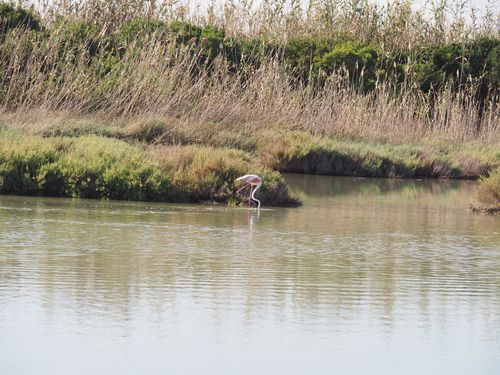
Thousands of birds use the lagoons and marshes of Vendicari as resting and feeding grounds during seasonal migrations. Flamingos, herons, spoonbills, and numerous species of waders can often be observed in the wetlands. During peak migration periods, several thousand individuals may occupy the lagoon areas simultaneously.
This phenomenon illustrates the global ecological significance of the site. Migratory birds rely on a network of habitats across multiple continents, and the loss of a single stopover location could disrupt entire migratory pathways. Vendicari therefore contributes to maintaining the ecological connectivity between European and African ecosystems.
Coastal Dunes and Vegetation Adaptation
Another distinctive natural feature of the reserve is its system of coastal dunes. These sandy formations developed as wind transported and deposited marine sediments along the shoreline. Over time, vegetation adapted to these harsh conditions stabilized the dunes and allowed them to persist as long-term landscape structures.
The plant species found in these environments exhibit specialized adaptations to survive under intense sunlight, strong winds, and high salinity. Many dune plants possess deep root systems that anchor them in shifting sand while helping to prevent erosion.
These vegetated dunes play a crucial ecological role by protecting the inland wetlands from storm surges and coastal erosion. They function as a natural buffer zone between the sea and the lagoon ecosystems, demonstrating how geological formations and biological adaptation interact to maintain environmental stability.
Interactions Between Local and Global Environmental Processes
The ecological systems present in Vendicari illustrate the complex interaction between local environmental conditions and broader global processes. The Mediterranean climate, characterized by hot dry summers and mild winters, influences vegetation cycles, water levels, and animal migration patterns.
Seasonal winds and marine currents shape the physical structure of the coastline, while regional climatic conditions regulate the hydrology of the wetlands. At the same time, global ecological dynamics such as bird migration and climate variability affect the functioning of the ecosystem.
For example, migratory species that depend on Vendicari may spend different parts of their life cycles in northern Europe, central Asia, or sub-Saharan Africa. Changes occurring in those distant regions can influence the populations observed in the Sicilian wetlands. This interdependence highlights the importance of protecting ecological sites that play key roles within global environmental networks.
Ecological Recognition and Conservation Status
The ecological importance of Vendicari eventually led to its designation as a protected natural reserve by regional authorities in Sicily. The recognition of its wetlands, coastal dunes, and migratory bird habitats encouraged the establishment of conservation policies aimed at preserving the natural landscape.
Although Vendicari is not included on the UNESCO World Heritage List, it forms part of broader conservation frameworks that protect Mediterranean wetlands and migratory bird corridors. Such protected areas contribute to international biodiversity initiatives designed to safeguard critical habitats.
The creation of the reserve has helped prevent large-scale coastal development and has preserved one of the most intact wetland systems in southern Italy. Scientific monitoring programs and regulated visitor access support the long-term conservation of the ecosystem while allowing the public to experience the landscape.
Interesting Ecological Observations
Several ecological observations illustrate the dynamic character of Vendicari’s natural environment. During certain migration seasons, large groups of flamingos gather in the lagoons, creating striking visual scenes across the shallow waters. These birds feed on microscopic organisms that thrive in saline conditions.
Another notable feature is the seasonal transformation of the wetlands. In summer, some lagoon areas partially dry out due to intense evaporation, exposing salt flats that attract specialized bird species. With the return of winter rains, the wetlands refill and support a different ecological community.
Such seasonal cycles demonstrate how the landscape continuously adapts to climatic fluctuations while maintaining overall ecological stability.
Conclusion
Vendicari Nature Reserve represents a remarkable example of how geological processes, hydrological dynamics, and biological diversity interact to create a unique Mediterranean coastal ecosystem. The combination of lagoons, dunes, wetlands, and migratory bird habitats forms a landscape of exceptional ecological value.
These natural features reflect the long-term interaction between environmental forces and living organisms. At the same time, the reserve illustrates the broader connections linking local ecosystems to global ecological processes such as bird migration and climate variability.
Through its protected status, Vendicari continues to serve as both a natural sanctuary for wildlife and a valuable site for scientific observation and environmental awareness. Its preservation highlights the importance of safeguarding coastal wetlands that play critical roles in sustaining biodiversity across continents.
 Links to the main sections of the site