Français (France)
  Nederlands (nl-NL)
 The landscapes of the Ladakh Plateau, located in the Indian region of Ladakh, are defined by extensive high-altitude areas, low population density, and spatial organization shaped by climate and relief. The plateau generally lies between 3,000 and over 5,000 metres above sea level and includes open plains, valleys, and mountainous zones. These landscapes influence settlement patterns, mobility, and local economic activities, particularly pastoralism and regional exchange routes. Today, they also provide a major setting for transportation corridors and contemporary tourism, while remaining a key geographical component of northern India’s Himalayan region.
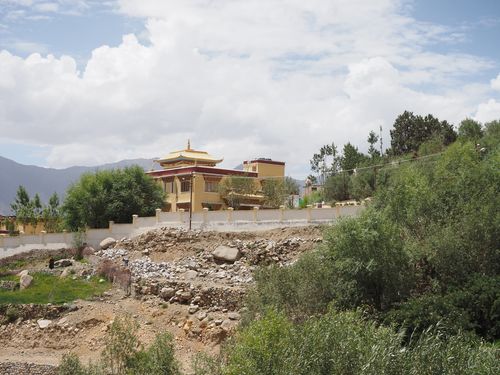
Ladakh • Landscapes

Ladakh • Landscapes
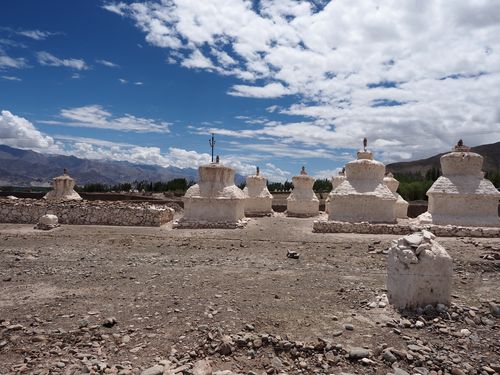
Ladakh • Landscapes
Natural site profile
Landscapes
Natural site categories: High altitude semi-desert
Natural site families: Seas, lakes and rivers • Desert landscapes
Natural sites genres: Aquatic, Terrestrial
Geographic location: High Plateau • Ladakh •
• Links to •
• List of videos about High Plateau on this site •
Ladakh, Landscapes and Faces • India
The Landscapes of the Ladakh High Plateau: Political Motivations, Historical Transformations, and Contemporary Preservation Challenges
The landscapes of the Ladakh Plateau, located in the present-day Indian territory of Ladakh, represent one of the most distinctive high-altitude environments in Asia. Their preservation and gradual valorisation have not resulted from a single conservation policy, but from a long sequence of political, economic, strategic, and cultural motivations that evolved over centuries. These landscapes, shaped as much by isolation as by human restraint, have acquired ecological and symbolic significance that extends beyond the regional scale.
Early Human Use and Unintentional Preservation
For much of its history, the Ladakh high plateau was not actively “preserved” in the modern sense. Instead, its integrity was largely maintained by environmental constraints. Extreme altitude, aridity, short growing seasons, and limited arable land discouraged intensive settlement and large-scale landscape transformation. Human activity focused on pastoralism, small irrigated agricultural pockets, and trans-Himalayan trade routes connecting Central Asia, Tibet, and the Indian subcontinent.
These traditional land-use systems, developed over many centuries, produced minimal ecological disruption. Low population density—still among the lowest in India today—meant that the plateau’s landscapes remained largely intact. In this early phase, preservation was an unintended consequence of geography rather than a conscious cultural or political objective.
Strategic and Political Motivations in the Nineteenth Century
The first major shift in the region’s significance occurred in the nineteenth century, when Ladakh became entangled in broader geopolitical rivalries. During the period known as the “Great Game,” British India and Tsarist Russia competed for influence across Central Asia. Ladakh emerged as a strategically sensitive borderland, situated between competing imperial spheres.
Political control and territorial stability became the primary objectives. While administrative oversight increased, economic exploitation remained limited. The British and local authorities focused on securing routes and borders rather than transforming the environment. This strategic priority indirectly reinforced landscape preservation, as large-scale industrial or agricultural development was neither feasible nor desirable.
Integration into Modern India and Regional Security
Following India’s independence in 1947, Ladakh was incorporated into the state of Jammu and Kashmir. Subsequent geopolitical events—most notably the Sino-Indian War of 1962 and continuing border tensions with China and Pakistan—further elevated the strategic importance of the plateau. Military infrastructure expanded, but civilian development remained tightly regulated.
During this period, preservation was driven less by environmental awareness than by security considerations. Restricted access, controlled land use, and limited infrastructure development slowed urban expansion and large-scale landscape alteration. Similar dynamics can be observed in other high-altitude or border regions worldwide, such as parts of the Tibetan Plateau or the Pamir Mountains, where strategic concerns have shaped land management policies.
Emergence of Cultural and Environmental Awareness (1970s–1990s)
A more explicit process of landscape valorisation began in the late twentieth century. From the 1970s onward, increased scientific interest in high-altitude ecosystems, combined with the rise of global environmental movements, reshaped perceptions of Ladakh. Researchers, development practitioners, and cultural advocates highlighted the ecological fragility of cold deserts and the sustainability of traditional land-use systems.
Tourism also played a growing role. Trekking, mountaineering, and cultural tourism expanded steadily from the 1980s, bringing new economic opportunities while also raising concerns about environmental degradation. In response, authorities introduced regulatory frameworks, including protected areas and restrictions on certain forms of development.
This phase mirrors global trends observed in regions such as the Andean Altiplano or the Rocky Mountains, where growing awareness of environmental limits led to the creation of national parks, biosphere reserves, and sustainable tourism initiatives.
Transformations and Environmental Change over the Long Term
Despite its relative stability, the Ladakh plateau has undergone significant transformations over time. Climatic fluctuations have altered glacial systems, river flows, and pasture availability. In recent decades, climate change has accelerated these processes, with observable glacier retreat and increasing variability in water resources.
Social and economic changes have accompanied these environmental shifts. Traditional pastoralism has declined in some areas, while tourism and public-sector employment have grown. These changes reflect broader global patterns, where remote mountain regions transition from subsistence economies to service-oriented systems integrated into national and international markets.
Symbolic and Ecological Significance in the Contemporary Era
Today, the Ladakh high plateau holds strong symbolic value. It is frequently presented as an example of human adaptation to extreme environments and of long-term coexistence between societies and fragile ecosystems. Ecologically, the plateau supports specialised flora and fauna adapted to low oxygen levels, cold temperatures, and arid conditions, reinforcing its scientific importance.
Although the Ladakh Plateau as a whole is not inscribed on the UNESCO World Heritage List, several protected areas and wildlife reserves operate within its boundaries. These frameworks contribute to international recognition, even in the absence of a single overarching designation.
Comparison with Other High-Altitude Regions
In comparative perspective, Ladakh shares characteristics with other high plateaus worldwide. Like the Tibetan Plateau, it plays a critical role in regional hydrology and climate regulation. Like parts of the Andes, it illustrates how traditional land-use systems can maintain ecological balance over long periods. However, Ladakh has so far avoided the scale of infrastructure development seen in some comparable regions, contributing to its relatively high level of landscape integrity.
Current State of Preservation and Emerging Challenges
At present, the overall state of preservation of the Ladakh high plateau remains comparatively good. Low population density, limited industrial activity, and regulatory controls have preserved much of its visual and ecological character. Nevertheless, the site faces mounting challenges.
Key threats include climate change, increased tourist pressure, infrastructure expansion, and rising demand for water and energy resources. Balancing economic development with ecological protection has become a central policy concern.
The future preservation of Ladakh’s landscapes will depend on integrated approaches that combine scientific research, community participation, environmental regulation, and regional cooperation. As with other high-altitude regions around the world, the choices made in the coming decades will determine whether this unique landscape can retain both its ecological integrity and its symbolic significance in a rapidly changing global context.
The Landscapes of the Ladakh High Plateau: Geological Innovation, Ecological Adaptation, and Global Significance
The landscapes of the Ladakh Plateau, located in the northern Indian region of Ladakh, offer an exceptional illustration of geological, biological, and ecological processes operating under extreme environmental conditions. Far from being static or barren, this high-altitude plateau represents a dynamic system shaped by deep-time tectonics, climatic constraints, and long-term biological adaptation. Its characteristics reveal both the uniqueness of local natural processes and their interaction with global environmental dynamics, making the Ladakh Plateau a reference landscape for the study of high-mountain environments.
Geological Processes Shaping a High-Altitude Plateau
The Ladakh Plateau owes its existence to one of the most significant geological events in Earth’s history: the collision between the Indian and Eurasian tectonic plates, which began approximately 50 million years ago. This collision initiated the uplift of the Himalayan mountain system and produced a complex assemblage of plateaus, ranges, and intermontane basins. Ladakh occupies a transitional zone between the main Himalayan chain and the high plateaus of Central Asia.
Geologically, the region is notable for the presence of ophiolite belts, sedimentary sequences of marine origin, and metamorphic rocks that were once part of an ancient ocean floor. These formations, now exposed at elevations exceeding 4,000 metres, provide rare and direct evidence of plate tectonic processes. The relative clarity of rock strata, preserved by low chemical weathering rates, allows geologists to observe structures that are often obscured in more humid environments.
Topography Defined by Aridity and Mechanical Erosion
Unlike many alpine regions dominated by dense vegetation and glacial erosion, the Ladakh Plateau is characterised by extreme aridity. Annual precipitation in some areas falls below 100 millimetres, placing the region within the category of cold deserts. This arid climate, combined with intense solar radiation and large daily temperature variations, favours mechanical erosion processes such as freeze–thaw cycles and rock fragmentation.
The resulting topography consists of broad high-altitude plains, gravel-covered plateaus, steep alluvial fans, and deeply incised river valleys. Seasonal rivers fed by snowmelt and limited glacial sources reshape sediment deposits each year, creating landscapes that appear stable at a distance but are dynamically reworked over short timescales. This combination of high elevation and desert conditions is rare globally and contributes significantly to the site’s distinct visual and scientific character.
Cold-Desert Ecosystems and Biological Specialisation
Biologically, the Ladakh Plateau represents an extreme ecological environment where productivity is low but specialisation is high. Average annual temperatures remain low, winters are prolonged, and oxygen levels are reduced by approximately 40% compared to sea level at elevations above 4,000 metres. These constraints limit species diversity but promote highly adapted forms of life.
Vegetation is sparse and dominated by drought-resistant and cold-tolerant species, including alpine grasses, cushion plants, and hardy shrubs. Growth periods are short, often limited to a few weeks during summer. Despite this, these plant communities play a crucial role in stabilising soils and supporting herbivorous fauna.
The plateau supports emblematic animal species adapted to hypoxia and cold, such as wild yaks, Tibetan antelope in peripheral zones, bharal (blue sheep), and predators like the snow leopard. These species exhibit physiological adaptations, including efficient oxygen utilisation and seasonal behavioural strategies, making the Ladakh Plateau a key area for studies of evolutionary biology and resilience.
Local Environmental Controls and Global Climatic Influences
The landscapes of the Ladakh Plateau reflect a unique interaction between local environmental controls and global climatic forces. Locally, altitude, topography, and aridity determine water availability, vegetation patterns, and land-use potential. Globally, climate change increasingly influences these systems.
Over recent decades, scientific observations have documented glacier retreat, changes in snowfall patterns, and altered river discharge regimes. Although Ladakh’s glaciers are generally smaller than those of the central Himalayas, they play a critical role in sustaining water supplies during dry seasons. Their sensitivity to temperature increases makes the plateau an important indicator region for studying climate change impacts on high-altitude hydrological systems.
Notable Natural Features and Landscape Structures
Several natural features contribute to the distinctiveness of the Ladakh Plateau. Fossil glacial valleys and moraines testify to colder climatic phases in the past, while extensive sedimentary plains illustrate long-term erosion and deposition under arid conditions. The Indus River and its tributaries carve linear corridors through the plateau, creating sharp contrasts between irrigated valley floors and surrounding mineral-dominated slopes.
These river systems act as ecological lifelines, concentrating biodiversity and human activity in otherwise inhospitable terrain. From a landscape perspective, the juxtaposition of broad empty spaces and narrow productive zones underscores the scale and severity of environmental constraints.
International Recognition and Frameworks of Protection
Although the Ladakh Plateau as a whole is not inscribed on the UNESCO World Heritage List, its scientific and ecological importance is widely recognised. Parts of the region fall within protected areas and wildlife reserves established under national conservation frameworks. These measures align with global efforts to safeguard fragile mountain ecosystems, similar to initiatives applied in the Andes, the Tibetan Plateau, and parts of the Rocky Mountains.
International interest in Ladakh has been reinforced by research on high-altitude adaptation, climate change, and sustainable land use. The absence of a single UNESCO designation does not diminish its global relevance; rather, it reflects the scale and complexity of the landscape, which transcends discrete site boundaries.
Statistics, Scale, and Environmental Significance
The Ladakh Plateau typically extends between 3,000 and over 5,000 metres above sea level, with some surrounding passes exceeding 5,500 metres. Population density remains extremely low, often below 3 inhabitants per square kilometre in remote areas. These figures underscore both the environmental severity of the plateau and the limited direct human pressure on its ecosystems.
From a scientific perspective, such conditions make Ladakh one of the world’s most valuable natural laboratories for studying ecological thresholds, adaptation strategies, and long-term landscape stability under climatic stress.
Conservation Impact and Contemporary Challenges
Current conservation efforts have helped maintain a relatively high degree of landscape integrity. However, the plateau faces emerging challenges, including increased tourism, infrastructure development, and growing demand for water and energy resources. Climate change amplifies these pressures by reducing glacial reserves and increasing variability in water supply.
Ensuring the long-term conservation of the Ladakh Plateau requires balancing scientific research, environmental regulation, and the needs of local communities. As with other high-altitude regions globally, its future depends on recognising the plateau not merely as a scenic environment, but as a complex system where geological history, biological adaptation, and global environmental change converge.
In this sense, the landscapes of the Ladakh High Plateau stand as a powerful illustration of Earth’s capacity to generate resilient yet fragile environments—spaces whose uniqueness lies precisely in the interaction between extreme natural forces and long-term ecological equilibrium.
 Links to the main sections of the site