

 Français (France)
  Nederlands (nl-NL)
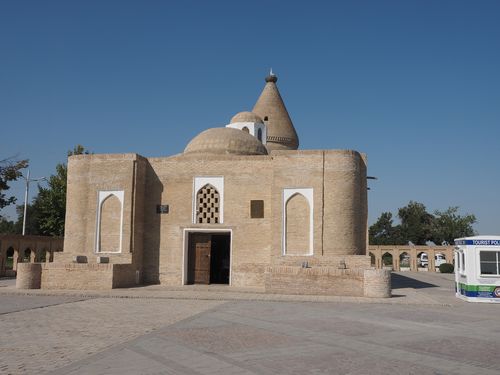
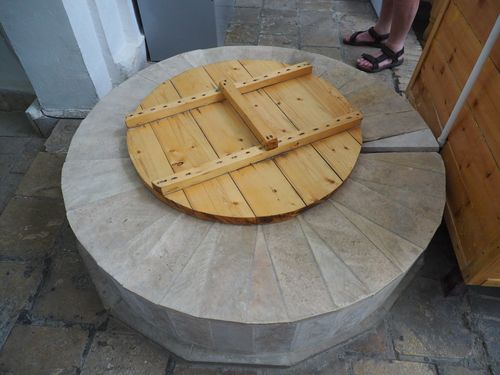
 The Chashma-Ayub Mausoleum in Bukhara, Uzbekistan, is a significant monument showcasing medieval Islamic architecture. Its name, meaning "Job's Spring," stems from a legend linking the site to the biblical prophet Job. The mausoleum houses a spring believed to possess healing properties. Preserved through the centuries, it remains a prominent site for those interested in the cultural and historical heritage of the region.
Monument profile
Chashma-Ayub Mausoleum
Monument category: Mausoleum
Monument family: Tomb, Necropolis, Mausoleum or Cenotaph
Monument genre: Funerary
Cultural heritage: Islamic
Geographic location: Bukhara • Uzbekistan
Construction period: 14th century AD
This monument in Bukhara is inscribed on the UNESCO World Heritage List since 1993 and is part of the serial property "Historic Centre of Bukhara".See the UNESCO monuments featured on this site
• Links to •
• This monument illustrates the following theme •
Architecture • Mausoleums : Muslim Mausoleums
• List of videos about Bukhara on this site •
Bukhara, oasis on the silk road • Uzbekistan
• References •
Wikipedia EN: Chashma-Ayub Mausoleum
UNESCO: Chashma-Ayub Mausoleum
Chashma-Ayub Mausoleum: Historical Legacy, Political Motives, and Modern Challenges
Political and Social Motivations Behind Its Construction
The Chashma-Ayub Mausoleum, located in Bukhara, Uzbekistan, was constructed between the 12th and 14th centuries. The initial motivation for its construction was deeply rooted in the political and social dynamics of the era. Politically, rulers sought to strengthen their legitimacy by associating themselves with religious and spiritual symbols. The mausoleum’s link to the prophet Job (Ayub), a revered figure in Islamic, Christian, and Jewish traditions, reinforced this legitimacy. Socially, the monument served as a site for communal gathering and spiritual solace, particularly due to the presence of a legendary spring believed to have healing properties.
Historical Context and Global Comparison
During the period of its construction, Central Asia was a hub of cultural and commercial exchange along the Silk Road. The Khorezmian Empire dominated the region until the Mongol invasions of the 13th century, which brought significant upheaval. While Bukhara endured destruction, it was later revitalized under the Timurid Empire, which contributed to the mausoleum’s expansion. Globally, this era saw the Crusades shaping Europe and the Middle East, the rise of the Song and Yuan dynasties in China, and the flourishing of trade networks across the Islamic world. Bukhara’s strategic location mirrored its global contemporaries like Venice and Cairo, as a nexus of trade and cultural integration.
Major Historical Events and Transformations
The Chashma-Ayub Mausoleum underwent significant transformations over the centuries, reflecting the region's political shifts and cultural exchanges. Originally built during the Khorezmian era, it was later expanded under the Timurids, who introduced a conical dome, a hallmark of Persian architectural influence. This adaptation demonstrated not only technical innovation but also the blending of local and foreign traditions.
Subsequent periods saw further modifications, including decorative enhancements that incorporated geometric patterns and ceramic tiles. Each change highlighted the prevailing rulers’ desire to leave their imprint, transforming the mausoleum into a dynamic historical record of power transitions and artistic evolution.
Cultural Significance and Current State
The mausoleum remains a significant cultural landmark in Uzbekistan, embodying the spiritual, historical, and architectural heritage of Bukhara. Its association with the miraculous spring continues to attract pilgrims and tourists alike. Efforts to preserve its integrity have maintained much of its original structure and design, despite centuries of wear. However, its relatively remote location compared to more prominent sites in Bukhara has posed challenges in securing consistent preservation funding.
Challenges to Historical Integrity
The preservation of the Chashma-Ayub Mausoleum faces modern threats, including environmental factors such as temperature fluctuations and desertification, which erode its structural stability. Additionally, increasing urbanization and the impact of tourism require careful management to prevent damage to the site. Balancing the needs of conservation with the demands of accessibility remains a critical challenge.
Conclusion
The Chashma-Ayub Mausoleum is a testament to the intersection of political ambition, social cohesion, and artistic innovation in medieval Central Asia. Its transformations over the centuries reflect the region’s dynamic history, marked by changing rulers and cultural exchanges. As a symbol of resilience and a repository of historical memory, its preservation is vital to safeguarding the cultural identity of Bukhara and its recognition on the global stage. With appropriate measures, this extraordinary monument can continue to inspire future generations while honoring its storied past.
Chashma-Ayub Mausoleum: Architectural Brilliance and Cultural Synthesis
Architectural Innovation and Technological Advances
The Chashma-Ayub Mausoleum, constructed between the 12th and 14th centuries in Bukhara, Uzbekistan, stands as a remarkable example of medieval technological and architectural ingenuity. The monument showcases the use of baked bricks, a material valued for its durability and adaptability in the arid climate of Central Asia. These bricks were meticulously arranged to create thick, insulated walls capable of maintaining a stable internal temperature, an essential feature in the region’s extreme climate.
The mausoleum’s most striking architectural element is its conical dome, introduced during the Timurid period. This dome demonstrates advanced engineering, with its design ensuring a balanced distribution of weight while adding aesthetic grandeur. The use of precise geometric calculations in its construction highlights the scientific knowledge and technical expertise of the era.
Fusion of Regional and Foreign Artistic Traditions
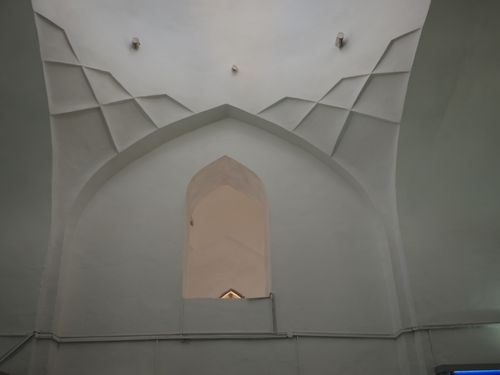
The mausoleum embodies a unique blend of local and external artistic influences, a reflection of Bukhara’s position as a cultural crossroads on the Silk Road. Its geometric patterns and understated decorative elements are hallmarks of Islamic architecture in Central Asia, emphasizing symmetry and the divine order. At the same time, the dome’s Persian influence is evident, blending seamlessly with regional architectural styles.
Carved inscriptions and decorative tiles further enhance the monument’s visual appeal, combining local craftsmanship with motifs inspired by Persian and Timurid traditions. This synthesis of styles underscores the cultural exchanges facilitated by Bukhara’s strategic location.
Notable Structure and Layout
The mausoleum’s layout is simple yet profound. It features a central chamber surmounted by the conical dome, surrounded by smaller annexes. This compact and functional design reflects the dual purposes of the structure: a site for spiritual reflection and a space for housing the revered spring of Job.
The legendary spring, central to the mausoleum’s identity, is integrated into its architecture, symbolizing the link between the material and the divine. This incorporation of natural elements into the design enhances the site’s spiritual significance.
Anecdotes and Historical Significance
Legend has it that the spring within the mausoleum was miraculously created by the prophet Job (Ayub), a tale that has drawn pilgrims for centuries. The monument also serves as a testament to the resilience of Bukhara’s people, having withstood the Mongol invasions and periods of political turmoil. These stories add layers of historical and cultural depth to the site.
Contribution to International Recognition
While not individually listed as a UNESCO World Heritage Site, the Chashma-Ayub Mausoleum benefits from its inclusion in the historic fabric of Bukhara, a UNESCO-listed city. This association has brought greater international attention to the monument, highlighting its architectural and cultural value. The recognition has spurred restoration efforts and increased tourism, ensuring its preservation and global appreciation.
Challenges and Conservation Efforts
Modern threats to the mausoleum include environmental factors such as desertification and temperature fluctuations, which accelerate wear on its materials. Tourism, while beneficial for awareness, poses risks of physical degradation if not managed carefully. Efforts to preserve the site involve employing advanced conservation techniques that respect its historical integrity, alongside community engagement to maintain its cultural relevance.
Conclusion
The Chashma-Ayub Mausoleum is a shining example of architectural innovation, cultural synthesis, and spiritual significance. Its design reflects the ingenuity and artistic diversity of medieval Central Asia, making it an enduring symbol of Bukhara’s rich heritage. Through careful preservation and continued recognition, this extraordinary monument remains a bridge between the past and the present, captivating visitors and scholars alike with its timeless legacy.