

 Français (France)
  Nederlands (nl-NL)
 Ajloun Castle, located in northern Jordan, is a prime example of medieval Islamic military architecture. Built in the 12th century during the reign of Saladin, the fortress was designed to defend the region against Crusader invasions and to secure vital trade routes. Its robust walls and towering structures highlight the strategic significance of the area during that period. Today, it is a popular destination for visitors interested in military history and the scenic views it offers of the surrounding landscape.
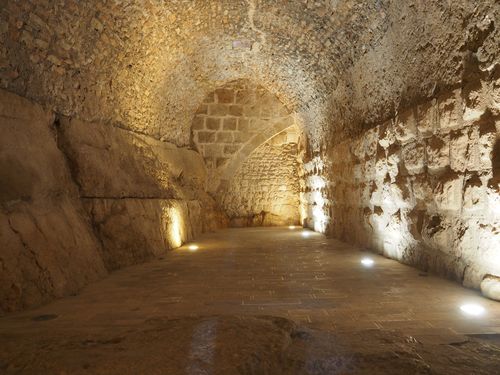
Fort Ajloun • Fort Ajloun

Fort Ajloun • Fort Ajloun

Fort Ajloun • Fort Ajloun
Monument profile
Fort Ajloun
Monument category: Fort
Monument family: Fort, Fortifications or Citadel
Monument genre: Military
Cultural heritage: Islamic
Geographic location: Fort Ajloun • Jordan
Construction period: 12th century AD
• Links to •
• List of videos about Fort Ajloun on this site •
Fort Ajloun, Muslim fortress • Jordan
• References •
Wikipedia EN: Ajloun Castle
Ajloun Castle: Political Motivations, Historical Transformations, and Modern Preservation Challenges
Ajloun Castle, also known as Qal'at Ar-Rabad, stands as a testament to medieval Islamic military ingenuity and the socio-political dynamics of the 12th century. Built during the time of the Crusades, this fortress played a crucial role in the defense of the Islamic territories and the control of vital trade routes. Over the centuries, the castle has witnessed numerous transformations, reflecting shifts in power and cultural influences, while today it remains a symbol of Jordan’s rich historical heritage.
Political and Social Motivations Behind Its Construction
Ajloun Castle was constructed in 1184 by Izz al-Din Usama, a general in the service of Saladin (Salah ad-Din). The primary motivation behind its establishment was to fortify the region against Crusader incursions and ensure the protection of the Islamic realm.
- Political Goals: The castle was strategically positioned to oversee and control the northern Jordan Valley, guarding important trade and communication routes connecting Syria, Jordan, and Egypt. It also served to monitor the movement of Crusader forces and protect the local iron mines essential for weapon production.
- Social Significance: Ajloun Castle was not only a military outpost but also a symbol of Islamic resilience and unity. It fostered economic growth in the surrounding area by ensuring the safety of trade caravans and supporting local communities through its defensive presence.
Historical Events and Their Impact
Ajloun Castle has been shaped by key historical events that have influenced its role and structure:
- The Crusades (12th Century): Built as a defensive measure during Saladin’s campaign against the Crusaders, the castle was integral to the Islamic military strategy, particularly during the successful reconquest of Jerusalem in 1187.
- Mongol Invasions (13th Century): In 1260, the Mongols attacked and damaged the castle. It was subsequently restored and reinforced by the Mamluks, who added towers and defensive features to strengthen its fortifications.
- Ottoman Era (16th–20th Century): Under Ottoman rule, the castle served administrative purposes, but its military importance diminished. It was repurposed as a regional garrison and administrative center.
- Earthquakes (19th Century): A series of earthquakes in 1837 and 1927 caused significant damage to the castle, leaving much of it in ruins until modern restoration efforts began in the 20th century.
Global Context and Comparison
Ajloun Castle’s construction aligns with the broader trend of fortification during the medieval period, a time marked by territorial conflicts and the rise of centralized powers:
In Europe, castles such as the Krak des Chevaliers in Syria, built by the Crusaders, served similar purposes of defense and control.
In Asia, the Great Wall of China, though much older, reflects a similar emphasis on territorial protection and military preparedness.
In Africa, fortifications like the Citadel of Cairo demonstrated the Mamluk commitment to safeguarding trade and resisting foreign invasions.
Ajloun Castle’s distinction lies in its ability to adapt regional architectural styles to serve both defensive and symbolic purposes.
Transformations Through the Centuries
The architectural evolution of Ajloun Castle mirrors the shifting political and cultural dynamics of the region:
- Mamluk Additions: After the Mongol invasions, the Mamluks fortified the castle further, adding towers and refining its defenses to adapt to evolving warfare tactics.
- Ottoman Modifications: While less focused on military needs, the Ottomans used the castle as a local administrative hub, integrating storage facilities and residential quarters.
- Modern Restorations: In the mid-20th century, the Jordanian government initiated restoration projects to stabilize the ruins and highlight the castle’s historical significance.
Cultural Importance and Current State of Preservation
Today, Ajloun Castle is a prominent tourist attraction and a symbol of Jordan’s medieval heritage. It offers visitors insights into the region’s strategic importance during the Crusades and serves as a reminder of the architectural and military prowess of Islamic civilizations.
- Conservation Efforts: Restoration projects have focused on stabilizing walls, preserving key features like the main gate and watchtowers, and enhancing visitor access while maintaining the site’s authenticity.
- Community Impact: The castle contributes to the local economy through tourism and educational initiatives, raising awareness about Jordan’s rich cultural history.
Challenges in Modern Preservation
Despite its well-maintained condition, Ajloun Castle faces several challenges:
- Environmental Threats: Erosion, fluctuating temperatures, and weathering continue to pose risks to the stone structure.
- Tourism Pressure: Increasing visitor numbers place strain on the castle’s pathways and delicate features, requiring careful management.
- Seismic Activity: Located in a seismically active region, the castle remains vulnerable to earthquakes.
- Resource Limitations: Funding and expertise for long-term preservation efforts are insufficient, making sustained maintenance a challenge.
Conclusion
Ajloun Castle stands as a remarkable example of medieval military architecture and a symbol of resilience in the face of historical challenges. Its strategic significance during the Crusades, coupled with its enduring legacy as a cultural and historical landmark, underscores its importance on both regional and global scales. While modern preservation efforts have ensured its survival, ongoing challenges highlight the need for continued investment to protect this extraordinary site for future generations.
Ajloun Castle: A Testament to Technological Innovation and Architectural Synthesis
Ajloun Castle, also known as Qal'at Ar-Rabad, is a prime example of medieval Islamic military architecture that reflects both technological advancements and cultural synthesis during the 12th century. Built during a period of political and religious turmoil, its design and construction showcase innovative engineering, use of local materials, and a unique blend of artistic influences.
Technological Advancements and Materials Used
The construction of Ajloun Castle demonstrates advanced engineering techniques and the use of durable materials suited to its strategic and defensive purpose.
Materials:
- Limestone: Locally sourced limestone was used for the castle’s walls and foundations. Known for its resilience to erosion, this material ensured the structure’s longevity.
- Mortar: A lime-based mortar was applied to bind stones together, providing flexibility to withstand environmental changes and minor seismic activity.
- Iron and Wood: Iron reinforcements and wooden beams were used in gates and drawbridges, adding functionality to the defensive features.
Construction Techniques:
- Sloped Walls: The castle’s walls were designed with a slight incline to deflect incoming projectiles, enhancing its defensive capabilities.
- Arches and Vaults: These architectural elements were used to distribute weight evenly, creating durable and spacious interiors.
Advanced Water Systems: The castle included cisterns and drainage systems to collect and store water, ensuring a sustainable supply during sieges.
These techniques highlight the ingenuity of Islamic military architects in creating structures that combined functionality with enduring strength.
Architectural Features and Cultural Fusion
Ajloun Castle’s architecture embodies a blend of regional traditions and external influences, reflecting the multicultural interactions of its time.
Notable Structural Elements:
- Towers and Watchposts: The castle’s design includes four main towers positioned to provide maximum visibility and defense, a feature common in Islamic military forts.
- Gates and Passageways: The main entrance is fortified with a drawbridge and a series of angled passageways to impede enemy advances.
- Cisterns: Large underground reservoirs were integrated to store water, emphasizing the importance of self-sufficiency during prolonged conflicts.
Decorative Elements:
The castle incorporates simple geometric patterns carved into the stone, a hallmark of Islamic art, alongside motifs inspired by Byzantine and local Nabataean styles.
Subtle decorative features, such as engraved inscriptions and floral designs, were added to embellish the otherwise utilitarian structure.
This synthesis of styles highlights Ajloun Castle’s position as a cultural crossroads, influenced by regional and foreign traditions while maintaining its primary defensive function.
Noteworthy Statistics and Anecdotes
Date of Construction: Ajloun Castle was built in 1184 by Izz al-Din Usama, a general under Saladin, to defend the region against Crusader incursions.
Dimensions: The castle’s walls rise to approximately 16 meters, with a total area covering over 4,200 square meters.
Strategic Location: Positioned at 1,250 meters above sea level, the castle overlooks the Jordan Valley, allowing control over trade routes and strategic vantage points.
An anecdote of significance involves the castle’s role in protecting iron mines in the region, a vital resource for weapon manufacturing during Saladin’s campaigns.
Impact on International Recognition
Ajloun Castle has not been inscribed on the UNESCO World Heritage List, but it holds significant cultural value and is a key feature of Jordan’s national heritage. Its architectural and historical importance has contributed to its recognition as a prime example of medieval Islamic fortifications.
- Conservation Efforts: Jordanian authorities have undertaken restoration projects to stabilize the ruins, improve access, and preserve the castle’s key features.
- Tourism and Education: Ajloun Castle serves as a cultural hub, attracting visitors interested in history, architecture, and the legacy of the Crusades.
Challenges in Preservation
Despite its relatively good state of conservation, Ajloun Castle faces several modern challenges:
- Environmental Factors: Erosion and weathering due to exposure to the elements threaten the structure’s integrity.
- Seismic Activity: Located in a tectonically active region, the castle is vulnerable to earthquakes, which have historically caused significant damage.
- Tourism Pressure: Increased foot traffic from visitors necessitates careful management to prevent wear and tear on delicate features.
- Resource Limitations: The need for consistent funding and expertise poses a challenge to long-term preservation.
Conclusion
Ajloun Castle stands as a remarkable representation of technological and architectural innovation during the medieval Islamic period. Its strategic design, cultural influences, and enduring legacy underscore its importance as both a historical monument and a symbol of regional resilience. Continued efforts to preserve and promote this architectural marvel will ensure its story remains accessible to future generations, serving as a bridge between past and present.