

 Français (France)
  Nederlands (nl-NL)
 Located in Agrigento, Sicily, the Temple of Concordia is one of the best-preserved ancient Greek temples in the world. Dating back to the 5th century BCE, this Doric temple was reportedly dedicated to the goddess of harmony and agreement. It was converted into a Christian church in the 6th century, which aided its preservation. Featuring an impressive structure with 34 columns, the temple is a highlight of the Valley of the Temples, an archaeological site famed for its extensive array of ancient temples and a UNESCO World Heritage Site.
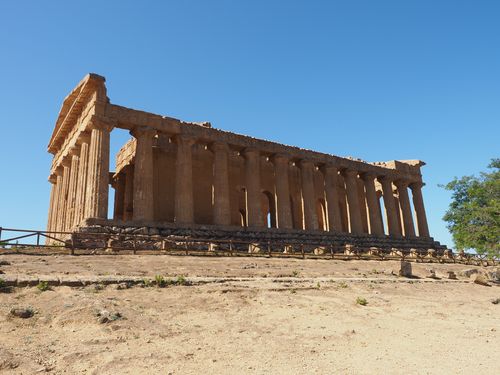
Agrigento • Temple of Concord
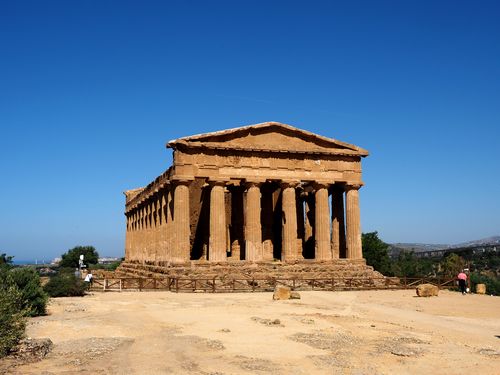
Agrigento • Temple of Concord
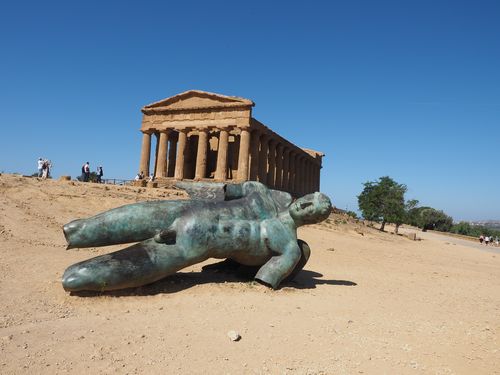
Agrigento • Temple of Concord
Temple of Concord
The Temple of Concordia in Agrigento: Political Aspirations, Historical Evolution, and Preservation Challenges
The Temple of Concordia, constructed around 440 BCE, stands as one of the most iconic monuments of ancient Greek civilization. Located in Agrigento, Sicily, this Doric temple reflects the political ambitions and social values of its time. Over the centuries, the temple has witnessed transformations that mirror shifts in power and cultural influences. Today, it serves as both a cultural landmark and a symbol of humanity’s shared heritage.
Political and Social Motivations Behind Its Construction
During the 5th century BCE, Agrigento, known as Akragas in ancient times, was one of the wealthiest Greek colonies in the Mediterranean. The construction of the Temple of Concordia symbolized the city’s political strength and cultural sophistication. Though the temple's precise dedication remains debated, it likely honored a major deity, such as Hera or Zeus. Its monumental scale and strategic placement within the Valley of the Temples were designed to project unity, prosperity, and divine favor, reinforcing the city’s position in the competitive landscape of Greek city-states.
Historical Context and Global Comparisons
The mid-5th century BCE was a period of cultural and political innovation across the world. In Greece, the Classical period saw the flourishing of arts, philosophy, and architecture, exemplified by constructions like the Parthenon in Athens. Meanwhile, in China, the era of the Warring States laid the groundwork for the unification of the region under the Qin Dynasty. In Persia, the Achaemenid Empire reached its zenith, marked by monumental projects like Persepolis. The Temple of Concordia reflects the global trend of using monumental architecture to assert power and cultural identity.
Major Historical Events and Transformations
The Temple of Concordia has experienced several transformations that highlight the shifting dynamics of power and culture in the region:
- Conversion to a Christian Church: In the 6th century CE, the temple was converted into a Christian church, preserving its structure while altering its religious function. Walls were built between the columns to enclose the space, reflecting the dominance of Christianity after the decline of Greco-Roman paganism.
- Rediscovery in the 18th Century: The temple was rediscovered during the Enlightenment, a period of renewed interest in classical antiquity. This spurred conservation efforts and reinforced its importance as a symbol of ancient Greek achievement.
- Modern Recognition: In 1997, the temple and the entire Valley of the Temples were designated as a UNESCO World Heritage Site, ensuring its protection and global recognition.
Cultural Importance and Current State of Conservation
The Temple of Concordia is celebrated as one of the best-preserved Greek temples in the world. Its enduring structure, including 34 original columns and much of its entablature, exemplifies the resilience of ancient engineering. The site’s cultural significance has made it a centerpiece of Sicilian identity and a major tourist attraction, drawing visitors from across the globe.
Challenges to Preservation
Despite its remarkable state, the temple faces modern threats, including:
Natural Erosion: The limestone used in its construction is vulnerable to weathering, exacerbated by the region’s seismic activity.
Tourism Impact: The heavy influx of visitors places stress on the site, necessitating careful management.
Climate Change: Rising temperatures and pollution accelerate the deterioration of ancient materials.
To address these challenges, conservation efforts focus on using advanced techniques to stabilize the structure and mitigate environmental damage. UNESCO’s involvement has also raised awareness and secured funding for ongoing preservation projects.
Conclusion
The Temple of Concordia is not just an architectural marvel but a narrative of human history, reflecting the ambitions, transformations, and resilience of civilizations. Its continued preservation is a testament to the value of protecting cultural heritage, ensuring that future generations can appreciate its historical and artistic significance.
Architectural Mastery of the Temple of Concordia in Agrigento: A Testament to Ancient Innovation
The Temple of Concordia, located in Agrigento, Italy, is an exceptional example of ancient Greek architecture, showcasing technological advancements and cultural synthesis of the 5th century BCE. Its enduring grandeur and well-preserved state make it a significant artifact of classical antiquity. This article explores the architectural ingenuity behind its construction, the materials and techniques employed, and its cultural significance through the lens of history and preservation.
Technological Innovations and Materials
Built around 440 BCE during the height of the Greek Classical period, the Temple of Concordia exemplifies advanced engineering and aesthetic precision. The temple was constructed using local tuff limestone, a material abundant in the region. To enhance its appearance and durability, the surface was coated with white stucco, mimicking the finish of marble and adding to its visual impact.
The structural integrity of the temple owes much to the post-and-lintel system typical of Greek architecture, combined with precise interlocking joints and clamps. This method eliminated the need for mortar while ensuring stability. The slightly inward tilt of the columns (entasis) and the subtle curvature of the platform (stylobate) corrected optical distortions, showcasing the architects’ keen understanding of geometry and visual perception.
Unique Characteristics and Cultural Influences
The Temple of Concordia follows the Doric order, characterized by simple, fluted columns, a plain capital, and a robust entablature. Its layout adheres to the peripteral plan, with six columns on the short sides and thirteen on the long sides, surrounding a central chamber (cella) that once housed a deity's statue.
The absence of elaborate sculptural decoration on the metopes and frieze suggests a regional stylistic choice or practical constraints, distinguishing it from contemporaneous temples like the Parthenon in Athens. However, the minimalistic design allowed the temple's proportions and craftsmanship to take center stage. The influence of foreign artistic traditions, particularly from Carthaginian and Egyptian cultures, reflects the cosmopolitan nature of Agrigento as a key hub in the Mediterranean.
Statistics and Anecdotes
Spanning 39 meters in length and 16.9 meters in width, the Temple of Concordia features 34 columns, each standing approximately 7 meters high. Its transformation into a Christian church in the 6th century CE is a notable anecdote, involving structural alterations such as the construction of walls between columns. This adaptation, while significant, played a pivotal role in the temple’s preservation, sparing it from the destruction many other ancient monuments faced.
International Recognition and UNESCO Impact
The Temple of Concordia is widely regarded as one of the best-preserved Greek temples worldwide. Its inclusion in the UNESCO World Heritage Site list in 1997, as part of the Valley of the Temples, has been instrumental in securing its international recognition. This status has catalyzed funding for restoration, promoted responsible tourism, and enhanced global awareness of its cultural significance.
Preservation Challenges and Ongoing Efforts
The temple faces modern challenges, including environmental degradation, seismic activity, and the pressures of mass tourism. Climate change exacerbates the erosion of limestone, while human activity poses risks to its structural integrity. Conservation strategies, supported by UNESCO and local authorities, focus on employing advanced preservation technologies and implementing sustainable tourism practices.
Conclusion
The Temple of Concordia is a remarkable testament to the ingenuity and creativity of ancient Greek civilization. Its architectural brilliance, cultural synthesis, and historical endurance make it a vital link to our shared human heritage. Ongoing efforts to preserve and celebrate this masterpiece ensure its legacy will continue to inspire generations to come.