

 Français (France)
  Nederlands (nl-NL)
 Of Hindu tradition, the Gaekwad dynasty ruled for approximately 230 years, ± between 1721 and 1951 over all or part of , during the Medieval Period, the Colonial Period and the Modern Period.
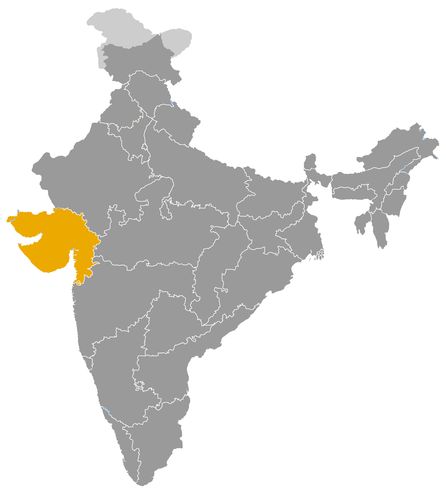
This map illustrates the maximum territory that the Gaekwad Dynasty had reached at its height, covering the current regions of in India. Its main purpose is to provide a visual aid to understand the geographical extent of this dynasty. However, it's important to note that the contemporary borders of these regions may not necessarily coincide with the historical territories.
The Gaekwad Dynasty: Political Leadership, Cultural Patronage and Economic Development in Indian History
The Gaekwad Dynasty, also spelled Gaikwad, was one of the most influential branches of the Maratha Confederacy and ruled the princely state of Baroda, now Vadodara in the Indian state of Gujarat. From the early eighteenth century until the integration of the princely states into independent India in 1947, the Gaekwad rulers transformed Baroda into one of the most progressive and prosperous states in the Indian subcontinent. Although their territorial domain was relatively modest compared with larger Indian empires, their political reforms, cultural patronage and economic modernization earned them a distinguished place in the history of India.
Origins and Political Rise
The Gaekwad Dynasty emerged during the decline of the Mughal Empire, a period marked by the rapid expansion of Maratha influence across western and central India. Its founder, Pilaji Rao Gaekwad, was a military commander serving under the Maratha Peshwas. In 1721 he established control over Baroda after a series of successful military campaigns in Gujarat.
Initially, the Gaekwads acknowledged the authority of the Peshwas, who exercised overall leadership within the Maratha Confederacy. Over time, however, they gained increasing autonomy while maintaining strategic alliances with other Maratha rulers. Their ability to balance military strength with diplomatic negotiation enabled them to consolidate their authority without becoming embroiled in prolonged internal conflicts.
The dynasty reached its political peak during the reign of Maharaja Sayajirao Gaekwad III, who ruled from 1875 to 1939. Widely regarded as one of the most enlightened rulers of princely India, Sayajirao transformed Baroda into a model state through administrative efficiency, legal reforms and ambitious social policies. Under his leadership, the state became known for effective governance and progressive public administration, attracting admiration from both Indian reformers and British officials.
Political Reforms and Administrative Innovation
One of the defining characteristics of the Gaekwad rulers was their commitment to administrative modernization. Unlike many contemporary princely states that relied heavily on traditional feudal structures, Baroda developed a relatively centralized and efficient system of government.
The Gaekwads reorganized taxation, strengthened the judicial system and introduced professional civil administration. They invested in local governance while encouraging accountability among public officials. Their administration sought to reduce corruption and improve the delivery of public services, contributing to long-term political stability.
Education formed an essential component of these reforms. Sayajirao Gaekwad III strongly believed that public education was fundamental to social progress. He introduced compulsory primary education, promoted literacy and supported educational opportunities regardless of caste or social background. These initiatives placed Baroda among the most progressive princely states of British India.
Cultural Patronage and Architectural Legacy
The cultural achievements of the Gaekwad Dynasty remain among its most enduring contributions to Indian civilization. The rulers viewed the arts, architecture and education as essential expressions of enlightened governance and invested heavily in their development.
The most celebrated architectural monument associated with the dynasty is the Laxmi Vilas Palace in Vadodara. Completed in the late nineteenth century, the palace combines Indo-Saracenic, European and traditional Indian architectural styles. Considerably larger than many contemporary royal residences, it symbolizes both the wealth and the cosmopolitan outlook of the Gaekwad court.
The dynasty also sponsored the construction of museums, libraries, public buildings and educational institutions that continue to serve the region today. These projects reflected a desire to combine traditional Indian culture with modern ideas introduced during the colonial period.
The Gaekwads became renowned patrons of artists, musicians and scholars. One of the most famous beneficiaries of their patronage was Raja Ravi Varma, whose paintings blended European artistic techniques with subjects drawn from Indian mythology. His work profoundly influenced modern Indian visual culture and helped popularize classical Hindu themes through realistic portraiture.
Literature, classical music and Sanskrit scholarship likewise flourished under the protection of the Gaekwad court, making Baroda an important intellectual center in western India.
Economic Modernization and Social Development
The economic policies of the Gaekwad Dynasty contributed significantly to the prosperity of Baroda. Recognizing that political stability depended upon economic growth, the rulers implemented reforms aimed at improving agriculture, trade and infrastructure.
Agriculture remained the foundation of the state's economy. Irrigation projects, improved land administration and revised taxation policies increased agricultural productivity while providing greater security for cultivators. These measures helped stabilize rural incomes and strengthened the state's financial resources.
Infrastructure development became another priority. Roads, railway connections and telegraph lines enhanced communication within the state and facilitated trade with neighboring regions and major ports on India's western coast. Improved transportation encouraged commercial activity and integrated Baroda more closely into the expanding economy of British India.
Industrial development also received considerable attention. Textile production, handicrafts and local manufacturing expanded under government encouragement, creating employment opportunities and diversifying the state's economy beyond agriculture.
The dynasty's concern for social welfare extended beyond economic policy. Hospitals, sanitation projects and public health initiatives improved living conditions, while reforms supporting women's education represented significant advances for the period.
Legacy in Modern India
Following India's independence in 1947, the princely state of Baroda acceded peacefully to the Indian Union. Although the Gaekwads lost their political authority, their legacy remained deeply embedded in the institutions they had created.
The Maharaja Sayajirao University of Baroda continues to rank among India's leading universities, reflecting the dynasty's enduring commitment to education. The Laxmi Vilas Palace remains one of Gujarat's most important historical landmarks, while numerous museums, libraries and cultural organizations established during the Gaekwad era continue to preserve the region's artistic heritage.
Modern Vadodara still reflects the urban planning, educational vision and cultural investment initiated under Gaekwad rule, demonstrating the lasting influence of their governance.
Conclusion
The Gaekwad Dynasty occupies a distinctive position in Indian history because of its emphasis on enlightened administration rather than territorial conquest. Through political reform, educational advancement, cultural patronage and economic modernization, the rulers of Baroda transformed their principality into one of the most progressive states of pre-independence India. Their support for architecture, the arts, scholarship and public welfare created an enduring legacy that extends well beyond Gujarat. Today, the achievements of the Gaekwad Dynasty continue to illustrate how visionary leadership could foster stability, prosperity and cultural flourishing within the diverse political landscape of the Indian subcontinent.
The Geographical Expansion of the Gaekwad Dynasty in India: Territorial Growth and Relations with Neighboring Powers
The Gaekwad Dynasty, also known as the Gaikwad Dynasty, was one of the principal branches of the Maratha Confederacy and ruled the princely state of Baroda, now Vadodara in the Indian state of Gujarat. Founded in the early eighteenth century by Pilaji Rao Gaekwad, the dynasty emerged during the decline of the Mughal Empire and the rapid expansion of Maratha influence across western India. Although the Gaekwads never established a vast empire comparable to those of the Mughals or the Marathas as a whole, they gradually extended their authority over a strategically important region of western India. Their territorial expansion shaped the political balance of Gujarat and influenced their relationships with neighboring dynasties, regional powers and, eventually, the British East India Company.
The Origins of the Gaekwad Territory
The geographical expansion of the Gaekwad Dynasty began within the broader military campaigns of the Maratha Confederacy. During the early eighteenth century, the Mughal Empire was weakening rapidly, creating opportunities for ambitious Maratha commanders to establish regional authority.
Pilaji Rao Gaekwad, originally serving under the Maratha Peshwas, led successful campaigns in Gujarat. In 1721 he established control over Baroda, which became the political and administrative center of the dynasty. Located between northern India, the Deccan Plateau and the ports of the Arabian Sea, Baroda occupied a highly strategic position that allowed the Gaekwads to influence both inland trade and coastal commerce.
This initial conquest formed the foundation upon which the dynasty gradually expanded its influence throughout central Gujarat.
Expansion Throughout Gujarat
During the eighteenth century, successive Gaekwad rulers consolidated their authority across much of central and eastern Gujarat. Their territories eventually included Baroda, Dabhoi, Kheda, Anand, Chhota Udepur and numerous surrounding districts.
Rather than pursuing continuous military conquest, the Gaekwads frequently expanded through negotiated agreements, tribute arrangements and alliances with local chiefs. Smaller principalities often retained their traditional rulers while recognizing Gaekwad supremacy and paying tribute in exchange for military protection.
Control over fertile agricultural districts significantly strengthened the state's economy. The rich plains of Gujarat produced cotton, grains, sugarcane and other valuable crops, providing substantial revenue for the dynasty.
Equally important was the control of commercial routes connecting Ahmedabad, Surat and other trading centers. Although the Gaekwads did not directly dominate every major port, their inland territories gave them considerable influence over the movement of goods between the interior of India and the western coast.
Stable Borders and Administrative Consolidation
Unlike several other Maratha dynasties that sought continuous territorial expansion, the Gaekwads increasingly emphasized consolidation rather than conquest. Once their authority over central Gujarat had been secured, they concentrated on strengthening administration and improving internal stability.
This relatively stable territorial framework allowed them to invest in infrastructure, agriculture and taxation instead of maintaining costly military campaigns. Roads, irrigation systems and administrative centers reinforced their control over the countryside while contributing to economic prosperity.
As a result, Baroda evolved into one of the most efficiently governed princely states in western India, despite its more limited geographical size compared with larger contemporary kingdoms.
Relations with the Maratha Confederacy
The territorial expansion of the Gaekwad Dynasty was closely connected to the political structure of the Maratha Confederacy. Initially, the Gaekwads remained subordinate to the Peshwas, who exercised overall leadership from Pune.
However, as the dynasty consolidated its position in Gujarat, it gradually acquired greater political independence. This growing autonomy occasionally created tensions with the Peshwas, particularly concerning taxation, military obligations and the distribution of conquered territories.
Despite these disagreements, the Gaekwads generally remained loyal members of the Maratha Confederacy. Cooperation among the various Maratha houses was often essential when confronting external threats, particularly the declining Mughal Empire and rival regional powers.
Relations with the Mughal Empire
The expansion of the Gaekwad Dynasty occurred largely at the expense of Mughal authority in Gujarat. During the early eighteenth century, Mughal governors struggled to maintain effective control over the province as imperial power declined.
Military confrontations between Maratha forces and Mughal officials became increasingly frequent. As the Gaekwads strengthened their position, they gradually replaced Mughal administrators across much of central Gujarat.
This transfer of authority reflected the broader political transformation taking place throughout India, where regional dynasties increasingly supplanted the weakening Mughal administration.
Relations with Neighboring States
The geographical position of the Gaekwad territories placed the dynasty in regular contact with numerous neighboring powers.
To the north, the Rajput states of Rajasthan maintained diplomatic, commercial and occasionally military relations with Baroda. While border disputes sometimes occurred, prolonged warfare was relatively uncommon, and mutual commercial interests often encouraged cooperation.
To the south and east, the Gaekwads interacted with other Maratha rulers, including the Holkars, Scindias and Bhonsles. These relationships alternated between cooperation and rivalry, depending upon changing political circumstances within the confederacy.
The dynasty also benefited from Gujarat's proximity to major maritime trading centers. Commercial exchanges with Arab, Persian and European merchants contributed to Baroda's growing prosperity and reinforced its regional importance.
Alliance with the British
By the late eighteenth century, the expansion of British influence dramatically altered the political landscape of India. Recognizing the growing power of the British East India Company, the Gaekwads adopted a pragmatic diplomatic strategy.
Through a series of treaties, they accepted British protection while preserving substantial autonomy over their internal administration. This arrangement enabled the dynasty to retain its territorial integrity during a period when many neighboring states experienced military defeat or political annexation.
During the nineteenth century, Baroda remained one of the most important princely states under British paramountcy, enjoying considerable internal independence while participating in the wider political framework of British India.
Legacy of Their Territorial Rule
Following Indian independence in 1947, the princely state of Baroda peacefully acceded to the newly formed Indian Union. The territories once governed by the Gaekwads became part of the modern state of Gujarat.
Many administrative boundaries, urban institutions and transportation networks established under the dynasty continued to influence regional development. Vadodara remains one of Gujarat's principal cultural, educational and industrial centers, reflecting the long-term impact of Gaekwad administration.
Conclusion
The geographical expansion of the Gaekwad Dynasty was characterized by steady consolidation rather than rapid imperial conquest. By establishing firm control over central Gujarat and strategically important commercial routes, the dynasty created one of western India's most prosperous and stable princely states. Their territorial policies shaped diplomatic relations with the Maratha Confederacy, the declining Mughal Empire, neighboring Rajput states and, eventually, the British East India Company. Although their realm was smaller than many contemporary Indian kingdoms, the Gaekwads demonstrated that careful administration, strategic alliances and economic development could secure lasting political influence. Their territorial legacy continues to be reflected in the historical and economic importance of modern Gujarat.
The list covers the Gaekwad rulers of Baroda State. Pratap Singh Rao ceased to exercise sovereign power when the state joined India in 1949 but retained his title until 1951.
- Pilaji Rao Gaekwad (1721–1732) • The founder of the dynasty’s power, he established Gaekwad authority in part of Gujarat.
- Damaji Rao Gaekwad (1732–1768) • He conquered Baroda and greatly expanded the dynasty’s territories.
- Sayaji Rao I Gaekwad (1768–1778) • A son of Damaji Rao, he succeeded him as ruler of Baroda State.
- Fateh Singh Rao I Gaekwad (1778–1789) • He governed during a period of Maratha rivalry and territorial consolidation.
- Manaji Rao Gaekwad (1789–1793) • His brief reign was marked by internal disputes within the ruling family.
- Govind Rao Gaekwad (1793–1800) • He gained power after several years of succession struggles.
- Anand Rao Gaekwad (1800–1819) • During his reign, the Treaty of Cambay of 1802 placed Baroda under British protection.
- Sayaji Rao II Gaekwad (1819–1847) • He ruled within the alliance with the British East India Company.
- Ganpat Rao Gaekwad (1847–1856) • He succeeded Sayaji Rao II and continued the administration of the princely state.
- Khande Rao II Gaekwad (1856–1870) • His reign saw the development of infrastructure, including Baroda’s railway network.
- Malhar Rao Gaekwad (1870–1875) • Accused of misgovernment, he was deposed by the British administration.
- Sayaji Rao III Gaekwad (1875–1939) • He modernized Baroda and expanded education, libraries, administration and public infrastructure.
- Pratap Singh Rao Gaekwad (1939–1951) • The last ruling maharaja of Baroda, he oversaw the state’s integration into India and founded Maharaja Sayajirao University in 1949.