

 Français (France)
  Nederlands (nl-NL)
 The Red Bridge, or Cầu Thê Húc, is a renowned pedestrian bridge located in Hanoi, Vietnam. Made of wood and painted a vivid red, it connects the shores of Hoan Kiem Lake to the island hosting the Ngoc Son Temple. Designed in traditional Vietnamese style, this bridge is a symbol of culture and spirituality, attracting both locals and visitors. Its name, meaning "place where morning light rests," reflects its poetic and cultural significance in Hanoi's daily life.
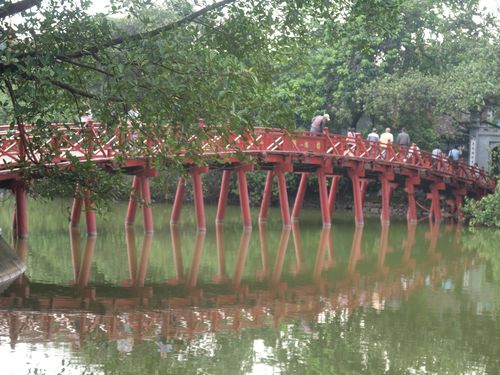
Hanoi • Red Bridge
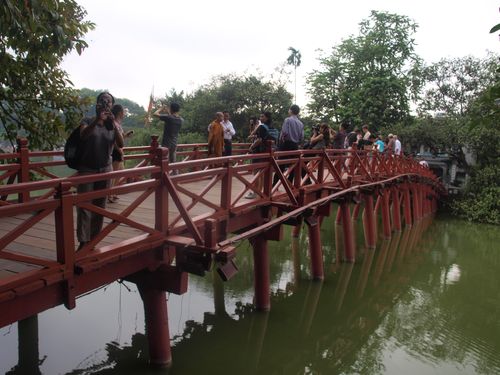
Hanoi • Red Bridge
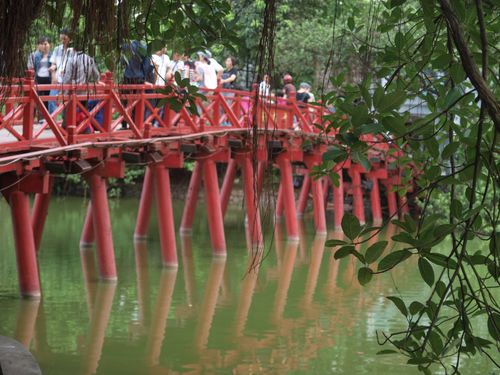
Hanoi • Red Bridge
Monument profile
Red Bridge
Monument category: Bridge
Monument family: Civil engineering structures (bridges, wells, etc.) and factories
Monument genre: Economic
Geographic location: Hanoi • Vietnam
Construction period: 19th century AD
• Links to •
• List of videos about Hanoi on this site •
Hanoi, the capital • Vietnam (EN)
The Red Bridge in Hanoi: A Cultural Symbol and Historical Witness
The Red Bridge, or Cầu Thê Húc, is a landmark in Hanoi, Vietnam, known for its historical, cultural, and spiritual significance. Built in the mid-19th century during the Nguyễn dynasty, it serves as a connection between the shores of Hoan Kiem Lake and Ngoc Son Temple. Beyond its function as a pedestrian bridge, it represents deep-rooted political, social, and cultural aspirations that have evolved over centuries.
Political and Social Motivations Behind Its Construction
The construction of the Red Bridge was driven by both political and social motives. During the Nguyễn dynasty, it was essential to strengthen cultural and spiritual unity among the people. The bridge was designed as a passage to Ngoc Son Temple, a sacred site honoring figures such as Trần Hưng Đạo, a national hero, and spiritual deities like the Taoist philosopher Laotseu.
By linking a place of worship to the daily lives of the citizens, the bridge became a symbol of the interconnectedness of governance, spirituality, and cultural identity. Its bright red color, signifying prosperity and good fortune in Vietnamese tradition, further reinforced its role as a unifying and auspicious symbol.
Historical Events and Their Impact
The Red Bridge has been a silent witness to significant historical events, including colonial occupation, wars, and periods of national reconstruction. During the French colonization of Vietnam, the bridge and its surroundings served as a site of resistance and cultural preservation. It remained a central gathering point for ceremonies and celebrations, even amid political upheaval.
In modern times, the bridge has symbolized resilience and continuity, becoming a focal point for local traditions and tourism.
Global Context and Comparisons
The mid-19th century, when the Red Bridge was built, was a period of profound transformation worldwide. In Europe, the Industrial Revolution was reshaping societies with technological advancements, while in Asia, countries like Vietnam were grappling with foreign influences and colonial pressures. The Red Bridge, with its traditional Vietnamese design and cultural symbolism, reflects an era of resistance to external domination and a commitment to preserving national identity.
Similar monuments, such as Japan’s torii gates or China’s traditional stone bridges, share a comparable fusion of functional design and spiritual symbolism, showcasing a broader Asian architectural philosophy.
Transformations Over the Centuries
The Red Bridge has undergone several renovations to maintain its structure and symbolism. These transformations include repairs to its wooden planks and repainting to preserve its signature color. While modern materials and techniques have occasionally been incorporated, efforts have been made to ensure that the bridge retains its traditional aesthetic.
These changes mirror the shifts in political power and cultural influences over time, reflecting Vietnam’s journey through colonization, independence, and modernization.
Cultural Importance and Current Conservation Status
Today, the Red Bridge is an iconic symbol of Hanoi, drawing visitors from around the world. It represents the harmonious balance between nature and human ingenuity, as well as the spiritual and cultural values of Vietnam.
However, the bridge faces challenges due to environmental factors, such as humidity and pollution, as well as the growing pressures of tourism. Local authorities have implemented restoration projects to address these issues while preserving its historical authenticity.
Challenges in Preservation
The primary challenges to preserving the Red Bridge include the effects of urbanization, the impact of mass tourism, and the deterioration caused by natural elements. Efforts to limit visitor access during renovations and raise awareness about its cultural importance are essential to maintaining its integrity.
Conclusion
The Red Bridge in Hanoi stands as a testament to Vietnam’s cultural and historical richness. Its construction, history, and enduring significance highlight the resilience and unity of the Vietnamese people. Preserving this monument is vital to safeguarding its legacy for future generations while celebrating its role as both a functional structure and a symbol of national identity.
The Red Bridge in Hanoi: Architectural Ingenuity and Cultural Synthesis
The Red Bridge, or Cầu Thê Húc, is one of Hanoi’s most iconic structures, symbolizing the cultural and spiritual essence of Vietnam. Constructed in the mid-19th century, the bridge demonstrates the technological innovation and artistic traditions of its time while serving as a bridge—both literal and symbolic—between history and the present.
Architectural Innovation and Technological Advancement
The Red Bridge’s construction highlights the innovative use of local materials and engineering techniques of the era. Built primarily from wood, the bridge rests on sturdy wooden piers driven into the bed of Hoan Kiem Lake. The vibrant red color was chosen not only for its cultural significance—representing prosperity and good fortune in Vietnamese tradition—but also for its durability against weathering.
The bridge’s slightly curved design, a hallmark of traditional Vietnamese aesthetics, is not merely decorative. This curvature distributes weight evenly across the structure, ensuring stability and longevity. Such engineering reflects a sophisticated understanding of materials and construction techniques suited to the tropical environment of Hanoi.
A Blend of Regional and Foreign Artistic Traditions
The design of the Red Bridge incorporates elements of local Vietnamese artistry while drawing subtle inspiration from neighboring cultures. Its simple yet elegant structure aligns with traditional Vietnamese principles of harmony and balance, closely linked to Confucian and Buddhist philosophies.
The decorative elements on the bridge, including carvings of dragons and lotus flowers, are distinctly Vietnamese, symbolizing strength, wisdom, and purity. At the same time, the symmetry and spatial arrangement reflect Chinese architectural influences, underscoring Vietnam’s historical exchanges with its northern neighbor.
Notable Structure and Layout
The Red Bridge spans the Hoan Kiem Lake, connecting the shore to Ngoc Son Temple on Jade Island. Its name, Cầu Thê Húc, translates to "the place where morning light rests," adding poetic depth to its cultural significance. The bridge’s red-painted wooden planks and gently arched shape create a visual harmony with the surrounding natural and spiritual landscape.
The bridge has become an iconic backdrop for cultural events and photography, further embedding it in Hanoi’s cultural identity.
Anecdotes and Historical Insights
The bridge’s construction was commissioned to create a sacred pathway to Ngoc Son Temple, dedicated to several revered figures, including General Trần Hưng Đạo and Laotseu. This spiritual connection reinforces the bridge’s symbolic function as a link between the earthly and divine.
Although the exact year of its original construction remains uncertain, historical records suggest significant renovations during the Nguyễn dynasty, particularly to maintain its structure and cultural relevance.
International Recognition and UNESCO Consideration
While the Red Bridge has not been inscribed as a UNESCO World Heritage Site, it enjoys global recognition as a symbol of Hanoi’s heritage. Its aesthetic and cultural value attracts millions of visitors annually, showcasing Vietnam’s unique blend of tradition and modernity.
Efforts to preserve the bridge have been instrumental in maintaining its status as a cultural landmark. Periodic restorations, including repainting and structural reinforcement, aim to balance its historical authenticity with the demands of modern tourism.
Challenges in Preservation
The Red Bridge faces several preservation challenges, including environmental degradation, the effects of heavy foot traffic, and the impact of Hanoi’s rapid urbanization. Rising water levels and pollution in Hoan Kiem Lake also threaten its structural integrity. Authorities have implemented measures such as restricting access during repairs and raising public awareness about its cultural importance.
Conclusion
The Red Bridge is more than a physical structure; it is a cultural icon that embodies the ingenuity, artistry, and spiritual depth of Vietnam. Its architecture reflects a harmonious fusion of traditional craftsmanship and cultural influences, making it a timeless symbol of Hanoi’s identity. Preserving this remarkable monument is essential to honoring Vietnam’s rich history and ensuring its legacy for future generations.