

 Français (France)
  Nederlands (nl-NL)
 The Sitori-i-Mokhi Khosa Palace in Bukhara, Uzbekistan, stands as a remarkable example of the region's cultural and architectural heritage. Built during the reign of the last emirs of Bukhara, it functioned as a summer residence. The palace combines local and European influences, resulting in a distinctive aesthetic. It remains a significant site, drawing visitors for its beauty and historical value.
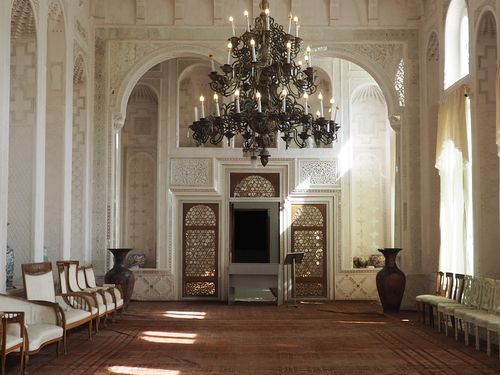
Bukhara • Sitori-i-Mokhi Khosale Palace

Bukhara • Sitori-i-Mokhi Khosale Palace
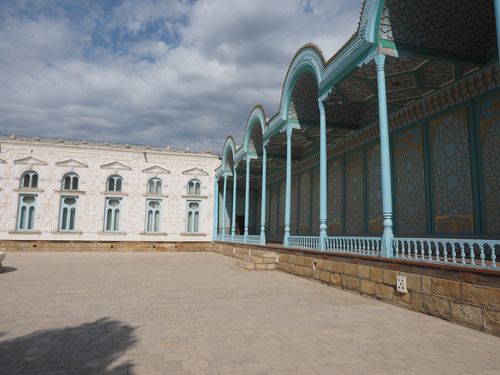
Bukhara • Sitori-i-Mokhi Khosale Palace
Monument profile
Sitori-i-Mokhi Khosale Palace
Monument category: Palace
Monument family: Palace and Annexes
Monument genre: Residential
Cultural heritage: Islamic
Geographic location: Bukhara • Uzbekistan
Construction period: 19th century AD
• Links to •
• List of videos about Bukhara on this site •
Bukhara, oasis on the silk road • Uzbekistan
The Sitori-i-Mokhi Khosa Palace: A Reflection of Political Ambitions and Cultural Evolution
Political and Social Motivations Behind Its Construction
The Sitori-i-Mokhi Khosa Palace, located in Bukhara, Uzbekistan, was constructed at the end of the 19th century and the beginning of the 20th century during the reign of Emir Alim Khan. The palace was intended as a summer residence, symbolizing the Emirate of Bukhara's wealth and modernity. Its construction was driven by political and social motivations, as the emir sought to consolidate his authority and showcase his kingdom’s cultural sophistication amidst growing Russian influence in Central Asia.
The architecture reflects a blend of traditional Uzbek and European styles, illustrating the emir’s desire to project both continuity with local traditions and openness to modernity. This hybridity served a political purpose: to signal strength and resilience in the face of external pressures, particularly from the expanding Russian Empire, which sought to dominate the region.
Key Historical Events and Their Impact
The palace’s history is intricately tied to the fall of the Emirate of Bukhara. In 1920, the Red Army overthrew Emir Alim Khan, marking the end of Bukhara's status as an independent emirate. The palace ceased to serve as a royal residence and was repurposed as a museum under Soviet rule. This transition reflects the broader shifts in Central Asia during the early 20th century, as traditional power structures were dismantled and replaced by Soviet administrative systems.
During the Soviet era, the palace’s role shifted from a symbol of local sovereignty to a cultural heritage site. It became a repository for showcasing the region’s history, even as Soviet policies sought to suppress religious and royalist legacies. This transformation underscores the adaptability of the palace’s function in response to changing political regimes.
Contextualizing the Era Globally
The construction of the Sitori-i-Mokhi Khosa Palace occurred during a period of global modernization. Across the world, rulers were commissioning grand architectural projects to assert their power and modernity. For example, in Europe, the late 19th and early 20th centuries saw the construction of iconic structures such as the Eiffel Tower (1889) and the Palace of the Peace in The Hague (1913). Similarly, in Asia, the Qajar dynasty in Persia was building opulent palaces to assert their cultural and political relevance.
In this context, the palace’s blend of local and European influences mirrors broader global trends, where architecture served as a medium for expressing political identity and cultural aspirations.
Transformations Over Time
Over the decades, the Sitori-i-Mokhi Khosa Palace has undergone significant transformations. Its original design, which combined mirrorwork ceilings, intricate mosaics, and lush gardens, reflected the artistic sensibilities of the Emir’s court. However, during the Soviet period, some elements were altered or neglected. Restoration efforts in the post-Soviet era have focused on reviving its original splendor, though some features remain affected by time and historical interventions.
The palace’s transformation from a royal residence to a museum highlights the shifting nature of cultural heritage. Today, it serves as a site for preserving and promoting Uzbek history, attracting scholars and tourists alike.
Cultural Significance and Current Condition
The Sitori-i-Mokhi Khosa Palace holds immense cultural significance as a symbol of Bukhara’s history and identity. Its intricate decorations and harmonious design showcase the region’s artistic heritage. Though it is not a UNESCO World Heritage Site, it is widely regarded as a jewel of Uzbek architecture and draws visitors from around the globe.
Currently, the palace is in relatively good condition thanks to ongoing conservation efforts. However, challenges such as environmental factors, including temperature fluctuations and humidity, pose risks to its intricate mosaics and plasterwork. Tourism also places pressure on the site, requiring careful management to prevent damage.
Challenges in Preservation
The preservation of the Sitori-i-Mokhi Khosa Palace faces several modern challenges. Limited financial resources and technical expertise can hinder comprehensive restoration efforts. Additionally, the impacts of climate change, such as increased humidity and extreme weather conditions, threaten the integrity of the structure. The delicate mirrorwork and frescoes are particularly vulnerable to these factors.
Efforts to address these challenges include collaborations with international heritage organizations and the use of advanced conservation technologies. Public awareness campaigns have also been launched to highlight the importance of protecting this unique site.
Conclusion
The Sitori-i-Mokhi Khosa Palace stands as a testament to the political ambitions and cultural dynamism of late 19th-century Bukhara. Its architectural beauty and historical significance make it a vital part of Uzbekistan’s heritage. By understanding its history and addressing the challenges of its preservation, future generations can continue to appreciate this remarkable symbol of Central Asian culture.
The Architecture of Sitori-i-Mokhi Khosa Palace: A Testament to Innovation and Cultural Fusion
Technological Advancements and Construction Techniques
The Sitori-i-Mokhi Khosa Palace, constructed in the late 19th and early 20th centuries, stands as a remarkable example of architectural ingenuity. Commissioned by Emir Alim Khan, the last emir of Bukhara, the palace reflects a sophisticated blend of traditional craftsmanship and modern technologies of its time. Its construction utilized advanced techniques and carefully selected materials to embody the grandeur of the emirate.
The use of imported European mirrors, fine plasterwork, and locally sourced glazed tiles highlights the meticulous attention to detail. Artisans incorporated t’azhib, or gilded patterns, alongside geometric tile mosaics to create intricate decorative schemes. The integration of natural ventilation systems and the use of lush gardens in the design demonstrate an understanding of climate-responsive architecture, ensuring the palace remained cool during Bukhara's intense summer heat.
A Fusion of Regional and Foreign Artistic Traditions
The palace’s architectural features exemplify a unique confluence of regional artistry and external influences. Its mirror-clad ceilings, inspired by Persian traditions, amplify light and create an illusion of expansive space. Simultaneously, the floral motifs and detailed plaster carvings reflect the influence of Uzbek craftsmanship.
One of the most notable features of the palace is its incorporation of European styles into the traditional Islamic architectural framework. Elements such as wrought iron balconies and stained-glass windows were inspired by Russian and Western aesthetics, representing the emir’s exposure to foreign design during his travels. This fusion made the palace a symbol of cultural dialogue and adaptation.
Noteworthy Structures and Layout
The layout of Sitori-i-Mokhi Khosa is emblematic of hierarchical design, with separate spaces allocated for public audiences, private residences, and ceremonial purposes. The central courtyard, surrounded by meticulously maintained charbagh gardens, embodies Persian architectural principles, symbolizing paradise.
The Hall of Mirrors, one of the palace’s most striking features, showcases an unparalleled level of craftsmanship. Thousands of tiny mirror fragments are arranged in elaborate patterns, creating a dazzling visual effect. This hall served as a venue for important receptions and reflected the emir’s intent to impress visitors with his wealth and cultural sophistication.
Anecdotes and Historical Significance
Construction of the palace began in 1912, with a team of local and foreign artisans contributing to its design. Emir Alim Khan personally oversaw the selection of decorative motifs, influenced by his experiences in St. Petersburg and Persia. An intriguing anecdote suggests that the emir’s fascination with European design stemmed from his admiration for Russian palaces, inspiring him to blend these styles with Central Asian traditions.
International Recognition and UNESCO Impact
Although the Sitori-i-Mokhi Khosa Palace is not officially inscribed as a UNESCO World Heritage Site, its historical and architectural significance has garnered international attention. Its hybrid design serves as a case study in cultural fusion and innovation, attracting scholars and visitors worldwide.
This recognition has positively influenced conservation efforts, with restoration projects aiming to preserve the intricate details of the palace’s interiors and exteriors. International collaboration has also provided resources and expertise to address the challenges posed by environmental factors and tourism.
Conclusion
The Sitori-i-Mokhi Khosa Palace remains a vivid representation of architectural advancement and cultural synthesis. Its innovative use of materials, combination of artistic traditions, and strategic layout underscore its historical importance. As a symbol of Bukhara’s legacy, the palace continues to inspire admiration and efforts to preserve its timeless beauty for future generations.