

 Français (France)
  Nederlands (nl-NL)
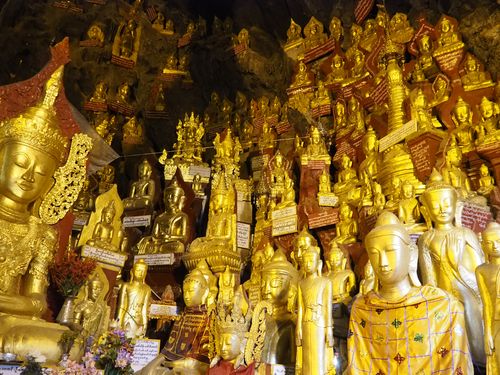
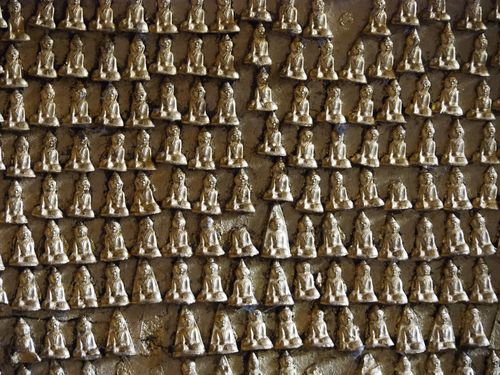
 The Shwe Oo Min Pagoda, located in Pindaya, Myanmar, is a significant Buddhist religious site, known for its natural caves housing thousands of Buddha statues. This pilgrimage destination attracts numerous devotees and visitors who come to admire the impressive collection of golden, brass, and alabaster statues arranged within the limestone caverns. The site provides a peaceful atmosphere conducive to meditation and spiritual reflection. The Shwe Oo Min Pagoda is also the setting for annual religious festivals, bringing together the local community and pilgrims from across the country.

Monument profile
Shwe Oo Min Pagoda
Monument categories: Pagoda, Rock Sanctuary
Monument families: Rock Sanctuary and Monumental Bas-reliefs • Pagoda or stupa
Monument genres: Religious
Cultural heritage: Buddhist
Geographic location: Pindaya • Myanmar
Construction period: 17th century AD
• Links to •
• List of videos about Pindaya on this site •
Pindaya, the cave of the Buddhas • Myanmar
Pindaya, paper making workshop • Myanmar
• References •
Wikipedia EN: Pindaya Caves
Political and Social Motivations Behind the Construction of Shwe Oo Min Pagoda in Pindaya, Myanmar
The Shwe Oo Min Pagoda, located in Pindaya, Myanmar, is a significant religious site with deep historical roots. The construction of this pagoda was driven by a combination of political and social motivations, reflecting the broader dynamics of the region at the time. This article explores the reasons behind the establishment of the Shwe Oo Min Pagoda, the key historical events that shaped its development, and the challenges it faces today in preserving its historical integrity.
Political and Social Motivations
The construction of the Shwe Oo Min Pagoda dates back several centuries, during a period when Buddhism played a crucial role in unifying the political and social landscape of Myanmar. The promotion of Buddhism by local rulers was a strategy to consolidate their power and foster a shared religious identity among the population. Building religious sites like the Shwe Oo Min Pagoda was a way for these leaders to demonstrate their piety, legitimize their rule, and strengthen social cohesion in a region marked by ethnic and cultural diversity.
Socially, the pagoda served as a gathering place for devotees, reinforcing communal bonds through shared religious practices. The thousands of Buddha statues accumulated over the centuries by pilgrims and donors highlight the ongoing importance of this site as a center of devotion and meditation.
Major Historical Events and Their Impact
Over the centuries, the Shwe Oo Min Pagoda has witnessed numerous historical events that have influenced the development of the Pindaya region. These events often mirrored the broader political dynamics of Myanmar, including periods of relative peace and stability under various Buddhist kingdoms, as well as times of turmoil due to foreign invasions and internal conflicts.
For example, the region was influenced by the expansion of Burmese kingdoms, which sought to strengthen their influence by building and maintaining religious sites like the Shwe Oo Min Pagoda. Changes in power and religious reforms within these kingdoms also led to modifications and expansions of the site over time.
In a global context, while Europe was experiencing the Renaissance and East Asia saw the consolidation of empires like the Ming in China, Myanmar was engaged in building its national identity through Buddhism. The development of religious sites like the Shwe Oo Min Pagoda was integral to this strategy, comparable to the construction of cathedrals in Europe as symbols of religious and political power.
Major Transformations of the Monument
Throughout the centuries, the Shwe Oo Min Pagoda has undergone several significant transformations that reflect changes in power and cultural influences. Successive additions of Buddha statues and decorative elements not only enriched the site but also reflected the artistic styles and cultural influences of each period.
Wars, rebellions, and invasions sometimes threatened the integrity of the pagoda, but each reconstruction phase introduced new architectural and artistic elements. These transformations demonstrate the resilience of the site and its continued importance to the faithful.
Cultural Importance and Current State of Conservation
Today, the Shwe Oo Min Pagoda remains a site of great cultural and religious significance for the people of Pindaya and for pilgrims from Myanmar and beyond. However, the site faces significant conservation challenges. The natural erosion of the limestone caves, damage caused by humidity, and the increasing number of visitors pose long-term threats to the preservation of the statues and structures.
Efforts to conserve the site are essential to protect this heritage from modern degradation while respecting its historical integrity. Balancing the preservation of the site with accommodating pilgrims and tourists is crucial to ensuring that the Shwe Oo Min Pagoda continues to be a place of devotion and culture for future generations.
Preservation Challenges
The specific challenges related to the preservation of the Shwe Oo Min Pagoda include the need to stabilize the natural structures of the caves, control humidity to prevent damage to the statues, and regulate the flow of visitors to minimize human impact on the site. Restoration and protection initiatives are essential to ensure the survival of this historic site, which is not only a religious treasure but also a symbol of Myanmar’s cultural identity.
In conclusion, the Shwe Oo Min Pagoda in Pindaya is a prime example of how religious architecture can serve as a pillar for both spiritual devotion and the political and social consolidation of a region. Its preservation is crucial to maintaining the living link between Myanmar’s past and present.
Architectural Innovation and Cultural Synthesis in Shwe Oo Min Pagoda, Pindaya, Myanmar
Shwe Oo Min Pagoda in Pindaya, Myanmar, is a remarkable example of architectural innovation and technological advancement, reflecting the grandeur and religious significance of the period in which it was constructed. This pagoda, integrated into a natural limestone cave system, showcases not only the skill and ingenuity of its builders but also a unique blend of regional artistic traditions and foreign influences that have shaped its aesthetic and cultural legacy.
Technological Advancements and Construction Techniques
The architecture of Shwe Oo Min Pagoda exemplifies the advanced technological capabilities of the time, particularly in its adaptation to the natural environment. The pagoda is built within a complex of limestone caves, which required precise planning and skillful execution to ensure the stability and integrity of both the natural rock formations and the man-made structures. The caves were utilized not only as a natural shelter but also as a sacred space where thousands of Buddha statues could be installed, creating a spiritual atmosphere deeply integrated with the surrounding landscape.
Materials such as gold, brass, and alabaster were used extensively in the creation of the Buddha statues and other religious artifacts housed within the caves. These materials were selected for their durability, aesthetic appeal, and symbolic significance. Gold, in particular, was employed to highlight the divine nature of the Buddha statues, reflecting the wealth and devotion of the donors who contributed to the construction and embellishment of the pagoda.
The techniques used in the creation of these statues involved intricate carving and gilding processes, which have allowed the sculptures to withstand the test of time. The artisans employed advanced methods of sculpture and metalworking that were prevalent in the region, ensuring that the statues remained intact and retained their brilliance for centuries.
Architectural Characteristics and Cultural Synthesis
The architectural characteristics of Shwe Oo Min Pagoda reflect a unique synthesis of regional artistic traditions and foreign influences, making it a distinctive monument in Myanmar’s cultural landscape. The decorative elements found within the pagoda, including the diverse representations of Buddha and floral motifs, exhibit a fusion of styles that draw from both indigenous and external sources.
The statues of Buddha within the pagoda vary significantly in size and design, ranging from small, simple effigies to large, elaborately adorned sculptures. This diversity indicates the involvement of various patrons over the centuries, each contributing to the site according to their means and artistic preferences. The presence of Indian and Chinese artistic influences, particularly in the use of precious stones and intricate carvings, further underscores the cultural exchanges that have shaped the region.
One of the most notable architectural features of the Shwe Oo Min Pagoda is the central hall within the largest cave, where the most significant Buddha statues are displayed. This hall is characterized by its high ceiling and richly decorated walls, creating an awe-inspiring environment for meditation and worship. The spatial arrangement of the statues and the overall layout of the cave complex were designed to facilitate a spiritual journey for pilgrims, guiding them through a path of contemplation and devotion.
Notable Structure and Layout
The layout of Shwe Oo Min Pagoda is particularly noteworthy for its harmonious integration with the natural cave system. The caves form a labyrinthine network of chambers and corridors, each filled with Buddha statues and religious icons, creating a serene and contemplative atmosphere. The central chamber, with its towering Buddha statues, serves as the focal point of the site, drawing pilgrims deeper into the spiritual experience.
An interesting anecdote about the pagoda is the continuous addition of statues over the centuries, resulting in a collection that now numbers in the thousands. This accumulation of religious artifacts illustrates the enduring significance of the site as a place of worship and the deep devotion of the Buddhist community.
International Recognition and UNESCO World Heritage Status
The unique architectural and cultural significance of Shwe Oo Min Pagoda makes it a strong candidate for international recognition, including potential nomination as a UNESCO World Heritage site. Such recognition would not only underscore the historical and artistic value of the pagoda but also provide crucial support for its conservation.
If granted UNESCO status, Shwe Oo Min Pagoda would benefit from increased awareness and funding for preservation efforts, ensuring that its statues, murals, and architectural features are protected from environmental degradation and the impacts of tourism. This recognition would also enhance the global standing of the pagoda, attracting scholars, pilgrims, and tourists from around the world, while promoting sustainable practices that protect the site’s integrity.
Conclusion
Shwe Oo Min Pagoda in Pindaya is a powerful testament to the technological innovation and cultural synthesis that characterized the region during its construction. Its architecture reflects both the advanced skills of its builders and the rich tapestry of artistic influences that have shaped its design. The preservation of this monument is crucial to maintaining its cultural and spiritual legacy, ensuring that it continues to inspire and serve as a place of devotion for future generations.