

 Français (France)
  Nederlands (nl-NL)
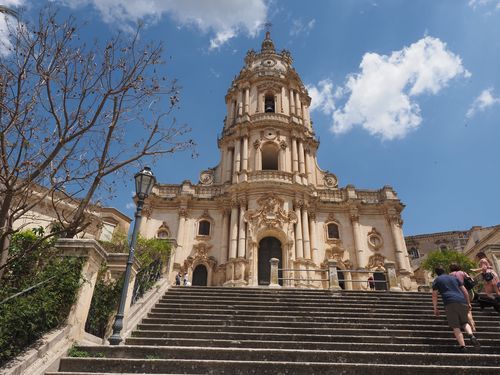
 The Cathedral of San Giorgio is a landmark located in Modica, Sicily, Italy. It exemplifies Sicilian Baroque architecture and reflects the region’s rich religious heritage. Built in the 18th century, the cathedral is notable for its grand façade and harmonious design. As a Christian place of worship, it remains a key cultural symbol of Modica, attracting visitors with its striking aesthetic and spiritual significance.
Monument profile
San Giorgio Cathedral
Monument category: Cathedral
Monument family: Church, cathedral, basilica, chapel
Monument genre: Religious
Cultural heritage: Christian
Geographic location: Modica • Sicily • Italy
Construction period: 18th century AD
This monument in Modica is inscribed on the UNESCO World Heritage List since 2002 and is part of the serial property "Late Baroque Towns of the Val di Noto (South-Eastern Sicily)".See the UNESCO monuments featured on this site
• Links to •
• List of videos about Modica on this site •
Modica, two cathedrals, one unique heritage • Sicily
• Sources •
UNESCO World Heritage Centre – Val di Noto Documentation Historical Archives of Modica – Reconstruction Records (18th Century) Studies on Sicilian Baroque Architecture (University of Catania) Reports on Heritage Conservation from the Sicilian Regional Government
Cathedral of San Giorgio in Modica: A Testament to Faith, Power, and Cultural Heritage
Political and Social Motivations Behind Its Construction
The Cathedral of San Giorgio, located in Modica, Sicily, stands as an iconic symbol of Baroque architecture and religious heritage. Its origins trace back to medieval times, but the current structure primarily reflects the reconstruction efforts following the catastrophic 1693 earthquake, which devastated much of southeastern Sicily, including Modica.
The motivations behind rebuilding the cathedral were not solely religious. The project served as an assertion of political power, social resilience, and the dominance of the Catholic Church in a region marked by a complex history of foreign rule. At the time, Sicily was under Spanish influence within the Kingdom of the Two Sicilies, and grand architectural projects like San Giorgio were instrumental in reinforcing the authority of both secular and ecclesiastical powers. The cathedral was designed to project a sense of divine protection, civic pride, and cultural identity amidst the region’s recovery from natural disaster.
Historical Events That Shaped Its Development
The 1693 Earthquake and Its Aftermath
The 1693 earthquake was a defining event for southeastern Sicily. It caused widespread destruction, leveling cities and killing thousands. The reconstruction of Modica, including the Cathedral of San Giorgio, became part of a broader urban renewal effort across the Val di Noto. This period marked the rise of Sicilian Baroque, a distinctive architectural style characterized by dramatic facades, intricate ornamentation, and dynamic spatial compositions.
Architectural Leadership
The reconstruction of the cathedral began in the early 18th century, under the guidance of renowned architect Rosario Gagliardi, whose visionary designs helped shape many of the Baroque masterpieces in the region. Gagliardi’s work on San Giorgio incorporated innovative structural techniques to enhance the building’s resilience against future earthquakes, while also embracing the grandeur and theatricality typical of Baroque aesthetics.
Sociopolitical Context
Globally, the 18th century was an era of monumental architecture reflecting the power of absolute monarchies and the Catholic Church. In France, the grandeur of Versailles symbolized royal dominance; in Russia, Saint Petersburg showcased imperial ambition. Similarly, in Sicily, cathedrals like San Giorgio served as potent symbols of both spiritual authority and secular governance, reflecting the intertwined nature of religion and politics during the post-Reformation period.
Major Transformations Over the Centuries
The Cathedral of San Giorgio has undergone numerous transformations that mirror the shifting tides of political power and cultural influences in Sicily:
- Medieval Foundations: The original church, predating the Baroque reconstruction, reflected Norman and Gothic influences from earlier dominations.
- Baroque Reconstruction (1702 onwards): The post-1693 rebuild introduced a monumental Baroque facade, a soaring central nave, and an impressive dome, redefining the city’s skyline.
- 19th-20th Century Restorations: Periodic restoration efforts addressed structural damage from subsequent earthquakes, with modifications that blended preservation with modernization.
- UNESCO Recognition (2002): As part of the “Late Baroque Towns of the Val di Noto”, San Giorgio’s inclusion in the UNESCO World Heritage list has further elevated its cultural significance and attracted global attention.
Cultural Significance and Current State of Conservation
Today, the Cathedral of San Giorgio is not only a place of worship but also a cultural landmark and a major tourist attraction. It symbolizes the artistic and historical identity of Modica and holds a central place in the community’s religious life, hosting annual processions and festivals.
Current Conservation Status
The cathedral is in a relatively good state of preservation, thanks to consistent maintenance and restoration initiatives. Key elements of the structure, such as the façade, dome, and interior frescoes, have been carefully restored to maintain their original splendor. However, the building remains vulnerable to environmental and human-induced threats.
Challenges in Preserving Its Historical Integrity
Despite ongoing conservation efforts, the Cathedral of San Giorgio faces several modern preservation challenges:
- Seismic Activity: Sicily’s seismic risk requires continuous structural monitoring and the implementation of advanced anti-seismic technologies to protect the cathedral.
- Climate Change: Variations in temperature, humidity, and extreme weather events contribute to the deterioration of stone and frescoes, accelerating the erosion of historical materials.
- Tourism Pressure: While tourism supports the local economy, the influx of visitors can lead to physical wear on the building, especially on fragile decorative elements.
- Funding and Resources: Ensuring sustainable funding for conservation projects is an ongoing challenge, particularly in balancing public investment with private sponsorship.
Conclusion
The Cathedral of San Giorgio in Modica stands as a testament to the enduring interplay between faith, art, and power. Its history reflects the resilience of a community rebuilding after tragedy, the influence of political regimes, and the evolution of architectural styles shaped by local and global currents. As a UNESCO World Heritage site, the cathedral enjoys international recognition, but its preservation demands vigilant efforts to safeguard its legacy for future generations. Its story is not just one of stone and design but of the cultural spirit that continues to thrive within its walls.
The Architectural Splendor of the Cathedral of San Giorgio in Modica: Innovation, Heritage, and Global Recognition
Technological Advancements and Architectural Innovation
The Cathedral of San Giorgio, located in Modica, Sicily, is a striking example of Sicilian Baroque architecture, showcasing both technological ingenuity and artistic excellence from the 18th century. Rebuilt after the catastrophic 1693 earthquake, which devastated southeastern Sicily, the cathedral reflects the innovative spirit of its time, both in terms of construction techniques and design aesthetics.
The reconstruction was led by the renowned architect Rosario Gagliardi, whose vision blended traditional Sicilian craftsmanship with advanced engineering concepts. The architectural plan of the cathedral demonstrates a sophisticated understanding of structural dynamics, particularly in seismic regions. Gagliardi’s approach to balancing monumental beauty with structural resilience exemplifies the technological progress achieved during the post-earthquake reconstruction era in Sicily.
Materials and Construction Techniques Reflecting the Grandeur of the Era
The construction of the Cathedral of San Giorgio utilized local limestone, a material abundant in the region, known for its durability and malleability, allowing intricate carvings and detailed façades. This stone reflects sunlight beautifully, giving the cathedral a radiant appearance that changes throughout the day, enhancing its visual impact.
Key Construction Techniques:
- Seismic Reinforcement: Given the seismic vulnerability of the region, the cathedral was designed with enhanced structural stability, incorporating thick load-bearing walls, cross vaults, and reinforced arches to distribute seismic forces effectively.
- Elevated Façade Design: The façade, with its tiered structure, was crafted to create a sense of vertical ascent, leading the eye upward, symbolizing a connection between earth and heaven—a common Baroque motif.
- Monumental Staircase: The grand staircase of over 250 steps not only serves as a dramatic approach to the cathedral but also functions as a foundational support system, stabilizing the structure on Modica’s steep terrain.
- Domed Architecture: The central dome, a hallmark of Baroque architecture, is both an aesthetic and engineering achievement, with its weight carefully distributed through supporting columns and arches.
A Unique Blend of Regional Traditions and Foreign Influences
The architectural style of the Cathedral of San Giorgio is a fusion of local Sicilian traditions and international Baroque influences, making it a unique cultural artifact.
- Sicilian Craftsmanship: The detailed stone carvings, ornate altars, and decorative motifs reflect the skills of local artisans, rooted in centuries-old traditions.
- Spanish and Norman Influences: Elements of Spanish Baroque can be observed in the dramatic curves and elaborate decorations, a legacy of Spain’s historical presence in Sicily. Additionally, the robust structure and strategic positioning recall Norman architectural sensibilities.
- Roman Baroque Inspiration: The grandeur of the façade and dynamic spatial compositions are influenced by the works of Roman Baroque masters like Gian Lorenzo Bernini and Francesco Borromini, though adapted to fit the Sicilian context.
This eclectic mix not only defines the cathedral’s aesthetic identity but also illustrates Sicily’s historical role as a crossroads of civilizations.
Notable Architectural Features and Structural Layout
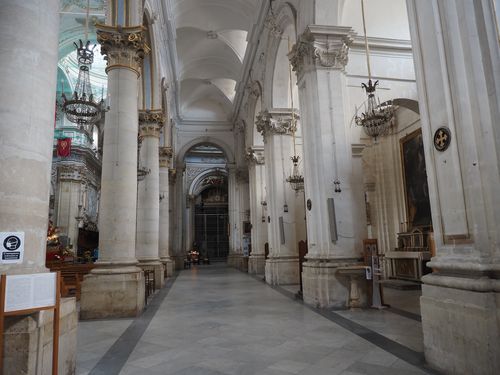
The Cathedral of San Giorgio follows a Latin cross plan, typical of Baroque churches, with a long nave, side aisles, and a prominent transept.
Architectural Highlights:
- The Façade: Composed of five vertical tiers, the façade is adorned with Corinthian columns, sculpted figures, and elaborate stonework, creating an impression of grandeur and movement.
- The Dome: Rising majestically above the transept, the dome reaches a height of approximately 36 meters, making it a defining feature of Modica’s skyline.
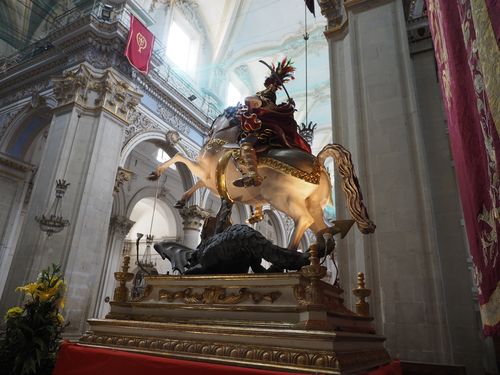
- Interior Design: The interior features richly decorated chapels, intricate stucco work, and vibrant frescoes, harmonizing with the overall Baroque aesthetic.
Anecdotes and Statistical Highlights
The cathedral’s 250-step staircase symbolizes both a physical and spiritual ascent.
Despite being rebuilt after the 1693 earthquake, evidence suggests that elements from the earlier medieval structure were integrated into the Baroque design.
The reconstruction took several decades, reflecting both the complexity of the project and the evolving artistic influences over time.
Contribution to International Recognition and UNESCO World Heritage Status
The Cathedral of San Giorgio is part of the “Late Baroque Towns of the Val di Noto”, inscribed as a UNESCO World Heritage Site in 2002. This recognition highlights the cathedral’s exceptional value as part of a collective cultural landscape showcasing the pinnacle of Sicilian Baroque architecture.
Impact of UNESCO Recognition
- Conservation Efforts: Inclusion in the UNESCO list has facilitated funding and technical support for preservation projects, ensuring the cathedral’s structural integrity and aesthetic preservation.
- Global Visibility: The cathedral has gained international recognition, attracting scholars, architects, and tourists interested in Baroque art and architecture.
- Cultural Exchange: The site serves as a focal point for cultural events, academic conferences, and exhibitions, promoting dialogue on heritage conservation and Baroque studies.
Challenges in Preserving Historical Integrity
Despite its celebrated status, the Cathedral of San Giorgio faces several modern preservation challenges:
- Seismic Vulnerability: Ongoing seismic activity in Sicily necessitates continuous monitoring and seismic retrofitting to protect the structure from potential earthquakes.
- Environmental Degradation: Climate change, air pollution, and natural weathering pose threats to the limestone façade and interior artworks, requiring advanced conservation techniques.
- Tourism Management: While tourism supports the local economy, excessive foot traffic can accelerate wear and tear, highlighting the need for sustainable visitor management strategies.
- Financial Constraints: Securing consistent funding for large-scale restoration projects remains a challenge, particularly in balancing public resources with private sponsorships.
Conclusion
The Cathedral of San Giorgio in Modica is more than an architectural masterpiece; it is a testament to Sicily’s resilience, creativity, and cultural fusion. Its innovative design, blending traditional Sicilian craftsmanship with global Baroque influences, reflects the dynamic history of the region. Today, as part of the UNESCO World Heritage landscape, the cathedral continues to inspire awe and admiration, symbolizing the enduring legacy of Sicilian Baroque and the universal value of cultural heritage.