

 Français (France)
  Nederlands (nl-NL)
 The Elephant Stables of Hampi form one of the most distinctive structures within the extensive monumental complex of Hampi in the state of Karnataka, southern India. This elongated building is characterized by a sequence of domed chambers and arched openings that reflect the artistic richness of the former capital of the Vijayanagara Empire. The structure was designed to house the royal elephants, animals that played an important role in ceremonial life and military organization at the royal court. Its orderly layout and refined architectural details illustrate the interaction of several architectural traditions in medieval India. Today, the Elephant Stables remain among the most recognizable monuments of the Hampi site.

Hampi • Elephant Stables
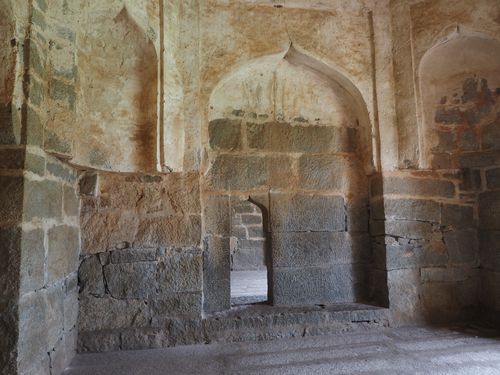
Hampi • Elephant Stables

Hampi • Elephant Stables
Monument profile
Elephant Stables
Monument category: Stables
Monument family: Palace and Annexes
Monument genre: Residential
Cultural heritage: Hindu
Geographic location: Hampi • Karnataka • India
Construction period: 15th century AD
This monument in Hampi is inscribed on the UNESCO World Heritage List since 1986 and is part of the serial property "Group of Monuments at Hampi".See the UNESCO monuments featured on this site
• Links to •
• Dynasties that contributed to the construction of the monument •

• List of videos about Hampi on this site •
Hampi, capital of the Vijayanagara empire • Karnataka, India
• References •
UNESCO: Group of Monuments at Hampi
History of the Elephant Stables of Hampi
Political and Social Context of the Construction
The Elephant Stables of Hampi were constructed during the height of the Vijayanagara Empire, one of the most powerful political entities in South India between the fourteenth and sixteenth centuries. At that time, Hampi—then known as Vijayanagara—served as the imperial capital and one of the largest urban centers in the world. The construction of specialized buildings for the management of royal elephants formed part of the broader administrative and ceremonial infrastructure required to sustain an imperial court and its military apparatus.
Elephants held a central position in the political and symbolic culture of South Asian courts. In warfare they functioned as formidable instruments of military power, capable of breaking enemy formations and projecting psychological dominance on the battlefield. In ceremonial contexts they represented royal authority, prestige, and prosperity. The maintenance of large elephant corps required carefully organized facilities for their housing, training, and care. The Elephant Stables thus responded to both practical and symbolic needs within the imperial system.
The Vijayanagara rulers, particularly during the fifteenth and early sixteenth centuries, pursued an ambitious program of urban development within their capital. Monumental architecture played a crucial role in demonstrating imperial power and administrative sophistication. Royal complexes, ceremonial halls, water systems, and military facilities were integrated into a planned landscape that reflected the authority and organizational capacity of the state.
At the time the stables were built, the empire faced constant rivalry with neighboring Islamic sultanates in the Deccan, including the Bahmani state and its successor polities. These geopolitical tensions shaped the priorities of Vijayanagara’s rulers, who invested heavily in military infrastructure and the maintenance of large armies. War elephants formed an important component of this military system. The construction of permanent facilities for them indicates both the scale of the imperial army and the logistical sophistication required to sustain it.
The political ambitions of Vijayanagara’s rulers extended beyond military power. The empire also sought to position itself as a defender of Hindu political traditions in southern India. The monumental development of the capital, including structures associated with royal administration, contributed to the projection of imperial legitimacy and cultural authority.
Major Historical Events Affecting the Site
During the fifteenth and early sixteenth centuries, Vijayanagara reached the peak of its power and prosperity. Contemporary accounts by travelers from Persia, Portugal, and other regions describe a vast and thriving metropolis filled with markets, temples, and royal buildings. Within this context, the Elephant Stables formed part of the extensive infrastructure supporting the court and the military establishment.
The stability of the empire began to weaken in the mid-sixteenth century due to shifting alliances and rivalries among the Deccan sultanates. The decisive turning point came in 1565 with the Battle of Talikota, where a coalition of Deccan states defeated the army of Vijayanagara. This defeat had profound consequences for the capital.
Following the battle, the victorious forces advanced toward the city and subjected it to widespread destruction and plunder. Many of the monumental structures of Vijayanagara were damaged or abandoned during this period of violence. The royal court relocated to other centers, effectively ending the city’s role as an imperial capital.
The Elephant Stables appear to have survived this destruction better than many other structures in the royal complex. Their location and function may have contributed to their relative preservation. Nevertheless, the collapse of the imperial administration meant that the building lost its original purpose. Without the royal elephant corps and the institutional framework that maintained it, the stables ceased to function as an operational facility.
In the centuries following the fall of Vijayanagara, the once-thriving capital gradually transformed into a landscape of ruins. While nearby temple complexes remained active pilgrimage centers, many structures within the royal enclosure were left unused and slowly deteriorated. The Elephant Stables, however, remained standing and retained much of their structural integrity.
Global Context of Monumental Construction
The construction of the Elephant Stables took place during a period of significant political and cultural transformation across the world. The fifteenth and sixteenth centuries witnessed the rise of powerful centralized states that expressed their authority through monumental urban projects.
In Europe, monarchies such as those of Spain, France, and England strengthened their institutions and invested in palaces, fortifications, and administrative centers that symbolized royal authority. The Ottoman Empire developed Istanbul into a major imperial capital following its conquest in the mid-fifteenth century, constructing mosques, palaces, and civic infrastructure on a grand scale.
In East Asia, the Ming dynasty in China oversaw extensive architectural developments, including the construction and expansion of imperial palaces and urban complexes in Beijing. These projects reflected the administrative organization and ceremonial needs of large centralized states.
The Vijayanagara Empire participated in this broader global pattern of monumental capital building. The creation of a carefully structured royal center at Hampi demonstrates how architecture was used to reinforce political authority and to organize the spatial functions of imperial governance. The Elephant Stables form part of this wider urban vision, illustrating how even facilities associated with military logistics were incorporated into monumental architectural planning.
Transformations and Changing Uses
After the destruction of Vijayanagara in the sixteenth century, the Elephant Stables entered a long period of abandonment. Without the administrative structures that had supported the royal court and its elephant corps, the building lost its functional role. Over time, natural processes such as weathering and vegetation growth affected many of the surrounding structures.
Despite this decline, the relative strength of the building’s construction helped preserve it. Unlike wooden structures or more fragile architectural elements, the stone construction of the stables allowed them to survive with comparatively limited damage.
During the nineteenth century, the ruins of Hampi began attracting the attention of colonial administrators, scholars, and early archaeologists. These observers recognized the historical significance of the former imperial capital and documented many of its monuments. The Elephant Stables were identified as one of the best-preserved buildings within the royal enclosure.
In the twentieth century, archaeological authorities initiated systematic conservation efforts aimed at stabilizing and preserving the monuments of Hampi. These initiatives included clearing vegetation, reinforcing structural elements, and conducting historical studies to better understand the organization of the former capital.
As archaeological research progressed, the Elephant Stables became an important reference point for understanding the military and administrative infrastructure of the Vijayanagara Empire. Their preservation allowed historians and archaeologists to reconstruct aspects of court life and the management of royal animals.
Cultural Significance in the Present Day
Today, the Elephant Stables stand as one of the most recognizable monuments within the archaeological site of Hampi. They contribute significantly to the interpretation of the former royal complex and provide insight into the organizational structure of the Vijayanagara court.
The monument also plays a role in shaping the historical identity of the region. For many visitors, the ruins of Hampi evoke the memory of a powerful and sophisticated South Indian empire. The Elephant Stables serve as a visible reminder of the scale and complexity of that imperial system.
Tourism has become an important dimension of the site’s contemporary life. Visitors from India and abroad come to explore the remains of the ancient capital, and the Elephant Stables are often among the most photographed structures. Their distinctive form and relatively intact condition make them a focal point for understanding the layout of the royal enclosure.
The monument does not currently serve a religious function, unlike many temples in the region. However, it remains closely associated with the cultural heritage of Karnataka and with the broader historical narrative of medieval South India.
Conservation Status and Modern Challenges
The archaeological site of Hampi has been recognized internationally for its exceptional historical and architectural value. It has been designated as a UNESCO World Heritage site, a status that reflects the importance of the remains of the Vijayanagara capital.
This recognition has led to increased attention toward the preservation of the site. Conservation efforts are managed by heritage authorities responsible for maintaining the stability of the monuments and protecting them from environmental damage.
Despite these efforts, several challenges threaten the long-term preservation of the Elephant Stables and other structures at Hampi. Environmental factors such as seasonal rainfall, temperature variations, and erosion affect the condition of stone structures. Vegetation growth can also weaken masonry over time.
Tourism presents both opportunities and challenges. While visitor interest helps promote awareness and funding for preservation, large numbers of visitors can contribute to wear and structural stress if not carefully managed.
Urban development in surrounding areas also poses potential risks to the historical landscape. Heritage management policies seek to balance the needs of local communities with the preservation of the archaeological environment.
Through ongoing conservation work and international recognition, the Elephant Stables continue to serve as a vital testimony to the political organization, military culture, and architectural achievements of the Vijayanagara Empire. Their survival provides an important window into the functioning of one of the most influential states in the history of South India.
Architecture of the Elephant Stables of Hampi
Architectural Context within the Royal Enclosure
The Elephant Stables of Hampi form one of the most distinctive structures within the royal enclosure of the former Vijayanagara capital. Built during the height of the Vijayanagara Empire, the building reflects the architectural ambitions of a court that combined military organization, ceremonial display, and urban planning within a carefully structured landscape. Although its primary function was practical—housing royal elephants used in warfare and courtly processions—the structure demonstrates a level of architectural refinement rarely associated with service buildings.
The monument illustrates how Vijayanagara architects integrated functionality with monumental design. The stables were constructed within a larger royal district that included administrative halls, audience pavilions, defensive walls, and ceremonial platforms. Their placement within this complex indicates that the management of royal elephants formed an integral part of the imperial infrastructure. Rather than isolating utilitarian facilities, the planners incorporated them into the architectural hierarchy of the royal center.
The resulting building therefore reflects both the practical needs of animal management and the symbolic language of imperial architecture.
Spatial Organization and Structural Layout
The Elephant Stables consist of a long rectangular building divided into a sequence of individual chambers aligned along a single façade. The structure contains eleven large compartments arranged in a continuous row, each designed to accommodate a single elephant. This modular layout allowed the animals to be housed separately while remaining within a unified architectural structure.
The façade is marked by eleven large arched entrances corresponding to the interior chambers. These arches provided sufficient height and width for elephants to enter and exit comfortably. Their regular spacing creates a rhythmic visual pattern that defines the external appearance of the building.
A central pavilion rises above the rest of the structure and functions as the architectural focal point of the building. This elevated section reinforces the symmetry of the composition and provides a hierarchical element within the otherwise repetitive sequence of chambers. The central unit may have served as a supervisory space for the keepers responsible for the royal elephants or as a ceremonial element emphasizing the importance of the structure.
Internally, each chamber is spacious and relatively austere, reflecting its utilitarian function. The chambers are connected through thick masonry walls designed to support the weight of the superstructure while also isolating each animal within its own enclosure.
Domes, Arches, and Roof Structures
One of the most striking architectural features of the Elephant Stables is the variety of domes covering the chambers. Each of the eleven compartments is crowned by a distinct dome or vaulted roof, creating a varied yet harmonious skyline above the building.
The central chamber is topped by a particularly prominent dome rising above a tower-like pavilion. On either side of this central unit, the domes display different forms, including ribbed domes, octagonal domes, and fluted dome structures. This diversity suggests deliberate experimentation with architectural forms rather than simple repetition.
The arches that define the entrances of the chambers exhibit a slightly pointed profile reminiscent of Indo-Islamic architectural traditions. These arches distribute structural loads efficiently while also creating wide openings suitable for the movement of large animals.
The combination of domes and arches demonstrates a sophisticated understanding of structural mechanics. The architects employed curved forms to distribute weight across the masonry walls while maintaining interior volumes capable of accommodating elephants.
Materials and Construction Techniques
The Elephant Stables were built primarily using locally available stone, particularly granite, which is abundant in the rocky landscape surrounding Hampi. Granite was widely used in Vijayanagara architecture because of its durability and resistance to weathering. The hardness of the stone also allowed buildings to survive centuries of exposure with relatively limited structural deterioration.
The walls are composed of large stone blocks carefully fitted together to create thick load-bearing structures. These massive walls provided the stability required to support the domes above the chambers while also ensuring the durability of the building.
In several areas, finer stone was used for decorative elements and finishing details. This combination of heavy structural granite and more refined stonework allowed builders to achieve both strength and visual clarity.
The construction of the domes required specialized knowledge of transitional architectural forms. Builders employed methods that allowed the transition from square ground plans to circular dome bases, often using intermediate geometric forms such as octagons. This technique reflects advanced masonry skills and an understanding of structural geometry.
Mortar and stone bonding techniques were used to stabilize the masonry while maintaining flexibility in the structure. Such construction methods helped the building withstand both environmental pressures and the long passage of time.
Architectural Innovations and Functional Design
Although the building served a practical purpose, its architecture incorporates several features designed to improve the conditions within the stables. The large entrances allow significant airflow through the chambers, an essential factor in the hot climate of southern India.
Ventilation was further enhanced by the height of the interior spaces. Warm air naturally rises toward the upper sections of the domes, allowing cooler air to circulate near ground level where the animals were housed. This passive ventilation system reflects a thoughtful adaptation to local climatic conditions.
The thickness of the stone walls also contributed to thermal regulation. Massive masonry absorbs heat slowly during the day and releases it gradually at night, moderating temperature fluctuations inside the chambers.
Another notable aspect of the design is the modular organization of the chambers. By dividing the structure into separate compartments, the builders created a system that allowed for controlled management of the elephants. Each animal could be housed individually while still remaining within the same architectural unit.
The building therefore demonstrates a sophisticated integration of architectural design with practical requirements related to animal care, security, and climate control.
Artistic and Cultural Influences
The Elephant Stables reflect a remarkable synthesis of architectural traditions. While the Vijayanagara Empire is often associated with Dravidian architectural forms found in temple construction, the stables display clear influences from Indo-Islamic architectural traditions.
The pointed arches and domed structures resemble elements found in the architecture of the Deccan sultanates. These stylistic features indicate cultural and artistic exchanges between neighboring political powers. Even during periods of military rivalry, artisans and architectural ideas circulated across regional boundaries.
At the same time, the overall organization and decorative restraint of the structure remain consistent with broader Vijayanagara architectural practices. The building avoids excessive ornamentation and instead emphasizes balanced proportions and structural clarity.
The mixture of architectural styles reflects the cosmopolitan environment of the Vijayanagara court, where diverse cultural influences interacted within a complex imperial setting.
Decorative Elements and Architectural Detailing
Despite its utilitarian purpose, the Elephant Stables contain several refined architectural details. The arches framing the entrances are accentuated by subtle moldings that emphasize their curvature and structural role.
Horizontal cornices run along portions of the façade, visually dividing the structure into distinct layers. These elements help reduce the visual mass of the building and create a sense of rhythm across its long elevation.
The domes themselves provide the most prominent decorative feature. Their varied shapes introduce visual complexity while maintaining overall symmetry. Some domes display ribbed patterns or stepped profiles that enhance their sculptural character.
The exterior surfaces remain largely unadorned compared with temple architecture of the same period. This restraint reflects the functional nature of the building while still maintaining an architectural dignity appropriate to a structure associated with the royal court.
Dimensions and Notable Architectural Features
The Elephant Stables extend for roughly ninety meters in length, making them one of the largest surviving structures within the royal enclosure. Each chamber is large enough to accommodate a fully grown elephant, indicating the considerable scale of the interior spaces.
The height of the domes varies across the structure, creating a dynamic skyline that distinguishes the building from the more uniform rooflines of other service buildings in the complex. The central pavilion rises above the surrounding chambers and acts as the visual anchor of the composition.
The repetition of eleven identical entrance arches creates a strong sense of architectural rhythm. This repetition reinforces the modular function of the structure while also producing a monumental façade.
Historical accounts suggest that royal elephants housed in these stables were used during state ceremonies and military campaigns. The architectural quality of the building reflects the prestige associated with these animals within the imperial system.
International Recognition and Conservation Challenges
The Elephant Stables form part of the larger archaeological complex of Hampi, which is recognized as one of the most significant historical sites in India. The architecture of the monument contributes to the global importance of the site as a testament to the urban planning and architectural achievements of the Vijayanagara Empire.
Today the structure benefits from protective measures associated with the preservation of the Hampi heritage landscape. Conservation programs focus on maintaining the structural stability of the building while minimizing the impact of environmental degradation.
Granite construction has contributed to the monument’s remarkable survival, yet long-term preservation still faces challenges. Weathering, biological growth, and visitor pressure all pose potential risks to the structure.
Careful management of the site is therefore required to ensure that the building remains stable while continuing to be accessible to visitors. The Elephant Stables stand today not only as a rare surviving example of Vijayanagara civil architecture but also as an illustration of how functional buildings could be integrated into monumental imperial landscapes.