

 Français (France)
  Nederlands (nl-NL)
 The Panch Mahal is a structure located in Fatehpur Sikri, in the Indian state of Uttar Pradesh. This building is characterized by its five-tiered design supported by intricately carved columns, giving it an airy and open appearance. Designed as a space for leisure and entertainment, it features a layout that promotes natural ventilation. The Panch Mahal stands as a fine example of Mughal architecture, reflecting the sophistication of residential spaces during that period.
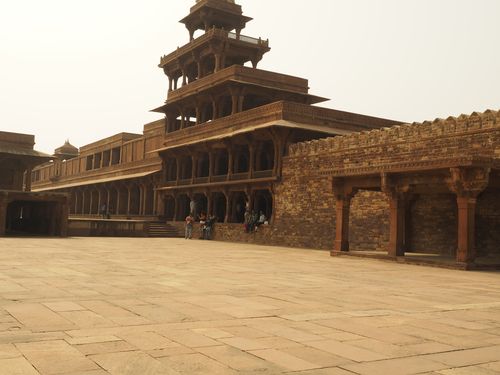
Fatehpur Sikri • Panch Mahal
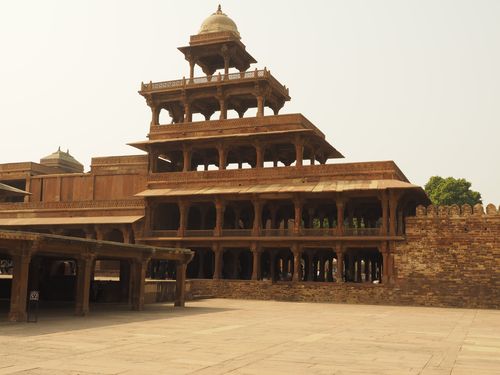
Fatehpur Sikri • Panch Mahal
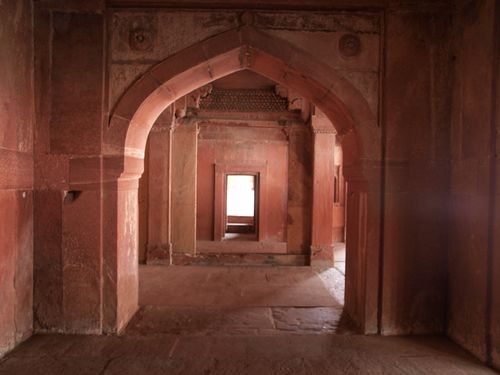
Fatehpur Sikri • Panch Mahal
Monument profile
Panch Mahal
Monument category: Palace
Monument family: Palace and Annexes
Monument genre: Residential
Cultural heritage: Hindu
Geographic location: Fatehpur Sikri • Uttar Pradesh • India
Construction period: 16th century AD
This monument in Fatehpur Sikri is inscribed on the UNESCO World Heritage List since 1986 and is part of the serial property "Fatehpur Sikri".See the UNESCO monuments featured on this site
• Links to •
• Dynasties that contributed to the construction of the monument •

• List of videos about Fatehpur Sikri on this site •
Fatehpur Sikri, the ephemeral capital • Uttar Pradesh, India
• References •
UNESCO: Fatehpur Sikri
Panch Mahal in Fatehpur Sikri: Political Motives, Historical Transformations, and Modern Conservation Challenges
The Panch Mahal, located within the grand complex of Fatehpur Sikri in Uttar Pradesh, India, is an architectural marvel that reflects the grandeur of the Mughal Empire under Emperor Akbar. Constructed in the late 16th century, the monument served not only as a space for leisure and cultural enrichment but also as a symbol of Akbar's political vision of inclusivity and governance. Over the centuries, the Panch Mahal has witnessed significant transformations, reflecting the changing political landscape and cultural influences that shaped the region. This article explores the political and social motivations behind its construction, its historical importance, its global context, and the contemporary challenges facing its preservation.
Political and Social Motivations Behind Its Construction
The construction of Panch Mahal, dating back to the 1570s, was driven by Emperor Akbar's desire to establish Fatehpur Sikri as the capital of the Mughal Empire. The city was built to commemorate the prophecy of Sufi saint Sheikh Salim Chishti, whose blessing had led to the birth of Akbar's heir, Prince Salim (later Emperor Jahangir). The monument was strategically positioned within the imperial complex to serve as a place of relaxation and social interaction for the royal court, especially the women of the harem.
The political motivation behind the construction of Panch Mahal lay in Akbar’s broader vision of cultural and religious harmony. The open, airy design of the structure, influenced by both Hindu and Islamic architectural elements, was symbolic of the emperor's inclusive policies, which aimed to bridge differences between diverse communities within his empire. The social purpose of the Panch Mahal was to create an environment conducive to leisure, discussion, and artistic expression, reinforcing the image of Fatehpur Sikri as a progressive and culturally vibrant capital.
Major Historical Events and Their Influence on the Region
Despite its initial grandeur, Fatehpur Sikri's tenure as the Mughal capital was short-lived. By 1585, the city was abandoned due to water scarcity and strategic military concerns, leading to the relocation of the capital to Lahore. However, during its brief period as the imperial seat, Fatehpur Sikri played a crucial role in shaping Mughal administrative policies and fostering cultural exchanges.
Key historical events associated with the Panch Mahal and the broader Fatehpur Sikri complex include:
Philosophical and Religious Discourses: The complex hosted debates among scholars of different religions, promoting Akbar’s policy of Sulh-i-Kul (universal tolerance).
Political Consolidation: The administrative policies and reforms initiated in Fatehpur Sikri set the foundation for a centralized Mughal governance system.
Cultural Flourishing: The city attracted artists, poets, and architects from across the empire, contributing to the development of a distinct Mughal aesthetic that influenced future architectural projects.
Even after its abandonment, Fatehpur Sikri remained a source of inspiration for subsequent rulers and served as an important pilgrimage site due to the tomb of Sheikh Salim Chishti.
Global Context and Comparison with Other Regions
The period of Panch Mahal's construction coincided with significant developments in other parts of the world. In Europe, the Renaissance was at its peak, characterized by a renewed interest in classical art, science, and exploration. The Ottoman Empire, under Sultan Suleiman the Magnificent, was experiencing its own cultural renaissance, while China, under the Ming dynasty, was consolidating its maritime and trade dominance.
Compared to the grand palaces of Renaissance Europe, which focused on symmetry and enclosed spaces, the Panch Mahal stands out for its open, multi-tiered design, which prioritizes airflow and a connection with nature. Unlike the fortified castles of Europe or the enclosed courts of the Ottoman Empire, the Panch Mahal's transparent structure reflects Akbar's vision of an open and inclusive governance model.
Architectural Transformations Over the Centuries
Over the centuries, the Panch Mahal has undergone various transformations, reflecting changes in political power and cultural influences. The structure itself has remained largely intact, thanks to its robust construction using locally sourced red sandstone. However, time, environmental factors, and human activities have led to gradual erosion and wear.
During the British colonial era, Fatehpur Sikri was rediscovered as a heritage site, leading to initial restoration efforts aimed at preserving the monument for academic and tourism purposes. The architectural elements that have seen significant changes include:
Restoration of Carved Columns: Efforts have been made to restore the intricate designs on the 176 sandstone columns supporting the structure.
Preservation of Open Spaces: Conservation initiatives have focused on maintaining the unique tiered layout and ensuring stability against environmental degradation.
Tourism Infrastructure: Paths and visitor-friendly amenities have been introduced to accommodate increasing footfall while maintaining the site's integrity.
These restoration efforts have helped preserve the original essence of the Panch Mahal while adapting it to contemporary needs.
Cultural Significance and Current Conservation Status
Today, the Panch Mahal stands as a testament to Mughal ingenuity and Akbar’s vision of cultural unity. Its five-story design, which tapers upwards, symbolizes hierarchical progression, often interpreted as an architectural metaphor for the spiritual journey. The structure continues to attract visitors, historians, and architects fascinated by its unique blend of functionality and aesthetics.
The monument was inscribed as part of the UNESCO World Heritage Site of Fatehpur Sikri in 1986, elevating its status to an internationally recognized cultural treasure. UNESCO’s involvement has brought funding, expertise, and global attention to conservation efforts, ensuring that the Panch Mahal remains a well-preserved historical landmark.
Modern Preservation Challenges
Despite the efforts to maintain the Panch Mahal, several challenges threaten its long-term preservation:
Environmental Factors: Pollution, temperature fluctuations, and acid rain have contributed to the gradual erosion of the sandstone structure.
Tourist Pressure: The increasing number of visitors poses a risk to the fragile architecture, with foot traffic causing wear and tear.
Urban Encroachment: The surrounding modern developments risk diminishing the historical ambiance of Fatehpur Sikri.
Resource Constraints: Ongoing conservation requires significant financial and technical resources, which are often limited.
Preservation strategies include the implementation of controlled visitor access, regular maintenance checks, and collaborations with international conservation bodies to adopt best practices in heritage management.
Conclusion
The Panch Mahal of Fatehpur Sikri stands as an enduring symbol of the architectural, political, and cultural achievements of the Mughal era. Its innovative design, combining functionality with aesthetic brilliance, continues to inspire admiration worldwide. Despite the challenges of conservation, the monument's recognition as a UNESCO World Heritage Site ensures its place in the global narrative of architectural heritage.
Efforts to protect and preserve the Panch Mahal must remain a priority to ensure that this extraordinary structure continues to tell the story of Emperor Akbar’s vision and the rich cultural legacy of the Mughal Empire for generations to come.
Panch Mahal in Fatehpur Sikri: A Symbol of Mughal Innovation and Cultural Synthesis
The Panch Mahal, located in Fatehpur Sikri, Uttar Pradesh, India, stands as a remarkable testament to the architectural and technological advancements of the Mughal era. Constructed during the reign of Emperor Akbar in the late 16th century, this five-story structure served as a leisure retreat and a space for royal gatherings. Its unique architectural style, materials, and design innovations reflect the grandeur and forward-thinking vision of the Mughal Empire. The Panch Mahal exemplifies the fusion of diverse artistic traditions, combining indigenous elements with influences from Persia and Central Asia.
Technological Advancements and Construction Innovations
The construction of the Panch Mahal showcases the advanced engineering and architectural capabilities of the Mughal period. Designed to provide comfort in the hot climate of northern India, the structure incorporates a range of innovative features that demonstrate a sophisticated understanding of climate control, spatial planning, and aesthetics.
Materials Used
The primary material used in the construction of the Panch Mahal is red sandstone, sourced from local quarries. This choice not only provided durability and weather resistance but also contributed to the monument's distinctive appearance. Additional materials include:
Limestone mortar, used to bind the sandstone blocks and provide structural stability.
Intricately carved wooden beams, applied in some areas to add decorative and functional elements.
Polished stone flooring, which enhanced both the visual appeal and practical usability of the space.
Construction Techniques
The Mughals employed several innovative construction techniques to ensure the longevity and functionality of the Panch Mahal:
Column-based design: The structure features 176 intricately carved columns, which provide structural integrity while allowing open-air circulation.
Terrace-style layout: Each successive level is smaller than the one below, creating a pyramidal form that enhances stability and aesthetics.
Natural ventilation: The open design, with minimal enclosed spaces, allows for continuous airflow, offering a cooling effect during hot summers.
These features illustrate the ingenuity of Mughal architects in creating structures that were both grand and practical.
Architectural Features and Cultural Influences
The Panch Mahal is an excellent example of the cultural amalgamation that defined Akbar's reign. Its architecture seamlessly integrates Rajput, Persian, and Indo-Islamic influences, reflecting Akbar’s inclusive governance and appreciation for artistic diversity.
Structural Design
The Panch Mahal follows a pyramidal structure, with five gradually receding levels. The ground floor consists of a colonnaded pavilion, while each upper level features progressively fewer columns, leading to an open rooftop that provides panoramic views of the surrounding landscape. This design not only enhances the monument’s visual appeal but also serves practical purposes, such as promoting ventilation and creating shaded areas.
Decorative Motifs
The ornamentation of the Panch Mahal exhibits a blend of artistic traditions:
Rajput influence: The presence of lotus motifs and floral carvings reflects the indigenous artistic heritage.
Persian influence: Geometric patterns and jali (perforated stone screens) demonstrate the Persian architectural legacy.
Central Asian elements: The tiered design resembles steppe architecture, influenced by Mughal connections to regions beyond India.
This unique combination of styles underscores Akbar's vision of cultural synthesis and harmony.
Notable Facts and Anecdotes
Several interesting facts and anecdotes surround the construction and history of the Panch Mahal:
It is believed that the structure was primarily used by the women of the royal harem, providing a secluded yet airy retreat.
Emperor Akbar is said to have enjoyed evening performances and intellectual discussions at the Panch Mahal, using it as a venue for entertainment and dialogue.
The panoramic rooftop is strategically positioned to offer a clear view of the entire Fatehpur Sikri complex, emphasizing its role as a vantage point.
Statistically, the Panch Mahal remains one of the best-preserved structures within Fatehpur Sikri, attracting thousands of tourists and researchers annually.
Global Recognition and UNESCO World Heritage Status
The Panch Mahal, as part of the Fatehpur Sikri complex, was designated a UNESCO World Heritage Site in 1986. This recognition has significantly elevated the monument’s global profile, drawing attention to its historical and architectural significance.
Impact of UNESCO Inscription
The inclusion of Fatehpur Sikri on the UNESCO list has led to:
Enhanced preservation efforts: International funding and technical expertise have been allocated to maintain the structural integrity of the Panch Mahal.
Increased tourism: The site has become a major attraction, contributing to the local economy while highlighting India's rich cultural heritage.
Cultural exchange: Scholars and architects from around the world study the site, fostering greater appreciation and understanding of Mughal architecture.
Despite these benefits, the increased footfall has also posed challenges for the preservation of the site.
Challenges in Preservation and Conservation Efforts
While the Panch Mahal has stood the test of time, it faces several modern threats that jeopardize its integrity. Key challenges include:
Environmental degradation: Pollution, acid rain, and natural weathering have contributed to the erosion of the sandstone carvings.
Tourist impact: The rising number of visitors has led to wear and tear of the structure, necessitating stricter access control measures.
Urban encroachment: Expanding human settlements around Fatehpur Sikri pose a threat to the historic ambiance and the physical surroundings of the monument.
Resource constraints: Despite UNESCO support, sustainable funding for long-term preservation efforts remains a challenge.
To address these challenges, conservation initiatives are focusing on sustainable tourism, routine maintenance, and advanced restoration techniques that align with traditional construction methods.
Conclusion
The Panch Mahal stands as a shining example of Mughal architectural excellence and cultural inclusivity. Its unique design, advanced construction techniques, and blend of artistic influences make it an invaluable piece of India's heritage. While modern challenges threaten its preservation, ongoing efforts backed by UNESCO and the Indian government continue to ensure that this magnificent structure remains a source of inspiration for generations to come.
By maintaining the balance between conservation and accessibility, the Panch Mahal will continue to tell the story of Akbar’s visionary rule and the Mughal Empire’s architectural ingenuity.