Français (France)
  Nederlands (nl-NL)
 The Cirque de Cilaos, located in the center of Réunion Island, is a vast natural amphitheater surrounded by towering volcanic mountains. Carved by erosion from the ancient Piton des Neiges volcano, it covers nearly 80 square kilometers of rugged cliffs, deep valleys, and lush vegetation. Accessible via a winding road with over 400 bends, the site reflects human adaptation to a remote mountain environment. Cilaos is also known for its thermal springs and terraced farming, illustrating a long-standing balance between natural landscapes and local livelihoods.
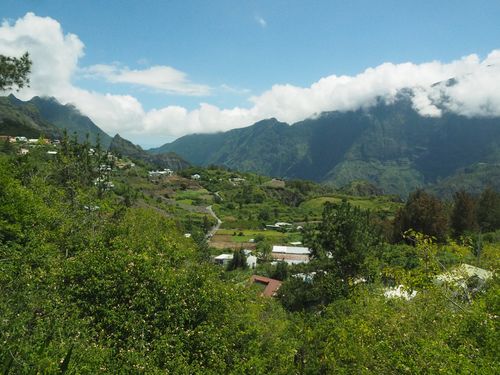
Reunion • Cirque de Cilaos
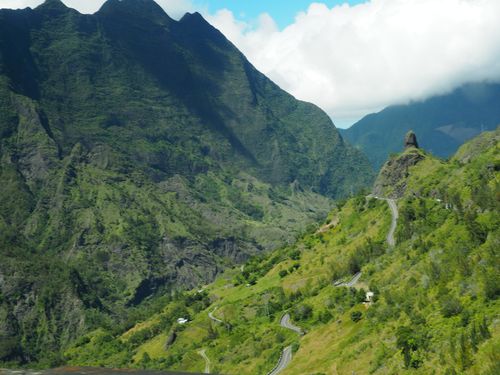
Reunion • Cirque de Cilaos
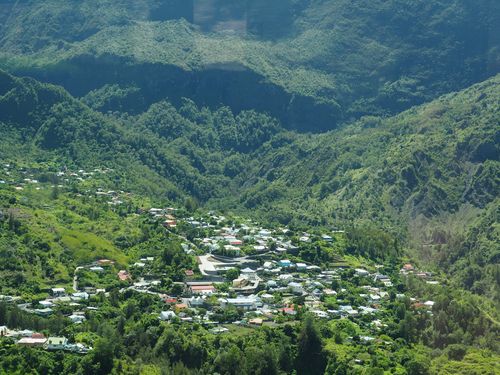
Reunion • Cirque de Cilaos
Natural site profile
Cirque de Cilaos
Natural site category: Volcanic cirque
Natural site family: Volcanoes and calderas
Natural site genre: Terrestrial
Geographic location: Cilaos • Reunion Island
This natural site in Cilaos is inscribed on the UNESCO World Heritage List since 2010 and is part of the serial property "Pitons, cirques and remparts of Reunion Island".See the UNESCO natural sites featured on this site
• Links to •
• List of videos about on this site •
Reunion: the volcano, the landscapes and the people • Reunion Island
• References •
UNESCO: Pitons, cirques and remparts of Reunion Island
Cirque de Cilaos: From Isolation to Recognition — A Model of Natural and Cultural Preservation
Located within the volcanic heart of Réunion Island, the Cirque de Cilaos stands as both a geological marvel and a social landscape shaped by centuries of adaptation. Its steep reliefs, deep ravines, and secluded valleys have long influenced the political, economic, and cultural development of the region. Today, Cilaos exemplifies how a once-isolated environment became a symbol of ecological awareness, sustainable tourism, and cultural resilience in the global movement for heritage preservation.
Early Settlement and the Genesis of Valorization
The human history of Cilaos begins in the 18th century, when runaway slaves—known as marrons—found refuge in this mountainous amphitheater. The isolation that once guaranteed safety later shaped the identity of the local communities, whose descendants built small, self-sufficient settlements. However, true recognition of the cirque’s potential only began in the late 19th and early 20th centuries. At that time, French colonial authorities viewed the highlands as places of health and retreat, in line with similar colonial-era movements in Madagascar, Vietnam, and India.
The discovery of thermal springs at Cilaos around 1880 prompted the construction of basic health facilities. By the 1920s, these springs became the foundation of a modest local tourism industry. The political motivation behind this development was clear: to project Réunion as a modern, productive French territory capable of integrating natural resources into its economic framework.
Economic Expansion and Infrastructural Integration
One of the most decisive moments in the history of Cilaos came with the completion of the road connecting it to the coastal city of Saint-Louis in the 1930s. This feat of engineering—cut through nearly 400 bends along steep volcanic walls—transformed the area’s economy. It opened access for trade, agriculture, and tourism, enabling the circulation of goods and people in ways previously unimaginable.
Economically, this connection fostered the development of terraced agriculture, particularly vineyards. The “vin de Cilaos,” introduced in the mid-20th century, became a cultural and commercial emblem of mountain life. At the same time, infrastructure investment under France’s Départementalisation policy after 1946 integrated Cilaos more deeply into the national framework. Public works, education, and healthcare followed, aligning with a broader global trend toward rural modernization in mountainous territories, comparable to the postwar Alpine and Andean programs.
Cultural Symbolism and Environmental Awareness
Cilaos quickly transcended its economic function to become a cultural landmark. For many Réunionnais, the cirque symbolizes endurance, freedom, and the dialogue between human and natural forces. Its landscape is closely tied to the memory of slavery and to the idea of survival in isolation. This symbolic dimension helped shape the cultural narrative of postcolonial Réunion: an island where diversity and adaptation define identity.
In the second half of the 20th century, a growing environmental consciousness began to reshape perceptions of Cilaos. Local and national authorities recognized the fragility of the volcanic ecosystems, marked by erosion, deforestation, and increasing tourism. This awareness echoed the global rise of environmental protection movements in the 1970s, such as the establishment of UNESCO’s World Heritage and Man and the Biosphere programs.
Global Recognition and UNESCO World Heritage Listing
By the early 2000s, Cilaos had become central to Réunion’s environmental policies. The creation of the Réunion National Park in 2007 formalized conservation efforts and laid the groundwork for international recognition. In 2010, UNESCO inscribed the “Pitons, Cirques and Remparts of Réunion Island” on the World Heritage List, recognizing their “outstanding universal value.” Cilaos, as one of the three main cirques, represents a crucial element of this inscription, reflecting both geological uniqueness and human coexistence with extreme environments.
This inclusion reinforced the island’s image as a model of tropical volcanic conservation. It also brought tangible benefits: stricter environmental management, sustainable tourism initiatives, and funding for ecological monitoring. The challenge, however, has been to balance preservation with the daily realities of the 6,000 residents who live within the cirque.
Environmental and Social Transformations
The 21st century has brought new transformations and challenges. Climate change is altering rainfall patterns and intensifying cyclones, accelerating erosion and threatening Cilaos’s infrastructure. Landslides are becoming more frequent, while invasive species—such as longose and guava marron—threaten endemic flora. The cirque’s narrow valleys make land use particularly complex, requiring constant maintenance of terraces and drainage systems.
Socially, the population faces the tension between modernization and preservation. Tourism, now a major source of income, risks overexploitation if not carefully managed. Authorities have implemented visitor caps on certain hiking trails and promoted educational ecotourism. Projects encourage residents to participate in conservation efforts through reforestation and traditional agricultural practices, such as the restoration of stone terraces that mitigate erosion.
Comparisons and Lessons from Other Regions
Globally, the preservation of Cilaos can be compared to similar efforts in other volcanic or mountainous regions. The Hawaiian Volcanoes National Park and the Canary Islands’ Teide National Park share the challenge of combining high biodiversity, tourism, and local cultural identity within fragile ecosystems. Yet Cilaos stands out for its strong human presence and its dual identity as both a natural and inhabited heritage site.
Whereas other volcanic sites emphasize pristine wilderness, Cilaos demonstrates that sustainable coexistence between people and nature is possible. This approach aligns with contemporary conservation philosophies, which view traditional knowledge and community participation as essential to long-term ecological stability.
The Present and Future of Preservation
Today, Cilaos is managed through a partnership between the Réunion National Park, local authorities, and UNESCO. Conservation priorities include controlling invasive species, replanting endemic forests, and improving water management systems. Ecotourism initiatives, such as guided hikes and educational programs, aim to limit environmental impact while promoting awareness.
Nonetheless, the cirque’s isolation remains a double-edged sword. It preserves the authenticity of the landscape but complicates access, infrastructure maintenance, and emergency management. Ongoing erosion of the road network—especially the iconic RN5 linking Cilaos to Saint-Louis—poses economic and safety challenges. These realities highlight the delicate balance between preservation, accessibility, and resilience that defines Cilaos’s current status.
A Living Heritage of Adaptation
The Cirque de Cilaos embodies more than a geological wonder; it represents a dialogue between nature, culture, and adaptation. From its origins as a refuge of resistance to its recognition as a global heritage site, its story mirrors broader human efforts to reconcile development with respect for natural processes.
Its preservation today depends not only on ecological measures but also on maintaining the cultural practices that have sustained it for centuries—terraced farming, local crafts, and a deep sense of belonging to the land. As climate pressures grow and tourism expands, Cilaos continues to offer a lesson in resilience: that harmony between people and landscape is achievable, but never guaranteed.
The Cirque de Cilaos: A Living Monument of Volcanic and Ecological Evolution
The Cirque de Cilaos, located in the highlands of Réunion Island, is a striking natural amphitheater that showcases some of the most complex geological, biological, and climatic processes in the Indian Ocean. Formed through millennia of volcanic activity, erosion, and ecological adaptation, it represents a living record of the Earth’s dynamic transformations and the resilience of life in extreme environments.
Geological Genesis and Structure
The cirque was shaped by the collapse of the Piton des Neiges volcano, an extinct volcanic massif that dominates the island. Over hundreds of thousands of years, intense rainfall, gravity, and erosion carved the steep walls that now define Cilaos. The result is an almost circular depression encircled by basaltic cliffs exceeding 2,000 meters in altitude, intersected by deep ravines and narrow valleys. These formations bear witness to a powerful geological history of uplift and collapse—similar to the calderas of Hawaii or the Canary Islands, but here intensified by tropical weather patterns.
The region’s geomorphology continues to evolve. Frequent landslides, caused by heavy rainfall and seismic microactivity, reshape the slopes and river courses, making the cirque an open-air laboratory for geomorphologists. The Cilaos fault system and the presence of sub-vertical basalt columns provide visible evidence of the volcanic layering process, while the river beds display alluvial deposits revealing the chronology of erosional cycles.
Climatic Contrasts and Hydrological Innovation
Cilaos’s climatic profile is among the most variable on Réunion Island. The cirque receives up to 3,500 mm of rain annually in its upper sectors, while the basin itself remains comparatively drier due to its enclosed topography. This climatic duality fosters micro-ecosystems within just a few kilometers of distance. The hydrological system, consisting of cascading streams and underground aquifers, ensures a rare equilibrium between erosion and renewal.
Thermal springs, long known for their therapeutic properties, emerge from the volcanic fissures beneath Cilaos. These hot waters, rich in minerals and trace elements, attest to ongoing geothermal circulation. From a scientific perspective, these springs provide valuable insights into the long-term thermal evolution of extinct volcanic systems.
Biodiversity and Endemism
The biological diversity of the Cirque de Cilaos mirrors its geological complexity. Its isolation has created conditions for the development of a rich endemic flora and fauna. More than 30% of plant species recorded in the cirque are found nowhere else on Earth. These include several species of tamarins (Acacia heterophylla), orchids, and ferns that have adapted to contrasting microclimates—from the misty ravines to the sun-exposed slopes.
Fauna in Cilaos is equally remarkable. The cirque hosts endemic bird species such as the Réunion harrier (Circus maillardi) and the Réunion stonechat (Saxicola tectes), as well as a variety of invertebrates that have evolved in isolation. The steep walls and deep valleys act as natural barriers, maintaining distinct ecological niches. The coexistence of dry and humid ecosystems within such proximity makes the cirque an exceptional site for studying evolutionary divergence, comparable to the Galápagos Islands on a smaller scale.
Human Interaction and Ecological Balance
Cilaos is one of the rare mountain ecosystems where human presence has coexisted with nature for centuries without completely altering its integrity. The inhabitants have developed sophisticated agricultural techniques—most notably terraced farming—to adapt to steep terrain and fragile soils. These terraces reduce runoff, prevent landslides, and preserve fertility, reflecting a deep ecological awareness.
The cultivation of lentils and vines, introduced in the 19th century, demonstrates how traditional knowledge and microclimatic conditions have shaped a distinctive cultural landscape. The famous Cilaos wine, produced at over 1,200 meters altitude, symbolizes the successful integration of human activity within a fragile environment.
Natural Landmarks and Ecological Processes
Cilaos’s natural features are equally captivating from an aesthetic and scientific standpoint. The Bras de Benjoin and Bras Rouge rivers cut through the volcanic rock, forming spectacular canyons and waterfalls that illustrate the intensity of tropical erosion. The “Fenêtre des Makes,” a high-altitude viewpoint overlooking the cirque, offers a panoramic view of the geological layers, while the remparts (cliffs) surrounding it serve as prime examples of gravitational subsidence.
Some areas, such as the Piton des Neiges ridges, reveal ancient lava flows and pyroclastic formations overlaid by recent alluvium, providing insight into the island’s volcanic cycles. These features also explain the extraordinary fertility of the soil, which supports both natural vegetation and agriculture.
Global Context and Recognition
The uniqueness of the Cirque de Cilaos has not gone unnoticed internationally. In 2010, UNESCO recognized the “Pitons, Cirques and Remparts of Réunion Island” as a World Heritage Site for their “outstanding universal value.” Cilaos, along with Mafate and Salazie, represents one of the key components of this inscription. The listing acknowledged not only the site’s geological and ecological importance but also the harmonious coexistence of natural and human processes in a mountainous environment.
The UNESCO recognition has had tangible effects on conservation. It reinforced legal protection under the Réunion National Park (established in 2007), expanded funding for biodiversity studies, and introduced visitor management policies to minimize human impact. These measures have positioned Cilaos as a model of sustainable management among mountain ecosystems worldwide.
Environmental Challenges
Despite these protections, Cilaos faces significant challenges. The combination of climate change, urban expansion, and tourism places increasing pressure on the landscape. Rising temperatures and irregular rainfall patterns accelerate erosion, while extreme weather events such as cyclones pose recurrent threats. The narrow access road, with its 400 bends, is particularly vulnerable to landslides and rockfalls.
Biodiversity is also under strain. Invasive species like the Chinese guava and the longose plant threaten native ecosystems by outcompeting endemic flora. Conservation programs now focus on reforestation using native species and on habitat restoration to ensure ecological continuity. These initiatives are essential to maintain the delicate equilibrium between conservation and human activity.
A Model of Resilience
The Cirque de Cilaos embodies the complex dialogue between natural evolution and human adaptation. It demonstrates how volcanic collapse, climatic variation, and ecological diversification can converge to create a living system of remarkable stability. Scientists continue to study the cirque as a model for understanding how tropical mountain environments respond to global environmental change.
At the same time, the community of Cilaos remains a key player in this preservation effort. Local initiatives promoting ecotourism, traditional crafts, and sustainable agriculture help to balance economic growth with environmental stewardship. This participatory approach reflects a broader shift in global conservation philosophy—one that values cultural heritage and local engagement as integral components of ecological sustainability.
Conclusion
The Cirque de Cilaos stands today as one of the most eloquent natural laboratories on Earth. Its towering cliffs, active erosion, and endemic biodiversity illustrate not only the creative force of geology but also the resilience of life in adapting to it. As part of the UNESCO World Heritage network, it continues to inspire scientists, conservationists, and visitors alike with its demonstration of how geological majesty and ecological fragility can coexist.
 Links to the main sections of the site