Français (France)
  Nederlands (nl-NL)
 The Mekong near Phapheng in southern Laos represents a distinctive section of the major Southeast Asian river. In this border region close to Cambodia, the river divides into multiple channels flowing around islands, rocky formations, and braided waterways. This stretch of the Mekong forms an important part of the wider river system and plays a significant role in the environmental and economic balance of the basin. Seasonal variations in water levels strongly influence the surrounding landscape and river dynamics. The area contributes to the geographical diversity of southern Laos and attracts visitors interested in observing one of Asia’s great rivers.
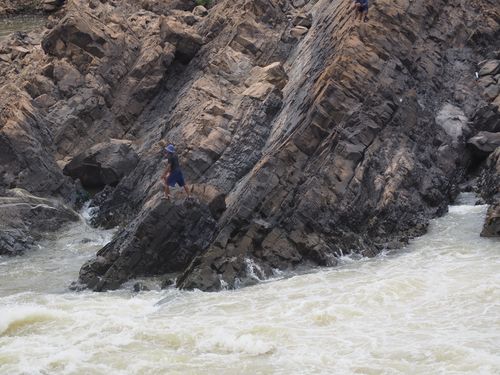
Laos • Meklong near Phapheng

Laos • Meklong near Phapheng

Laos • Meklong near Phapheng
Natural site profile
Meklong near Phapheng
Natural site category: River
Natural site family: Seas, lakes and rivers
Natural site genre: Aquatic
Geographic location: Laos • Laos
• Links to •
• List of videos about Mekong near Muang Champassak, Mekong near Luang Prabang, Mekong from Nakasong to Li Phi Somphamit on this site •
The Mekong: A Serene River? • Laos
The Mekong near Phapheng: Historical Significance, Regional Development, and Contemporary Conservation Challenges
The section of the Mekong River near Phapheng in southern Laos represents one of the most dramatic river landscapes in Southeast Asia. Located in the province of Champasak, close to the border with Cambodia, this part of the river is characterized by a network of channels, rocky formations, and numerous islands formed by the interaction of powerful currents and ancient geological structures. The area is particularly associated with the Khone Phapheng Falls, which form the largest waterfall system in Southeast Asia in terms of water volume. Over time, this landscape has gained importance not only as a natural phenomenon but also as a place shaped by economic, political, and cultural dynamics linked to the wider Mekong basin.
A strategic river landscape in early regional history
For centuries, the Mekong has functioned as one of the principal natural corridors of mainland Southeast Asia. Communities along its banks relied on the river for transportation, agriculture, and fishing. The region around present-day Phapheng became particularly significant because the powerful rapids and waterfalls interrupted navigation along the Mekong.
These natural barriers effectively divided the river into separate navigable sections. As a result, the area became an important transfer point where goods and travelers moving along the Mekong had to change routes or transport cargo over land. This geographical constraint gave the region strategic importance in the organization of trade networks linking the uplands of Laos with the lowlands of Cambodia and Vietnam.
Such river obstacles have played similar roles in other parts of the world. Major rapids and waterfalls along large rivers frequently became focal points for settlement, trade exchange, and logistical adaptation.
Colonial ambitions and the attempt to transform the Mekong into a trade route
The geopolitical importance of the Mekong near Phapheng became particularly evident during the late nineteenth century, when European colonial powers sought to integrate the Mekong into global trade networks. French colonial authorities in Indochina explored the possibility of using the river as a commercial route connecting Southeast Asia with southern China.
However, the powerful rapids and waterfalls in the Phapheng region proved to be a major obstacle to navigation. To bypass these rapids, colonial engineers constructed a short railway line on Don Khon Island. This railway allowed boats and goods to be transported around the waterfalls before continuing their journey along the Mekong.
Although these ambitious plans never fully succeeded in transforming the Mekong into a major international trade route, the engineering projects drew international attention to the unique geography of the region. The waterfalls and river channels began to be documented by explorers, geographers, and travelers.
Economic transformations and the emergence of tourism
During the twentieth century, the economic role of the Mekong near Phapheng gradually shifted. Instead of functioning primarily as a logistical barrier in trade networks, the region began to attract attention for its remarkable natural scenery.
The Khone Phapheng Falls became known as one of the most powerful waterfall systems in Asia. During the rainy season, enormous volumes of water surge through the rocky channels, creating a dramatic spectacle of white water and swirling currents.
With improvements in transportation infrastructure and increased regional travel, tourism gradually emerged as an important economic activity. Visitors came to observe the waterfalls, the river islands, and the surrounding rural landscapes. Local communities began to develop small-scale services such as guesthouses, restaurants, and transportation for visitors.
This transformation reflects a global trend in which dramatic river landscapes become tourist destinations. Similar developments have occurred in regions where waterfalls or rapids once served as natural barriers but later became celebrated scenic landmarks.
Ecological importance of the river system
The Mekong near Phapheng also plays a crucial ecological role within the broader Mekong basin. The river supports one of the most diverse freshwater ecosystems on Earth, with hundreds of fish species inhabiting its waters.
The complex network of channels, islands, and rapids around Phapheng creates a variety of aquatic habitats. These habitats provide breeding grounds, feeding areas, and migration routes for many fish species. Seasonal changes in water levels further influence these ecological processes.
The riverbanks and wetlands surrounding the waterfalls support additional biodiversity, including birds, reptiles, and plant species adapted to tropical river environments. This ecological richness makes the region particularly important for both conservation and scientific research.
Cultural perceptions and symbolic value
Beyond its ecological and economic importance, the Mekong near Phapheng holds cultural significance for the communities that live along its banks. In many Southeast Asian cultures, large rivers are seen as powerful natural forces that shape both the physical landscape and the social life of surrounding regions.
The dramatic waterfalls and rapids contribute to this perception of the river as a dynamic and sometimes unpredictable element of nature. For local communities, the river is not only a resource but also a central feature of cultural identity.
The continued presence of traditional fishing practices and river-based livelihoods reflects the long-standing relationship between human societies and the Mekong ecosystem.
Global comparisons with other major river landscapes
The Mekong near Phapheng can be compared with other major river landscapes where waterfalls or rapids have influenced regional development. In several large rivers around the world, such natural obstacles historically shaped transportation routes and settlement patterns.
In some cases, such sites eventually became iconic natural attractions. Waterfall regions along the Zambezi, the Amazon, or parts of North American rivers illustrate similar transformations in which dramatic landscapes gain international recognition while continuing to influence local economies and ecological systems.
These comparisons highlight how natural river dynamics can shape both environmental systems and human history.
Current conservation efforts and environmental challenges
Today the Mekong near Phapheng remains one of the most important natural landscapes in southern Laos. Its ecological richness and scenic power attract growing numbers of visitors and researchers interested in the river’s dynamics.
However, the region also faces significant environmental challenges. Hydroelectric development in the Mekong basin has raised concerns about changes to water flow, fish migration routes, and sediment transport. Alterations to the river’s natural regime could have major consequences for ecosystems downstream.
Tourism growth, while economically beneficial, also requires careful management to prevent environmental degradation. Protecting the riverbanks, maintaining water quality, and preserving traditional livelihoods are essential components of sustainable management.
A powerful river landscape shaped by nature and history
The Mekong near Phapheng illustrates how a powerful river system can shape landscapes, economies, and cultures over long periods of time. From its role as a barrier to navigation in historical trade routes to its present-day status as a natural landmark, the site reflects the evolving relationship between human societies and large river environments.
Today, the region stands as a striking reminder of the dynamic forces that continue to shape the Mekong basin. Its preservation will depend on balancing economic development, ecological protection, and international cooperation among the countries that share the river.
The Mekong near Phapheng: Geological Dynamics, Ecological Diversity, and the Natural Complexity of a Major River Landscape
The section of the Mekong River near Phapheng in southern Laos represents one of the most remarkable river landscapes in Southeast Asia. Located in Champasak Province near the Cambodian border, this part of the river is defined by a complex system of channels, islands, and powerful cascades that together form one of the most dynamic hydrological environments in the Mekong basin. The area surrounding the Khone Phapheng Falls illustrates how geological structures, hydrological forces, and biological diversity interact to create a unique natural system. These features provide valuable insight into the evolution of large tropical rivers and the ecological processes that shape them.
Geological foundations of a complex river system
The natural landscape of the Mekong near Phapheng is largely determined by the geological composition of the region. The river flows across an ancient plateau composed primarily of sandstone and other sedimentary rock formations that developed over millions of years.
Over long geological periods, the Mekong gradually eroded these rocks, carving channels and fractures into the bedrock. Unlike sections of the river that flow across wide alluvial plains, the Phapheng region presents a harder geological substrate that resists erosion in uneven ways. This resistance has produced a fragmented riverbed where the water divides into multiple streams.
The result is a striking network of rapids, cascades, and narrow channels that extend across several kilometers of river. The Khone Phapheng Falls themselves form a broad cascade system rather than a single vertical waterfall. Water rushes through rock formations and drops in successive stages, creating an expansive zone of turbulent flow.
This geological structure is a key factor in the distinctive appearance of the landscape and in the formation of numerous islands throughout the region.
A river shaped by powerful hydrological processes
The Mekong is one of the longest rivers in Asia, stretching more than 4,300 kilometers from the Tibetan Plateau to the South China Sea. Its enormous drainage basin collects water from several mountain systems across mainland Southeast Asia.
Near Phapheng, the volume of water carried by the river becomes particularly evident. During the rainy season, the Mekong’s discharge can reach tens of thousands of cubic meters per second. These seasonal surges transform the waterfalls and rapids into an immense torrent.
The hydrological processes at work in this area illustrate how major rivers respond to seasonal climatic cycles. The annual monsoon dramatically alters water levels, reshaping riverbanks, redistributing sediments, and temporarily submerging many of the islands scattered across the river.
Such fluctuations create constantly changing habitats that support a wide variety of aquatic and semi-aquatic organisms.
The formation of the Si Phan Don archipelago
One of the most striking characteristics of the Mekong near Phapheng is the presence of thousands of islands known collectively as Si Phan Don, a term that translates as “four thousand islands.”
These islands vary greatly in size. Some are little more than rocky outcrops that appear only during periods of low water, while others are large enough to support villages, agriculture, and forest vegetation.
The islands formed as sediments transported by the Mekong accumulated around bedrock obstacles and shallow areas in the riverbed. Over centuries, these sediment deposits stabilized and were colonized by plant life, eventually becoming permanent landforms.
This mosaic of islands creates a complex river landscape in which calm channels alternate with turbulent rapids. The resulting diversity of habitats contributes directly to the ecological richness of the region.
Biodiversity in one of the world’s richest freshwater ecosystems
The Mekong basin is widely recognized as one of the most biologically diverse freshwater systems on Earth. Scientists have identified more than a thousand fish species within the river and its tributaries.
The rapids and channels near Phapheng play an important role within this ecological network. Differences in water speed, depth, and substrate create numerous microhabitats that support different aquatic organisms.
Some species thrive in fast-flowing waters where oxygen levels are high, while others prefer calmer channels and flooded vegetation zones. Seasonal changes in water levels further expand these ecological niches.
The region has also attracted attention for the presence of large migratory fish species that travel long distances along the Mekong. The waterfalls and rapids create natural barriers that influence migration patterns and shape the distribution of fish populations throughout the basin.
Birdlife, reptiles, and amphibians also benefit from the diverse habitats provided by the riverbanks and islands.
Interactions between local processes and global environmental forces
The natural dynamics of the Mekong near Phapheng illustrate how local geological structures interact with broader environmental systems. The hydrological behavior of the river depends heavily on rainfall patterns across the entire Mekong basin.
Monsoon systems that originate over the Indian Ocean influence water levels in the Mekong and determine the seasonal rhythm of flooding and sediment transport. These climatic patterns represent a broader global system that affects river environments throughout Southeast Asia.
At the same time, changes in global climate conditions may alter precipitation patterns and affect the long-term stability of river ecosystems. The Mekong therefore reflects the interaction between regional geography and larger environmental processes.
International recognition and environmental awareness
Although the Mekong near Phapheng is not listed as a UNESCO World Heritage Site, it has gained international recognition as one of the most impressive natural landscapes along the Mekong River.
The Khone Phapheng Falls are often described as the largest waterfalls in Southeast Asia by volume of water. Their immense power and the surrounding island landscape have attracted researchers, photographers, and travelers interested in river ecology and geology.
This growing international attention has contributed to broader awareness of the ecological significance of the Mekong basin. The region is frequently included in discussions about biodiversity conservation and sustainable river management.
Contemporary challenges to ecological integrity
Despite its natural richness, the Mekong near Phapheng faces several environmental pressures. Hydropower development in the Mekong basin has raised concerns about the potential impact on water flow, sediment transport, and fish migration.
Large dams constructed upstream can alter the seasonal rhythm of the river and reduce the volume of sediments that help maintain islands and riverbanks. Such changes may influence both ecological systems and traditional fishing activities.
Tourism development also requires careful management to ensure that infrastructure expansion does not damage fragile river habitats.
A remarkable example of river-driven landscape evolution
The Mekong near Phapheng offers an exceptional example of how geological structure, hydrological force, and biological diversity interact to shape a large river landscape. The vast cascade system of Khone Phapheng, the thousands of islands of Si Phan Don, and the extraordinary biodiversity of the Mekong basin together form a natural environment of considerable scientific and ecological interest.
This region illustrates the complexity of tropical river ecosystems and the importance of preserving them. As environmental pressures increase throughout the Mekong basin, the landscapes near Phapheng stand as a powerful reminder of the dynamic processes that sustain one of the world’s great river systems.
 Links to the main sections of the site