

 Français (France)
  Nederlands (nl-NL)
 The Church of Saint Francis of Assisi is a Catholic monument located in Goa, in the Indian state of Goa. It forms part of the principal religious buildings dating from the Portuguese period and reflects the long-standing presence of Christianity in the region. The church is associated with early missionary orders active in Goa and belongs to the wider heritage ensemble that illustrates the city’s colonial history. Today, it stands as both a cultural landmark and a significant reference point for understanding the religious and institutional development of Goa.
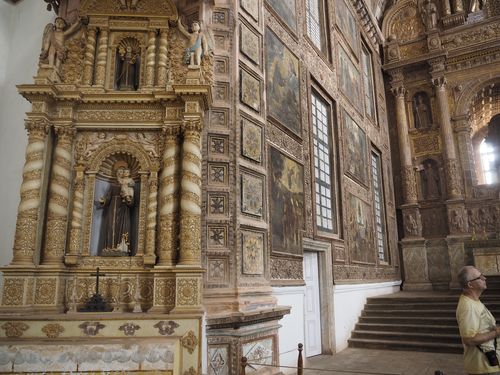
Goa • Church of Saint Francis of Assisi
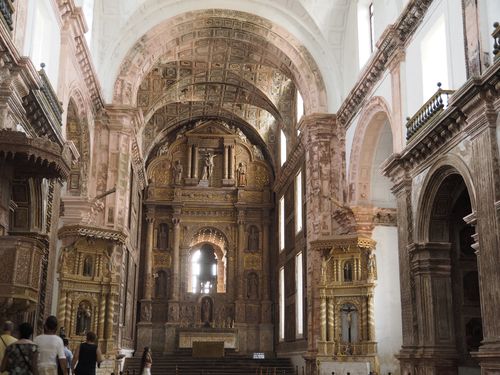
Goa • Church of Saint Francis of Assisi
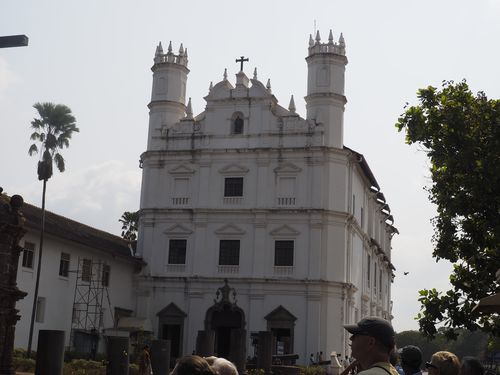
Goa • Church of Saint Francis of Assisi
Monument profile
Church of Saint Francis of Assisi
Monument category: Church
Monument family: Church, cathedral, basilica, chapel
Monument genre: Religious
Cultural heritage: Christian
Geographic location: Goa • Goa • India
Construction period: 16th century AD
This monument in Goa is inscribed on the UNESCO World Heritage List since 1986 and is part of the serial property "Churches and Convents of Goa".See the UNESCO monuments featured on this site
• Links to •
• List of videos about Old Goa City, Panaji, Chandor, Candolim on this site •
Goa • A piece of Portugal in India
History of the Church of Saint Francis of Assisi, Goa
The Church of Saint Francis of Assisi, located in Old Goa in the Indian state of Goa, is one of the principal monuments associated with the Portuguese presence in Asia. Built adjacent to the Franciscan convent established in the early sixteenth century, the church reflects the political ambitions, missionary strategies, and institutional development of the Portuguese Estado da Índia. Its historical trajectory illustrates the interaction between imperial authority, religious expansion, and the transformation of Goa from a colonial capital to a heritage site.
Political and Social Context of Construction
The origins of the church date to the period following the Portuguese conquest of Goa in 1510 under Afonso de Albuquerque. Goa quickly became the capital of Portuguese India and the administrative center of its eastern empire. The establishment of religious institutions formed an essential component of colonial consolidation. Among the earliest missionary orders to arrive were the Franciscans, who founded a convent and an initial chapel around 1517.
The construction of a more substantial church was driven by both religious and political objectives. Religiously, the Franciscans required an institutional base for liturgical practice, education, and the supervision of newly converted communities. Politically, monumental church construction served as a visible assertion of Portuguese sovereignty. Architecture functioned as a symbolic language that projected permanence and authority in a region marked by complex political dynamics.
The ambitions of the Portuguese Crown extended beyond local administration. Under the Padroado system, the monarchy exercised patronage rights over ecclesiastical affairs in overseas territories. The building of large conventual churches demonstrated the Crown’s commitment to Catholic orthodoxy and reinforced its legitimacy in competition with Islamic polities in the Indian Ocean and, later, with rival European powers.
Socially, the church played a central role in shaping colonial society. It contributed to the formation of a Christian urban elite and provided educational and charitable services. The Franciscan convent became a hub of religious instruction and community organization, integrating local populations into the structures of colonial governance.
Major Historical Events
The original sixteenth-century structures were modest and likely constructed with a combination of masonry and less durable materials. Over time, fires and climatic deterioration necessitated reconstruction. The present church largely reflects rebuilding efforts undertaken in the seventeenth century, when more durable construction techniques were implemented and decorative programs expanded.
The seventeenth century was marked by geopolitical tension in the Indian Ocean. Dutch naval expansion posed a threat to Portuguese maritime dominance. Although Old Goa did not experience large-scale sieges comparable to those in other colonial ports, the broader instability affected economic resources and administrative priorities. The Franciscan complex, however, continued to function as a religious institution.
In the eighteenth century, reforms introduced by the Portuguese Crown, particularly under the Marquis of Pombal, altered the structure of religious orders within the empire. While the Franciscans were not suppressed in the same manner as the Jesuits, administrative oversight increased and monastic properties were more closely regulated. These changes influenced the management of the convent and its associated church.
The gradual decline of Old Goa during the eighteenth century, largely due to epidemics and environmental challenges, resulted in the relocation of administrative functions to Panaji. As the urban population decreased, portions of the convent complex were repurposed or abandoned. The church itself, however, remained standing and retained religious and symbolic significance.
The annexation of Goa by India in 1961 marked a decisive political transition. Portuguese colonial authority ended, and the church entered a new legal and cultural framework within a secular Indian state. Despite this transformation, the monument retained its historical and religious identity.
Global Context of Construction
The development of the Church of Saint Francis of Assisi occurred within a broader global movement of Catholic expansion in the sixteenth and seventeenth centuries. Across Spanish America, Africa, and Asia, monumental churches were erected as instruments of evangelization and imperial presence. The decrees of the Council of Trent (1545–1563) emphasized doctrinal clarity and the didactic function of sacred architecture, influencing ecclesiastical construction throughout the Catholic world.
Old Goa became one of the principal missionary centers in Asia. Clergy trained in its institutions were dispatched to Japan, China, and Southeast Asia. The Franciscan church and convent formed part of this transcontinental network. Its construction mirrored developments in Lisbon and Rome, situating Goa within a global Catholic architectural and institutional system.
Transformations Over Time
Throughout its history, the church underwent several modifications. Structural rebuilding followed episodes of damage or deterioration. Decorative elements were added or enhanced during the seventeenth and eighteenth centuries, reflecting evolving aesthetic preferences and devotional practices.
As Old Goa declined demographically, the surrounding convent buildings were gradually adapted to new functions. Portions of the complex were later converted into museum spaces, integrating the monument into a heritage framework. This transformation illustrates the shift from purely religious usage to a combined religious and cultural role.
Twentieth-century conservation campaigns focused on stabilizing masonry, preserving interior artworks, and mitigating the effects of humidity. These efforts signaled a new phase in the building’s life, emphasizing preservation rather than expansion.
Contemporary Role and Cultural Significance
Today, the Church of Saint Francis of Assisi forms part of the ensemble known as the Churches and Convents of Goa. It is recognized as a major historical monument and attracts visitors interested in the region’s colonial past. While some liturgical functions continue, its primary contemporary role lies in heritage interpretation and cultural memory.
For the Catholic community of Goa, the church symbolizes continuity with a five-century-old religious tradition. It stands as evidence of the formative period in which Christianity became embedded in Goan society. Its association with the Franciscan order underscores the diversity of missionary activity in the region.
The monument also contributes to broader discussions about colonial heritage in India. It represents a tangible link to early modern global exchanges and the circulation of architectural forms, religious ideas, and institutional models.
Conservation and World Heritage Status
The Church of Saint Francis of Assisi is included within the UNESCO World Heritage Site designated as the Churches and Convents of Goa. This recognition affirms its outstanding universal value as an example of the dissemination of European religious architecture in Asia.
Conservation challenges include environmental factors such as humidity and biological growth, as well as structural stress caused by aging materials. Visitor management has become increasingly important, as tourism generates both economic benefits and conservation pressures.
Restoration policies emphasize material compatibility and respect for historical integrity. Traditional lime-based plasters and conservation techniques are employed to preserve authenticity while ensuring structural stability.
Conclusion
The history of the Church of Saint Francis of Assisi in Goa encapsulates the intersection of imperial ambition, missionary enterprise, and urban transformation. Founded in the wake of Portuguese conquest, it evolved through periods of geopolitical tension, institutional reform, and urban decline. Today, as part of a UNESCO World Heritage ensemble, it stands as both a monument of colonial-era Christianity and a symbol of Goa’s complex historical identity.
Architectural Analysis of the Church of Saint Francis of Assisi, Goa
The Church of Saint Francis of Assisi in Old Goa constitutes one of the most significant architectural testimonies of Portuguese ecclesiastical construction in Asia. Integrated into a former Franciscan convent complex, the church reflects successive building campaigns from the sixteenth and seventeenth centuries. Its architecture combines Mannerist structural clarity with Baroque decorative enrichment, while incorporating technical adaptations suited to the climatic and material conditions of western India. The building exemplifies the transmission of Iberian architectural models into a colonial setting and their transformation through local craftsmanship.
Technological and Architectural Innovations
The church follows a longitudinal basilican plan organized around a single nave leading to a deep chancel. This configuration corresponds to post-Tridentine architectural principles that prioritized liturgical visibility and didactic clarity. The uninterrupted axis from entrance to high altar ensures direct visual alignment, reinforcing theological emphasis on the Eucharistic focal point.
The structural system relies on thick load-bearing masonry walls constructed from locally available laterite stone. Rather than employing elaborate ribbed vaulting systems, the builders opted for a simplified structural scheme using semi-circular arches to distribute vertical loads. This method ensured durability under conditions of seasonal humidity and heavy monsoon rainfall. The mass of the masonry provides both structural stability and thermal inertia, mitigating rapid temperature fluctuations.
The roofing system, supported by robust wooden trusses, spans the nave without requiring complex stone vaults. This approach reduced structural weight while allowing for ease of maintenance. The timber framework also accommodated minor expansions and contractions caused by humidity variations, thereby reducing stress on masonry joints.
Ventilation was incorporated into the design through high clerestory openings and lateral windows that promote cross-ventilation. The substantial interior height permits warm air to rise, creating passive cooling. The church stands on a slightly elevated plinth, protecting foundations from water infiltration during monsoon seasons. These features demonstrate conscious adaptation of European building knowledge to the tropical environment of Goa.
Materials and Construction Techniques
Laterite forms the primary construction material. This iron-rich stone, abundant in Goa, can be cut easily when quarried and subsequently hardens upon exposure to air. Its use enabled large-scale masonry construction with local resources. For structural reinforcements and detailed architectural elements, harder stone such as basalt was employed, particularly in door and window frames.
Lime mortar binds the masonry, offering both cohesion and permeability. The permeability is essential in humid climates, allowing moisture to evaporate without creating internal pressure that might crack the structure. Exterior surfaces were plastered and whitewashed, enhancing protection against erosion while accentuating the geometric articulation of the façade.
Interior decorative elements were executed primarily in wood. The high altar and lateral retables were constructed using advanced carpentry techniques, including mortise-and-tenon joints and dowel reinforcements. Gilded surfaces were applied over carved wooden frameworks, reflecting Iberian Baroque craftsmanship adapted by local artisans.
Stylistic Influences and Artistic Synthesis
The façade demonstrates a Mannerist compositional order characterized by balanced proportions, restrained ornamentation, and clearly defined horizontal divisions. Pilasters articulate the vertical axis, while cornices structure the façade into hierarchical levels. This restrained exterior contrasts with the richness of the interior decoration.
Inside, the church exhibits a fully developed Baroque retable dominating the chancel. Twisted Solomonic columns, gilded surfaces, and layered iconographic programs define the principal altar. This decorative language reflects seventeenth-century Portuguese influences, transmitted through artistic networks linking Goa with Lisbon and other imperial centers.
The ornamentation also reveals regional contributions. Floral motifs and certain carving techniques reflect Indian artistic traditions, integrated within a European framework. This synthesis results in a distinctive hybrid aesthetic. The interaction between imported stylistic models and local craftsmanship underscores the cultural exchanges inherent in colonial architecture.
Spatial Organization and Structural Characteristics
The nave extends approximately 50 to 55 meters in length, providing ample interior volume. The absence of a projecting transept reinforces spatial unity. Side chapels are embedded within the thickness of the masonry walls, maintaining structural coherence while accommodating devotional functions.
The chancel is elevated above the nave floor, emphasizing liturgical hierarchy. The high altar occupies a commanding position, framed by architectural elements that draw the eye upward. Lateral altars along the nave introduce additional focal points without disrupting axial clarity.
The ceiling structure consists of a timber framework supporting a pitched roof. This system avoids the complexity and weight of stone vaulting while maintaining sufficient vertical clearance for ventilation and acoustics. The façade’s vertical articulation creates an imposing visual presence within the urban landscape of Old Goa.
Distinctive Structural Features
Compared to other churches within the Old Goa ensemble, the Church of Saint Francis of Assisi is notable for the combination of Mannerist exterior sobriety and Baroque interior exuberance. This duality reflects successive phases of construction and embellishment.
The integration of the church within a conventual complex represents another defining characteristic. The adjacency of cloister spaces and ecclesiastical functions follows Franciscan architectural traditions, emphasizing communal monastic life alongside public worship.
The masonry mass and simplified structural geometry contribute to exceptional durability. The building’s survival over several centuries attests to the effectiveness of these design choices in a challenging climate.
Dimensions and Notable Characteristics
The façade reaches a height proportionate to the nave’s internal volume, creating a balanced external profile. The spatial proportions adhere to Renaissance principles of harmony and symmetry, even as later Baroque interventions enriched the interior.
The high altar retable stands as one of the most elaborate examples of Baroque woodwork in Goa. Its vertical emphasis enhances the perception of height within the chancel. The interior’s integration of sculptural panels and decorative reliefs further enriches the spatial experience.
Local accounts reference earlier structural modifications necessitated by environmental wear. These reconstructions influenced certain decorative layers, resulting in subtle stylistic variations observable within the interior.
Urban Integration and Environmental Adaptation
The church forms part of the broader architectural ensemble of Old Goa. Its orientation aligns with adjacent conventual buildings, creating a coherent institutional complex. The forecourt area provides transitional space between sacred and urban domains.
Environmental adaptation remains evident in the thick masonry walls, raised platform, and ventilation strategy. These features minimize moisture infiltration and reduce thermal stress. The building’s resilience demonstrates the successful application of climate-responsive design within colonial architecture.
International Recognition and Conservation Challenges
The Church of Saint Francis of Assisi is included within the UNESCO World Heritage Site designated as the Churches and Convents of Goa. This designation recognizes the architectural significance of the ensemble as a whole and highlights the church’s role in illustrating the diffusion of European ecclesiastical architecture to Asia.
Conservation challenges primarily involve humidity, biological growth on laterite surfaces, and the preservation of gilded wooden elements. Tourism adds further stress to interior finishes and flooring. Conservation programs emphasize structural stabilization, compatible material restoration, and environmental monitoring.
Efforts to maintain authenticity focus on retaining original masonry and decorative features while reinforcing vulnerable sections. The continued stability of the building depends on regular maintenance and careful visitor management.
Architectural Significance
The Church of Saint Francis of Assisi exemplifies the adaptation of Iberian Mannerist and Baroque architectural principles to the tropical context of Goa. Its structural pragmatism, climatic responsiveness, and hybrid decorative vocabulary reflect the intersection of European design theory and local craftsmanship.
Through its balanced façade, expansive interior, and richly articulated retable, the church represents a significant stage in the global circulation of architectural ideas during the early modern period. It remains a central monument within the architectural heritage of Goa and a key reference point for understanding the transmission and transformation of ecclesiastical architecture across continents.