Français (France)
  Nederlands (nl-NL)
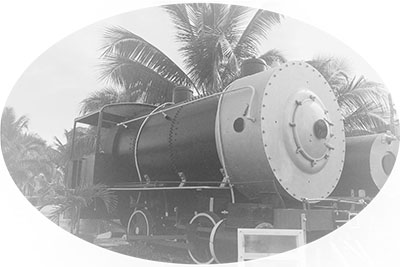
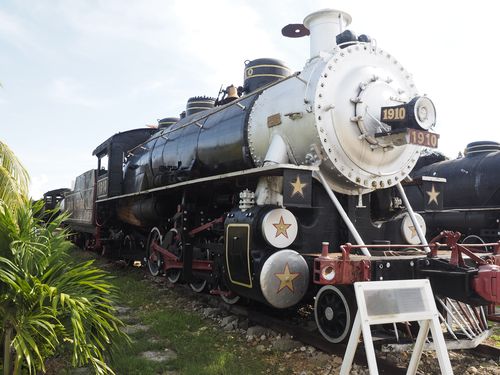
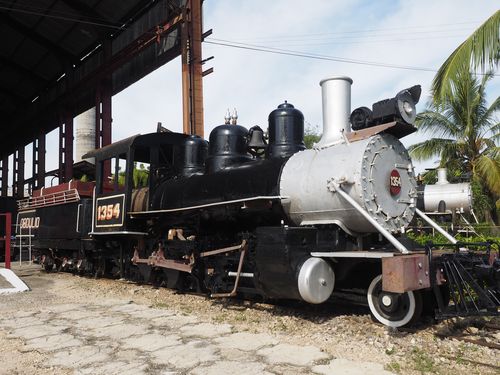
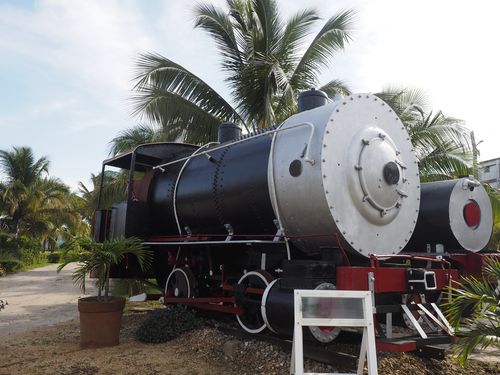
 IIn Remedios, Cuba, the Old Locomotives form a heritage ensemble connected to the region’s railway history. These preserved machines reflect the importance of rail transport in local economic development, particularly for agricultural and industrial goods. They illustrate the evolution of traction technology and railway networks across different periods. Open to visitors, the site provides a visual and educational perspective on this technical heritage. The locomotives, either maintained in their original condition or restored, contribute to the preservation and interpretation of a significant industrial legacy within the Cuban context.
Remedios • Old Locomotives
Remedios • Old Locomotives
Remedios • Old Locomotives
Monument profile
Old Locomotives
Monument categories: Iconic vehicles, Steam train
Monument families: Civil engineering structures (bridges, wells, etc.) and factories • Museum, remarkable architecture or group of buildings
Monument genres: Economic, Cultural or scientific
Geographic location: Remedios • Cuba
Construction period: 20th century AD
• Links to •
• List of videos about Remedios on this site •
Remedios, Marcelo Salado Sugar Museum • Cuba
Old Locomotives of Remedios: Historical Development of a Local Railway Heritage
Establishment and introduction of railway equipment
The group of Old Locomotives preserved in Remedios is directly associated with the development of railway infrastructure in the Villa Clara region during the second half of the nineteenth century. These machines were introduced to serve transport needs linked to agricultural production, particularly sugar cane, requiring reliable connections between cultivation areas and processing facilities. The locomotives currently preserved represent successive phases of acquisition, reflecting the integration of imported technology adapted to local operational conditions. Their presence indicates the gradual consolidation of a railway system designed to support regional economic activity.
Operational role and technical adaptation
The locomotives operated on secondary lines connected to broader railway networks, ensuring the movement of raw materials and processed goods. Their use was closely tied to industrial installations, especially sugar mills, where timing and capacity were essential. Over time, the locomotive fleet underwent adjustments, including replacements and technical modifications intended to improve efficiency and reliability. The diversity of models preserved in Remedios reflects these successive adaptations, with variations in mechanical configuration and capacity corresponding to changing operational requirements.
Withdrawal from service and preservation process
During the twentieth century, the progressive introduction of diesel traction led to the gradual withdrawal of steam locomotives from active service. Many units were dismantled, while others were retained locally, either due to logistical constraints or emerging recognition of their historical value. In Remedios, a selection of locomotives was preserved near former railway facilities or relocated to a designated display area. This preservation did not initially follow a unified program but resulted from incremental decisions that favored the retention of representative examples. Some locomotives have undergone limited interventions to stabilize their structures and maintain their physical integrity.
Transformation into a heritage ensemble
The preserved locomotives have acquired a new function as a heritage and interpretive resource. Their current presentation allows for the examination of railway technology as it existed during different phases of regional development. The ensemble forms part of the broader cultural landscape of Remedios, where industrial elements are integrated into heritage interpretation. The locomotives no longer serve a functional role in transport but act as material evidence of the technical systems that supported local production. Their significance lies in their capacity to document the operational history of the railway network through physical remains.
Global historical context
The introduction of locomotives in Remedios during the nineteenth century coincided with the expansion of railway networks in Western Europe and North America. Steam-powered transport systems were simultaneously being deployed in other parts of Latin America, including Mexico and Argentina. These developments occurred within a broader context of industrial growth and increasing demand for efficient transport of agricultural commodities. The diffusion of railway technology reflected interconnected economic transformations across multiple regions.
Structural configuration and technical composition of the Old Locomotives in Remedios
Spatial arrangement and site organization
The Old Locomotives preserved in Remedios are arranged within an open exhibition area associated with former railway infrastructure. Their placement follows a linear or slightly staggered alignment, reflecting the original positioning of rolling stock along tracks or within maintenance zones. Several locomotives are mounted on short preserved rail segments, while others rest on stabilized supports that maintain their original elevation. This configuration allows direct observation of each unit’s longitudinal proportions and mechanical articulation. The absence of permanent shelter exposes the structures to environmental conditions, affecting surface integrity and contributing to visible material degradation.
Structural composition and mechanical layout
Each locomotive is organized along a longitudinal chassis constructed from steel, forming the primary load-bearing frame. This chassis supports a cylindrical boiler positioned horizontally, which dominates the overall volume. At the front, the smokebox forms a distinct cylindrical extension connected to a vertical chimney, establishing the forward termination of the structure. The rear section incorporates the firebox and a driver’s cab, which is partially enclosed and defined by vertical walls and a simple roof structure. Large-diameter driving wheels are arranged in aligned sets beneath the chassis, linked by external connecting rods that remain visible and structurally integrated into the mechanical system.
Materials and fabrication techniques
The locomotives are primarily composed of steel and cast iron elements, assembled through riveting and bolting techniques. The boiler consists of riveted steel plates forming a pressure-resistant cylinder, with seams and joints clearly visible along its surface. The chassis and wheel assemblies are constructed from heavy metal components designed to withstand mechanical stress, while connecting rods and axles are forged to ensure durability and precise motion transfer. Secondary components within the cab, including flooring and internal fittings, may incorporate lighter materials such as wood or thin metal sheets. Surface layers reveal traces of original coatings and subsequent repainting, often altered by oxidation and exposure.
Functional zoning and internal organization
The internal organization of each locomotive follows a strict functional sequence. The front section houses the smokebox, connected to exhaust conduits directing combustion gases upward through the chimney. The central boiler encloses the water and steam generation system, occupying the largest portion of the structure. The rear firebox serves as the combustion chamber, accessible from the cab area. The driver’s cab contains control elements and openings that provide visibility along the track axis and lateral sides. In some cases, a separate tender unit is preserved, positioned behind the locomotive and structurally independent, used for storing fuel and water supplies.
Alterations, surface conditions and conservation state
The locomotives exhibit varying degrees of structural alteration due to prolonged exposure and the cessation of mechanical use. Metal surfaces show oxidation, material loss and deformation in secondary elements, particularly in external fittings and exposed joints. Restoration interventions remain limited, focusing on stabilization rather than reconstruction, with selective treatments applied to slow corrosion and preserve structural legibility. Moving components are immobilized, often fixed in place, maintaining their final operational configuration. The absence of protective enclosures has contributed to uneven preservation conditions across the ensemble, with some units retaining more complete structural integrity than others.