

 Français (France)
  Nederlands (nl-NL)
 The Havana Club Museum is an exhibition space located in the historic center of Havana and dedicated to the culture and production of Cuban rum. Housed in a restored building in the old city, the museum presents various aspects of the development and manufacture of this beverage closely associated with Cuba. The exhibition route explains the different stages of rum production, the raw materials involved, and the role of rum in the country’s economy and society. Objects, interpretive displays, and demonstrations accompany the visit. The museum functions as an educational venue that introduces visitors to the historical and cultural significance of rum in Havana.
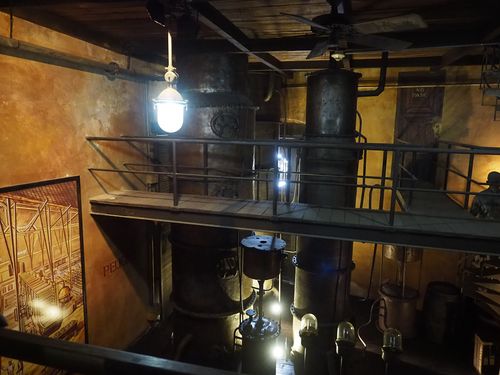
Havana • Havana Club Museum: stills
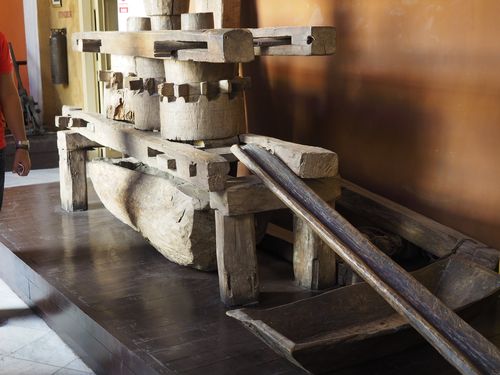
Havana • Havana Club Museum: press for sugar cane
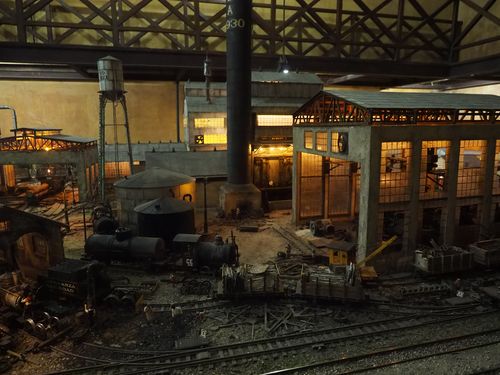
Havana • Havana Club Museum: model of a train carrying sugar cane
Monument profile
Havana Club Museum
Monument category: Museum
Monument family: Museum, remarkable architecture or group of buildings
Monument genre: Cultural or scientific
Geographic location: Havana • Cuba
Construction period: 21th century AD
• Links to •
• List of videos about Havana on this site •
Havana, the capital • Cuba
History of the Havana Club Museum in Havana
Origin of the building and early urban use
The Havana Club Museum occupies a historic building located in the old quarter of Havana, close to the port and the Plaza de San Francisco de Asís. The structure dates from the colonial period and originally formed part of the dense urban fabric that developed around the commercial and maritime activities of the city. Buildings in this area were closely connected with Havana’s role as a Caribbean port within the Spanish colonial trade network.
Before its transformation into a museum, the building served various urban functions typical of commercial districts in the historic center. Its position near the harbor made it suitable for activities related to storage, trade, and administrative work associated with port commerce. Over time the structure remained integrated into the evolving urban environment of Old Havana, even as economic and political changes altered the use of surrounding buildings.
During the twentieth century, the building survived the transformations that affected the historic center of Havana. Its structure was preserved despite changes in urban activity and the gradual decline of certain commercial functions in the district.
Creation of the museum and institutional project
The Havana Club Museum was established in the early twenty-first century as a cultural project dedicated to the history and production of Cuban rum. The initiative was developed through cooperation between the Havana Club brand and Cuban cultural institutions. The objective was to create a public space that would present the historical development of rum production and its role within Cuban society.
The choice of location in the historic center of Havana was deliberate. The old city had become a focal point for cultural tourism and heritage conservation programs. Installing the museum in a historic building allowed the project to combine industrial history with architectural heritage.
The interior spaces were adapted to accommodate permanent exhibitions devoted to the production of rum. The museum narrative explains the stages of production, including the cultivation of sugarcane, the fermentation process, distillation, and the aging of rum. These elements were presented through displays, objects, and interpretive installations designed to guide visitors through the development of the Cuban rum industry.
Development of the museum’s functions
Following its opening, the museum became a cultural site dedicated to presenting the traditions and technical processes associated with Cuban rum. The exhibition spaces include historical objects related to rum production, explanatory installations, and scale models illustrating the equipment used in distillation. A small demonstration distillery was incorporated into the museum to illustrate the functioning of traditional production techniques.
Guided presentations form an important component of the visitor experience. Museum staff explain the equipment and demonstrate aspects of rum production, providing visitors with a structured understanding of the processes involved. These demonstrations reinforce the museum’s educational role and distinguish it from purely exhibition-based institutions.
The museum gradually became integrated into the network of cultural attractions located within the historic district of Havana. Its subject matter links industrial production with cultural identity, presenting rum as a product associated with Cuban economic and social history.
Current role and conservation of the building
The adaptation of the building for museum use required restoration and structural consolidation in order to accommodate visitors and exhibition installations. These works were carried out as part of broader rehabilitation initiatives undertaken in the historic center of Havana during the late twentieth and early twenty-first centuries.
The structure of the building was preserved during the transformation process, while interior spaces were modified to support exhibition displays and visitor circulation. The museum continues to function as an interpretive center dedicated to the cultural significance of rum in Cuba.
Today the Havana Club Museum operates as both a cultural institution and a tourism-oriented attraction within the old city. The building remains actively used for exhibitions, guided demonstrations, and educational activities connected with the history of Cuban rum.
Global historical context
The creation of the Havana Club Museum occurred during the early decades of the twenty-first century, a period marked by the expansion of cultural tourism and the development of museums dedicated to industrial and gastronomic heritage. During these years, many cities established institutions focused on the history of specific products and local industries. At the same time, international tourism experienced significant growth, increasing interest in cultural and heritage sites. These developments encouraged the establishment of museums dedicated to traditional production and regional economic activities.
The museum is located in the historic center of Havana, which was inscribed on the UNESCO World Heritage List in 1982 under the official designation “Old Havana and its Fortification System.”
Architecture of the Havana Club Museum in Havana
Urban setting and spatial integration within the historic district
The Havana Club Museum occupies a historic building situated in the eastern sector of Old Havana, close to the harbor and the Plaza de San Francisco de Asís. The structure forms part of a continuous row of buildings aligned along the street, reflecting the dense urban pattern characteristic of the colonial city. The building’s façade contributes to the definition of the street frontage and maintains the architectural rhythm typical of the surrounding blocks.
The parcel on which the museum stands follows the rectangular configuration common in the historic center, where buildings extend deep into the block while presenting a relatively narrow façade toward the street. This elongated plan allows interior spaces to be organized as a sequence of rooms connected through corridors or transitional areas. The relationship between the exterior façade and the interior spatial arrangement reflects the original commercial and residential functions of the structure before its adaptation as a museum.
The museum building rises several levels above the street and maintains proportions comparable to neighboring structures. Its vertical scale remains consistent with the urban context, ensuring that the building integrates visually with the surrounding architecture while retaining a distinct presence.
Composition of the façade and architectural articulation
The façade presents a regular arrangement of openings distributed across several vertical bays. At street level, large openings originally facilitated access for commercial or storage activities. These ground-level openings are framed by masonry elements that emphasize the structural divisions of the façade.
The upper levels contain rectangular windows placed in a regular rhythm along the elevation. Many of these openings are accompanied by wrought-iron balconies or guardrails projecting slightly from the wall surface. The metalwork introduces a secondary architectural layer that contrasts with the solidity of the masonry walls.
Window frames and lintels are defined by molded elements that provide subtle articulation without elaborate decoration. Horizontal cornices mark the transitions between the floors and create a clear visual separation between the levels of the building. The façade is finished with plaster that covers the underlying masonry and produces a unified exterior surface.
The architectural language of the façade is restrained, emphasizing structural clarity rather than ornamental complexity. The repetition of windows and balconies produces a balanced composition in which vertical and horizontal elements interact to define the overall rhythm of the elevation.
Interior spatial organization and circulation
The interior of the building is organized around a central spatial structure that provides light and ventilation to the surrounding rooms. This internal arrangement corresponds to layouts frequently found in historic buildings in Havana, where a central courtyard or open space allows air circulation within the dense urban fabric.
Rooms are distributed around this central space and connected through corridors that establish a clear circulation pattern across the building. The museum’s exhibition areas occupy these rooms, which have been adapted to accommodate display installations while retaining the original spatial divisions.
The ground floor functions as the main entrance zone and includes spaces used for reception and introductory exhibits. Upper floors contain additional galleries arranged in sequence, guiding visitors through the museum’s narrative. The layout allows visitors to move progressively from one room to another while maintaining an understanding of the building’s internal structure.
Vertical circulation is provided by staircases positioned at transitional points within the plan. These staircases connect the different levels and define the progression of the museum route. Their position ensures movement between floors without interrupting the continuity of the exhibition spaces.
Interior volumes are characterized by relatively high ceilings that contribute to natural ventilation and create spacious environments for exhibition displays. The proportions of these rooms reflect the original architectural design of the building prior to its adaptation for museum use.
Construction techniques and building materials
The structural system of the museum building is based on load-bearing masonry walls constructed from stone and brick. These walls form the primary structural framework and support the floors and roof of the building. The masonry technique provides stability while allowing the structure to withstand the climatic conditions of Havana.
Floors are supported by timber or masonry structural elements resting on the load-bearing walls. Wooden beams or similar components span the interior spaces and support the floor surfaces of the upper levels. These elements contribute to the internal organization of the building by dividing it into distinct horizontal layers.
Exterior surfaces are coated with plaster that protects the masonry from humidity and weathering while providing a uniform appearance to the façade. The wrought-iron balconies and railings visible on the façade represent additional structural components attached to the masonry walls.
The roof structure consists of a framework designed to protect interior spaces from tropical rainfall while allowing effective drainage. Roofing materials were selected to withstand high humidity and seasonal storms typical of the Caribbean climate.
Architectural adaptation and conservation
The transformation of the building into the Havana Club Museum required architectural interventions designed to accommodate exhibition functions while preserving the historic structure. Interior spaces were reorganized to allow the installation of display cases, interpretive panels, and demonstration equipment associated with rum production.
Structural reinforcement was carried out in several areas to ensure visitor safety and the stability of the building. These interventions included strengthening floors, stabilizing walls, and installing modern lighting systems adapted to exhibition environments.
Restoration work focused on maintaining original architectural elements such as masonry walls, window openings, and balcony structures. The objective of these conservation efforts was to retain the historical character of the building while enabling its continued use as a public cultural space.
Ongoing maintenance addresses the effects of Havana’s humid maritime climate on the building materials. Periodic repairs to plaster surfaces, metal elements, and structural components ensure that the building remains stable and integrated within the historic urban landscape of Old Havana.