

 Français (France)
  Nederlands (nl-NL)
 The Vietnam National Museum of Fine Arts in Hanoi is one of the country’s leading cultural institutions dedicated to the preservation and presentation of visual arts. Located in the Vietnamese capital, the museum houses an extensive collection that reflects different periods and artistic traditions of the country. Its holdings include paintings, sculptures and various artistic objects illustrating the development of Vietnamese artistic expression and its interactions with other cultural influences. The museum also plays an important role in research, conservation and public education. Through exhibitions and educational programs, it contributes to the understanding and appreciation of Vietnam’s artistic heritage.

Hanoi • National Museum of Fine Arts
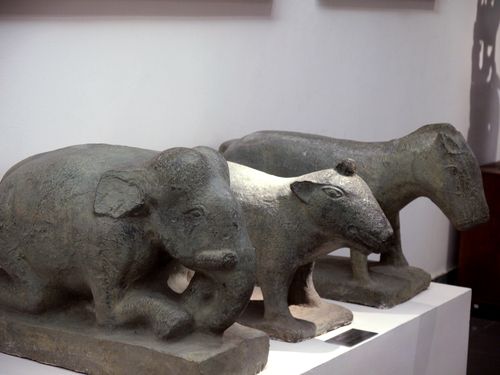
Hanoi • National Museum of Fine Arts

Hanoi • National Museum of Fine Arts
Monument profile
National Museum of Fine Arts
Monument category: Museum
Monument family: Museum, remarkable architecture or group of buildings
Monument genre: Cultural or scientific
Geographic location: Hanoi • Vietnam
Construction period: 20th century AD
• Links to •
• List of videos about Hanoi on this site •
Hanoi, the capital • Vietnam (EN)
History of the Vietnam National Museum of Fine Arts in Hanoi
Political and social context of the institution
The Vietnam National Museum of Fine Arts in Hanoi emerged within a complex historical environment shaped by colonial administration, national independence movements, and the cultural policies of the modern Vietnamese state. The institution was created to preserve and present the artistic heritage of the country, reflecting broader efforts to construct a coherent national cultural identity during the twentieth century.
The origins of the museum are closely linked to the cultural transformations that occurred during the French colonial period in Indochina. Beginning in the late nineteenth century, colonial authorities introduced new educational and administrative institutions that reshaped urban life in Hanoi. Among these initiatives was the creation of formal artistic education programs intended to train local artists according to academic principles derived from European traditions.
The establishment of the École des Beaux-Arts de l’Indochine in Hanoi in 1925 played a decisive role in this development. The school aimed to introduce academic techniques such as oil painting, perspective, and anatomical drawing while encouraging students to explore local artistic traditions. The emergence of a modern Vietnamese artistic community during the interwar period laid the intellectual foundation for the later creation of a national museum dedicated to visual arts.
After the end of the Second World War and the proclamation of Vietnamese independence in 1945, the country entered a prolonged period of political conflict and institutional transformation. Cultural institutions were increasingly viewed as instruments for preserving national identity and educating the public about the historical continuity of Vietnamese culture. In this context, the creation of a museum devoted to fine arts became an important cultural objective.
Foundation of the museum and development of its collections
The Vietnam National Museum of Fine Arts was officially established in 1966 in Hanoi, at a time when the country was experiencing the intense political and military pressures of the Vietnam War. Despite these circumstances, the authorities of the Democratic Republic of Vietnam pursued cultural initiatives designed to strengthen national identity and preserve artistic heritage.
The museum was installed in a building originally constructed during the colonial period. The structure had previously served educational purposes, which made it suitable for conversion into a museum. Its transformation into a cultural institution reflected both practical considerations and symbolic intentions, as the reuse of an existing colonial-era building allowed it to be integrated into the cultural framework of the modern Vietnamese state.
The initial collections of the museum were assembled from a variety of sources. Works were gathered from educational institutions, state collections, and regional cultural repositories. Archaeological discoveries, traditional artworks, and modern paintings were gradually brought together in order to represent the diversity of artistic production across the Vietnamese territory.
Particular attention was given to sculptures, lacquer paintings, silk paintings, and folk art traditions. These works illustrated both historical artistic practices and the development of modern Vietnamese art in the twentieth century. The museum therefore functioned not only as a repository of historical objects but also as a platform for recognizing contemporary artistic expression.
Historical events influencing the site and the institution
The history of the museum cannot be separated from the major political events that affected Vietnam during the twentieth century. The years following its establishment were marked by continued military conflict and the division of the country. Cultural institutions such as the museum operated under conditions that often required the protection and relocation of artworks to safeguard them from potential damage.
During the later stages of the Vietnam War, the preservation of cultural heritage became a priority for cultural authorities. Museums played a role in protecting artifacts and artworks that represented the historical and cultural identity of the nation.
Following the reunification of Vietnam in 1975, the museum entered a new phase of development. The expansion of its collections accelerated as artworks from various regions of the country were incorporated into the national cultural framework. This process reflected broader efforts by the government to integrate diverse regional traditions into a unified national narrative.
Throughout the late twentieth century, the museum underwent several reorganizations and improvements in its exhibition systems. These changes were intended to modernize display methods and expand the representation of different artistic periods.
Global context and the development of national museums
The creation of the Vietnam National Museum of Fine Arts corresponded with broader global trends in the establishment of national museums during the twentieth century. Many newly independent countries sought to create cultural institutions capable of preserving their artistic heritage while reinforcing national identity.
Museums of fine arts in particular served as platforms for defining the artistic traditions of a nation. They brought together historical artifacts, religious artworks, and modern artistic creations in order to illustrate cultural continuity across generations.
In Southeast Asia, several countries established national museums during the mid-twentieth century as part of broader cultural policies. These institutions were intended not only to preserve heritage but also to present national culture to international audiences.
Within this context, the museum in Hanoi became an important cultural institution representing the artistic achievements of Vietnam. It also played a role in international cultural exchange, hosting exhibitions and collaborating with foreign museums.
Transformations and development over time
Since its foundation, the museum has undergone numerous transformations aimed at improving both conservation conditions and exhibition spaces. The growth of the collections required the expansion of galleries and the modernization of storage facilities.
Curatorial approaches also evolved over time. The museum gradually organized its displays according to chronological and thematic principles, allowing visitors to follow the development of Vietnamese art from early historical periods to modern artistic movements.
Temporary exhibitions became an important component of the museum’s activities. These exhibitions often highlight specific artists, regional traditions, or thematic aspects of Vietnamese art. Such initiatives have contributed to maintaining the museum as an active cultural center rather than a static repository of objects.
The museum has also developed educational programs aimed at students, researchers, and the general public. Workshops, lectures, and guided visits help visitors better understand the historical and artistic context of the works on display.
Contemporary role and cultural significance
Today, the Vietnam National Museum of Fine Arts occupies a central place in the cultural life of Hanoi and the country as a whole. It is one of the principal institutions dedicated to the preservation, study, and presentation of Vietnamese visual arts.
The museum serves multiple audiences, including scholars, students of art, local visitors, and international tourists. Its permanent exhibitions present the historical development of Vietnamese artistic traditions, while temporary exhibitions introduce new perspectives on modern and contemporary creativity.
Beyond its function as an exhibition space, the museum also contributes to the formation of cultural identity. By presenting artworks as historical testimonies, it reinforces the connection between artistic production and the broader history of Vietnamese society.
The institution also plays a role in cultural diplomacy. Through collaborations with foreign museums and participation in international exhibitions, the museum contributes to the global recognition of Vietnamese art.
Conservation and modern preservation challenges
The preservation of the museum building and its collections represents an ongoing challenge. The tropical climate of northern Vietnam, characterized by high humidity and seasonal temperature variations, can affect both artworks and architectural structures.
Urban expansion in Hanoi has also created new pressures. Increased traffic, air pollution, and urban development require careful monitoring to protect historical buildings and museum collections.
In response to these challenges, conservation programs have been implemented to improve environmental controls and restore certain architectural elements of the building. These initiatives aim to ensure that both the structure and the artworks it houses remain protected for future generations.
The Vietnam National Museum of Fine Arts therefore continues to function as a key cultural institution, combining historical preservation, artistic research, and public education within a rapidly evolving urban environment.
Architecture of the Vietnam National Museum of Fine Arts in Hanoi
Architectural conception and overall design
The building that houses the Vietnam National Museum of Fine Arts in Hanoi represents an important example of institutional architecture developed in Indochina during the early twentieth century. Originally constructed during the colonial period to serve as an educational institution, the structure reflects the architectural dialogue that emerged between European design principles and the environmental and cultural conditions of Southeast Asia.
The architectural composition of the building is characterized by balanced proportions, functional spatial organization, and a careful adaptation to the tropical climate of northern Vietnam. Rather than reproducing European architectural models without modification, the design incorporates several structural and environmental adaptations intended to improve comfort and durability in a humid monsoon climate.
The building is organized around a relatively symmetrical layout composed of several wings connected by corridors and internal courtyards. This configuration allows for efficient circulation within the complex while ensuring that interior spaces receive sufficient natural light and ventilation. The architectural plan reflects the educational function for which the building was originally intended, while its later transformation into a museum benefited from the clarity and flexibility of this spatial arrangement.
Technological and architectural innovations
Although the structure does not present technological experimentation in the sense of monumental engineering works, it nevertheless demonstrates a series of architectural innovations typical of colonial architecture in Southeast Asia. One of the most important features is the adaptation of European construction techniques to the climatic conditions of the region.
The building incorporates large windows, open corridors, and shaded galleries designed to encourage cross-ventilation. This passive ventilation system reduces interior heat accumulation and allows air to circulate freely throughout the structure. Such design solutions were widely adopted by architects working in tropical regions during the early twentieth century.
Roof design also plays a crucial role in regulating temperature and protecting the building from heavy rainfall. The steeply pitched roofs allow rainwater to drain rapidly during monsoon storms while providing shaded areas that reduce direct solar exposure on the walls and windows.
The structural system relies on load-bearing masonry walls combined with reinforced elements capable of supporting the building’s multiple levels. The arrangement of columns and internal supports ensures the stability of the structure while allowing large interior spaces suitable for educational or exhibition purposes.
The use of wide corridors and transitional spaces between interior rooms also contributes to the building’s environmental performance. These intermediate spaces act as thermal buffers, protecting interior rooms from direct heat and improving the overall climatic comfort of the building.
Materials and construction techniques
The construction materials used in the building reflect a combination of locally available resources and construction methods introduced during the colonial period. Brick masonry forms the primary structural material for the walls, providing both strength and thermal mass. The thick masonry walls help regulate interior temperatures by slowing the transfer of heat between exterior and interior environments.
Exterior surfaces are often coated with protective plaster or lime-based finishes that shield the masonry from humidity and seasonal weathering. These coatings also contribute to the building’s aesthetic coherence by creating smooth surfaces suitable for architectural ornamentation.
Timber was used extensively for certain structural elements, particularly in roof frameworks and floor systems. Wooden beams allowed builders to span interior spaces efficiently while maintaining a degree of flexibility in the construction process. The use of timber also reflected the availability of suitable wood species in the region.
The roof structure typically consists of timber framing covered with ceramic tiles. These tiles provide effective protection against heavy rainfall and contribute to the building’s distinctive silhouette. Their weight also helps stabilize the roof structure during seasonal storms.
Stone or molded cement elements were used for certain decorative and structural details such as window frames, staircases, and entrance features. These components reinforce the durability of high-use areas while providing modest decorative accents consistent with the institutional character of the building.
Architectural influences and stylistic synthesis
The architectural style of the building reflects a hybrid approach that combines European institutional design with adaptations derived from Vietnamese and broader Southeast Asian architectural traditions. The overall composition of the façade, including the symmetry of the elevation and the rhythm of windows and pilasters, follows principles common in European civic architecture of the late nineteenth and early twentieth centuries.
At the same time, several features reveal an adaptation to regional architectural practices. The extended roof eaves, open galleries, and emphasis on ventilation correspond to architectural strategies long used in Vietnamese buildings to cope with heat and humidity.
This synthesis of influences is often described as part of a broader architectural approach developed in French Indochina, where architects sought to integrate European construction methods with climatic adaptations appropriate for tropical environments. Rather than imposing purely European architectural models, designers experimented with forms that could function effectively in the local context.
Decorative elements remain relatively restrained. Ornamentation typically appears in the form of modest cornices, window frames, and occasional relief patterns. This restraint emphasizes the building’s structural clarity and institutional character rather than elaborate decorative display.
Spatial organization and structural layout
The building’s spatial organization reflects its original educational purpose and its later adaptation as a museum. The structure is composed of multiple wings connected by internal corridors and galleries, creating a series of interconnected spaces that can accommodate different functions.
Interior rooms are relatively large and benefit from high ceilings, which improve air circulation and create a comfortable environment in a warm climate. The generous ceiling height also allows sufficient wall space for the display of artworks, an advantage that facilitated the building’s conversion into a museum.
Internal courtyards form an important component of the architectural layout. These open spaces allow natural light to penetrate deeper into the building while providing visual and climatic relief within the complex. Courtyards also serve as transitional spaces between different sections of the structure.
Entrances to the building are emphasized through modest architectural features such as stairways or portico-like projections. These elements create a clear sense of access while maintaining the restrained architectural character of the structure.
The circulation pattern within the building follows a logical sequence of corridors and rooms, which allows visitors to move easily through the exhibition spaces. This layout proved particularly advantageous when the building was adapted for museum use.
Dimensions and notable architectural characteristics
Although the building was not conceived as a monumental structure comparable to royal palaces or government complexes, its proportions and layout give it a notable presence within the urban environment of Hanoi. The elongated wings, balanced façades, and layered rooflines create a distinctive architectural profile.
One of the building’s notable characteristics is the harmony between interior and exterior spaces. The integration of courtyards, corridors, and galleries creates a sequence of spatial experiences that transition gradually between open and enclosed environments.
Another distinctive aspect is the adaptability of the building. Its modular interior layout allowed it to be transformed from an educational facility into a museum without requiring major structural modifications. This flexibility has played an important role in the building’s long-term use.
The architectural composition also emphasizes horizontality, with extended rooflines and broad façades that reflect the architectural vocabulary often used in colonial institutional buildings throughout Southeast Asia.
Architectural significance and conservation challenges
Today, the architecture of the Vietnam National Museum of Fine Arts represents an important historical layer in the urban development of Hanoi. The building illustrates the architectural experimentation that occurred during the colonial period when European design concepts were adapted to tropical environments.
Its significance lies not only in its function as a museum but also in its representation of a particular moment in architectural history when cultural and environmental influences were combined in new ways. The building demonstrates how institutional architecture evolved to address both symbolic and practical concerns.
Preserving the structure presents several challenges. The humid tropical climate can affect masonry surfaces, timber elements, and roofing materials. Seasonal temperature fluctuations and high humidity levels require careful monitoring to prevent structural deterioration.
Urban expansion in Hanoi also creates pressures on historical buildings. Increased traffic, pollution, and surrounding development can influence the preservation conditions of heritage structures. As a result, conservation programs must address both structural maintenance and environmental protection.
Restoration initiatives have aimed to maintain the architectural integrity of the building while upgrading its facilities to meet modern museum standards. These efforts ensure that the structure continues to serve both as a cultural institution and as a significant example of early twentieth-century architecture in Vietnam.