

 Français (France)
  Nederlands (nl-NL)
 The Franciscan Church in Peermade is one of the main Christian landmarks in this hill region of Kerala in southern India. Located in an area known for plantations and transport routes linking the highlands with the coastal plains, the church reflects the long-standing presence of Catholic communities in the Western Ghats. The monument continues to play an important religious and social role for the local population through parish activities, liturgical celebrations, and community gatherings. The church also attracts visitors interested in the religious heritage of Kerala and in the characteristic landscapes surrounding the town of Peermade.
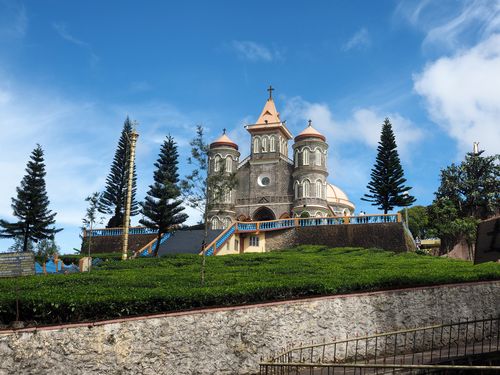
Peermade • Franciscan Church
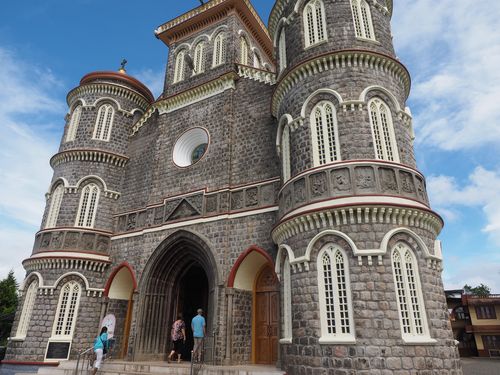
Peermade • Franciscan Church
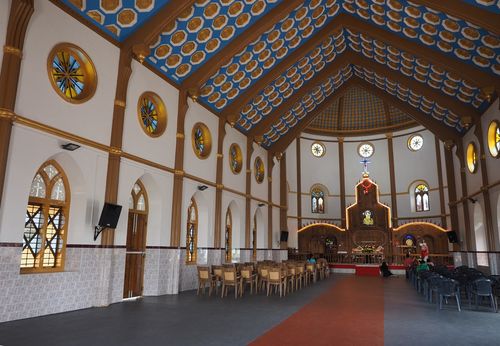
Peermade • Franciscan Church
Monument profile
Franciscan Church
Monument category: Church
Monument family: Church, cathedral, basilica, chapel
Monument genre: Religious
Cultural heritage: Christian
Geographic location: Peermade • Kerala • India
Construction period: 19th century AD
• Links to •
• List of videos about Peermade on this site •
Peermade, Franciscan church • Kerala, India
Development of the Franciscan Church in Peermade and the Highlands of Kerala
Establishment of Catholic Communities in Peermade
The history of the Franciscan Church in Peermade is closely connected to the development of the hill regions of present-day Idukki district in Kerala. Until the nineteenth century, much of this mountainous area remained sparsely populated and heavily forested. The expansion of tea, coffee, and spice plantations during the British colonial period gradually transformed Peermade into an important agricultural and transit zone linking the highlands with the coastal regions of Kerala.
The arrival of migrant workers, traders, and Christian families from other parts of Kerala contributed to the formation of Catholic communities in the region. Franciscan missionaries participated in this process by establishing religious institutions intended to support settlers living in plantation areas. The church in Peermade emerged within this context of demographic growth and expanding ecclesiastical organization in the Western Ghats.
Religious and Social Functions of the Church
The Franciscan Church served not only as a place of worship but also as a center of social organization for the local Catholic population. In the plantation districts of Kerala, church institutions frequently played an important role in education, charitable activities, and the coordination of community life among workers and rural families.
The Franciscan presence introduced a missionary structure focused on pastoral care in isolated hill settlements. The church became an important religious center for Catholics living in and around Peermade at a time when transportation and public infrastructure in the region remained limited. Religious festivals, parish gatherings, and liturgical celebrations strengthened the role of the church within the social fabric of the plantation communities.
During the twentieth century, the growth of the local population increased the importance of parish activities. The church continued to function as a focal point for religious ceremonies and community events while maintaining its association with the Franciscan tradition in Kerala.
Transformations and Preservation of the Monument
Like many churches located in the plantation regions of Kerala, the Franciscan Church in Peermade underwent several phases of renovation and expansion during the twentieth century. These modifications were primarily linked to the increase in the number of parishioners and the need to adapt the church facilities to changing liturgical and community requirements.
Maintenance work focused on protecting the structure from the effects of heavy rainfall, humidity, and vegetation associated with the climate of the Western Ghats. Repairs and restorations periodically affected the roof, walls, drainage systems, and surrounding spaces used for parish activities.
The urban environment of Peermade also evolved with the development of roads, tourism, and plantation infrastructure across the district. Despite these changes, the church retained its religious function and remained an active center of Catholic worship within the region.
The Church in the Global Context of Its Development Period
The development of Catholic missions in the hill regions of Kerala occurred during the broader expansion of European missionary networks in Asia during the nineteenth and early twentieth centuries. In the same period, British colonial authorities expanded plantation economies in several tropical regions of the world. Industrialization in Europe increased international demand for tea, coffee, and spices, contributing to the economic transformation of mountain regions such as Peermade.
Architectural Organization of the Franciscan Church in Peermade
Position of the Church Within the Landscape of Peermade
The Franciscan Church of Peermade stands within the mountainous environment of the Western Ghats in Kerala, a region characterized by steep terrain, dense vegetation, and plantation agriculture. The church occupies an elevated and visually accessible position connected to local roads developed during the expansion of tea and spice estates in the colonial period. Its placement reflects both practical accessibility for the local Catholic community and the constraints imposed by the hilly topography.
The surrounding grounds provide open areas used for religious gatherings, parish activities, and processional movement. The monument is generally accompanied by auxiliary parish structures associated with administrative, educational, or residential functions linked to the Franciscan presence in the region. The relationship between the church building and the surrounding landscape remains important because the heavy rainfall and humid climate directly influence drainage systems, circulation areas, and roof design.
Spatial Layout and Interior Configuration
The church follows a longitudinal layout organized around a principal nave leading toward the sanctuary and main altar. The façade functions as the dominant visual element of the structure and establishes the axial progression into the liturgical space. The overall composition remains relatively restrained, consistent with the architectural simplicity frequently associated with Franciscan ecclesiastical buildings.
Inside, the nave provides the main congregational space for worshippers, while secondary liturgical zones are distributed along the sides of the main interior volume. These spaces may include side chapels, devotional niches, or smaller prayer areas integrated into the structure. The sanctuary occupies the focal point of the building and is visually emphasized through elevation, lighting, or decorative treatment.
Natural ventilation forms an important aspect of the architectural organization. Large windows and elevated openings facilitate airflow inside the church and reduce the accumulation of humidity during the monsoon season. The arrangement of openings also contributes to the diffusion of natural light within the interior while limiting direct exposure to heavy rain.
The proportions of the church remain moderate compared to large urban cathedrals, reflecting its function as a parish church serving a regional community in the plantation highlands of Kerala.
Construction Materials and Architectural Features
The church is primarily constructed using masonry coated with plaster or lime-based finishes adapted to humid climatic conditions. Structural elements are designed to resist prolonged exposure to rainfall and moisture typical of the Western Ghats. Roofing systems represent one of the most important architectural components of the building due to the intensity of seasonal monsoon precipitation.
The roof generally features steep slopes that accelerate water runoff and reduce the risk of infiltration. Extended roof overhangs help protect the exterior walls and entrance zones from rain exposure. Timber components may be incorporated into roof structures, ceilings, or interior detailing, reflecting local building practices adapted to the mountain environment.
The façade typically combines symmetry with restrained decorative elements. Entrances, arched openings, and a bell tower or vertical façade section contribute to the visual identity of the church within the surrounding landscape. Ornamentation remains limited when compared to highly elaborate ecclesiastical monuments elsewhere in India. Decorative emphasis is usually concentrated around the altar area, religious statuary, and liturgical furnishings rather than across the entire exterior surface.
Interior furnishings include pews, altars, statues, and devotional elements associated with Catholic liturgical practice. The use of color and decoration generally prioritizes clarity of the worship space rather than dense ornamental programs.
Alterations, Maintenance, and Preservation
The Franciscan Church in Peermade has undergone several phases of repair, expansion, and modernization linked to the evolving needs of the parish community. Modifications have primarily affected roofing systems, drainage infrastructure, floor surfaces, and circulation areas surrounding the church.
Continuous exposure to moisture and vegetation requires regular maintenance of exterior walls, plaster coatings, and structural timber elements. Restoration work has focused on preventing water infiltration and stabilizing parts of the building affected by climatic deterioration.
Additional interventions have included adaptations to accommodate increased attendance during religious celebrations and improvements to accessibility around the church complex. Despite these changes, the monument has preserved its principal architectural organization and continues to reflect the practical relationship between Catholic ecclesiastical design and the environmental conditions of the Kerala highlands.