

 Français (France)
  Nederlands (nl-NL)
 The caravanserai in Mandu, located in the Indian state of Madhya Pradesh, is an important example of the region's historical significance in trade and cultural exchange during medieval times. This structure was designed to provide shelter for merchants, their goods, and their animals on long trade routes. Its functional and secure architecture highlights the practicality required for accommodating travelers. The site underscores Mandu's strategic role in ancient commercial networks.
Monument profile
Caravanserai
Monument category: Caravanserai
Monument family: Fort, Fortifications or Citadel
Monument genre: Military
Cultural heritage: Islamic
Geographic location: Mandu • Madhya Pradesh • India
Construction period: 15th century AD
• Links to •
• Dynasties that contributed to the construction of the monument •


• List of videos about Mandu on this site •
Mandu, ghost capital • Madhya Pradesh, India
The Caravanserai of Mandu: A Historical Intersection of Politics, Society, and Trade
Political and Social Motivations Behind Its Construction
The caravanserai of Mandu, built during the Sultanate of Malwa in the 15th century, was a critical infrastructure project reflecting the region's importance in facilitating trade and cultural exchange. As Mandu rose to prominence under the sultans, the construction of this caravanserai was strategically motivated to support commerce and secure political alliances. It served as a safe haven for merchants and travelers, offering accommodations, storage for goods, and facilities for animals.
Beyond commerce, the caravanserai also embodied the social values of the time. It became a hub for interactions among diverse communities, fostering cultural integration and mutual dependency, which were crucial for maintaining the Sultanate’s power and influence.
Historical Events and Their Impact on the Region
Throughout its history, Mandu experienced various shifts in power, from the rise of the Malwa Sultanate to its incorporation into the Mughal Empire and later the Maratha dominion. Each of these eras left an imprint on the caravanserai. Under the Mughal Empire, Mandu retained its commercial significance, though the focus gradually shifted to other centers like Agra and Delhi.
The caravanserai played a role in facilitating the movement of goods, ideas, and people, contributing to the broader economic and political stability of the region. During the Maratha period, however, the decline in overland trade routes and the advent of colonial infrastructure led to its reduced use, marking a shift in its historical trajectory.
Global Context and Comparisons
The construction of the Mandu caravanserai aligns with a global trend during the medieval period, where trade routes were central to economic and political systems. Similar structures, such as caravanserais in Persia, Central Asia, and the Ottoman Empire, served as logistical hubs that supported commerce and reinforced state control over trade.
Compared to caravanserais along the Silk Road or those in Anatolia, Mandu’s structure reflects a blend of Islamic and local architectural styles, symbolizing the region’s unique cultural synthesis. Like its counterparts globally, the caravanserai of Mandu was not just a functional space but also a representation of the power and prosperity of its builders.
Transformations of the Monument Over the Centuries
Over the centuries, the caravanserai has undergone significant transformations, reflecting changes in its use and the powers that controlled it. Initially a bustling center for merchants, it later became a relic of historical significance as trade routes evolved and other means of transportation took precedence.
Architectural additions and renovations during different eras, including Mughal and Maratha influences, altered its original structure while preserving its core function as a communal space. Some parts of the caravanserai have deteriorated, while others remain intact, offering glimpses into the craftsmanship of its time.
Cultural Importance and Current State of Conservation
The caravanserai of Mandu is a testament to the region’s historical role as a crossroads of commerce and culture. Its robust construction and strategic location underscore its significance in supporting the economic and social networks of its era.
Currently, the monument stands as a site of cultural and historical interest, attracting scholars and tourists alike. However, its state of conservation is mixed, with certain sections well-preserved due to restoration efforts, while others face degradation from exposure to natural elements.
Challenges to Preservation
The preservation of the Mandu caravanserai faces several modern challenges, including:
- Natural Erosion: The harsh monsoon climate of Madhya Pradesh accelerates the deterioration of the structure’s stonework.
- Urban Encroachment: Development pressures around Mandu threaten the integrity of the site.
- Lack of Resources: Limited funding and expertise for restoration impede comprehensive conservation efforts.
- Tourism Impact: Unregulated visitor access has contributed to wear and tear on the monument.
Balancing the need for tourism with the protection of the site requires sustained efforts and collaboration between local authorities, historians, and conservation experts.
Conclusion
The caravanserai of Mandu represents a remarkable intersection of technological innovation, cultural exchange, and political strategy. Its architecture and historical significance continue to reflect the glory of the Sultanate of Malwa and the global trade networks of the medieval world. Ensuring the preservation of this monument is essential not only for safeguarding India’s rich heritage but also for fostering a deeper understanding of its role in the broader historical context.
The Caravanserai of Mandu: Architectural Innovation and Cultural Fusion during the Malwa Sultanate
Technological Advancements and Architectural Innovations
The caravanserai of Mandu, constructed during the 15th century under the Malwa Sultanate, is a remarkable example of the technological and architectural ingenuity of its time. Designed to accommodate merchants, travelers, and their goods, the structure demonstrates a deep understanding of functionality and durability.
The use of locally sourced materials, such as sandstone and basalt, highlights the builders’ expertise in working with available resources. The stones were carefully cut and fitted without extensive use of mortar, ensuring stability and longevity. Advanced techniques, such as vaulted ceilings and pointed arches, were employed to maximize space and distribute weight efficiently. The incorporation of rainwater harvesting systems and natural ventilation reflects a forward-thinking approach to environmental challenges.
Materials and Techniques Reflecting Grandeur
The primary construction materials include robust sandstone and basalt, chosen for their durability and resilience against the harsh climate of Madhya Pradesh. These materials were meticulously shaped and assembled, showcasing the craftsmanship of the Malwa artisans.
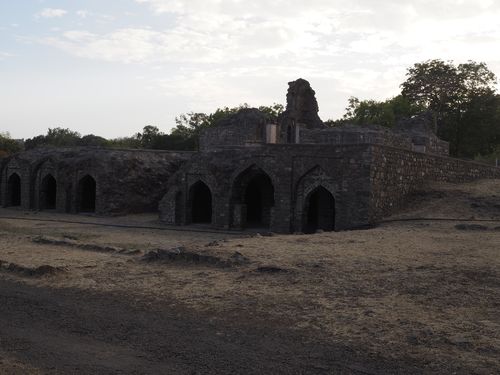
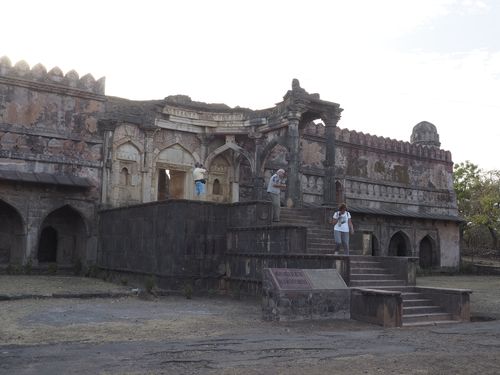
The vaulted chambers and arched gateways exemplify the use of Islamic architectural techniques, which enhanced both the structural integrity and the aesthetic appeal of the caravanserai. The floors were often paved with polished stone, ensuring smooth surfaces for the movement of goods and animals. Decorative elements, such as floral and geometric motifs, were carved into the stone, reflecting the Sultanate’s appreciation for artistry and detail.
A Unique Blend of Regional and Foreign Traditions
The caravanserai’s architecture embodies a fusion of regional and foreign influences, a hallmark of the Malwa Sultanate. Islamic elements, such as domes, arches, and intricate latticework, are seamlessly integrated with local design features like open courtyards and ornamental friezes inspired by nature.
The layout, with its large central courtyard surrounded by chambers, mirrors the design of similar structures in Central Asia and Persia. However, the addition of local motifs and practical features tailored to the Indian climate gives the monument a distinct identity. This synthesis of styles underscores Mandu’s role as a cultural and commercial hub.
Structure and Layout
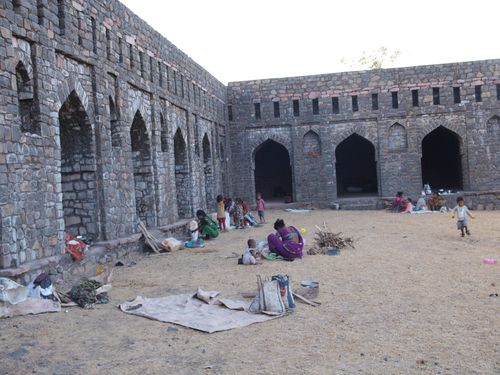
The caravanserai’s layout is both functional and symbolic. A spacious central courtyard serves as the focal point, surrounded by a series of vaulted chambers that provided lodging for merchants and storage for goods. The entrance is marked by grand arched gateways, designed to convey a sense of security and hospitality.
The structure also includes facilities such as water tanks and stables, catering to the needs of both travelers and their animals. The symmetry and organization of the spaces reflect careful planning, ensuring efficiency in movement and operations.
Notable Statistics and Anecdotes
Size and Capacity: The caravanserai could accommodate dozens of traders and their caravans, making it a vital node in the region’s trade network.
Engineering Feats: The rainwater harvesting system, with strategically placed channels and tanks, highlights the builders’ ingenuity in water management.
Cultural Importance: Historical records suggest that the caravanserai was a meeting point for merchants from as far as Persia, Central Asia, and the Deccan, contributing to the exchange of goods and ideas.
Contribution to International Recognition
While the caravanserai of Mandu is not yet listed as a UNESCO World Heritage Site, its architectural and historical significance position it as a strong candidate. The site exemplifies the ingenuity of medieval Indian architecture and its role in facilitating global trade networks. Recognition on an international platform would enhance its visibility and attract resources for its preservation.
Challenges to Preservation
The caravanserai faces several modern challenges, including:
Natural Erosion: The region’s monsoonal climate accelerates the deterioration of stone structures.
Urban Encroachment: Expansion of nearby settlements threatens the historical integrity of the site.
Tourism Impact: Unregulated foot traffic has led to wear and tear on delicate carvings and pathways.
Addressing these issues requires a concerted effort involving local authorities, conservation experts, and international organizations.