

 Français (France)
  Nederlands (nl-NL)
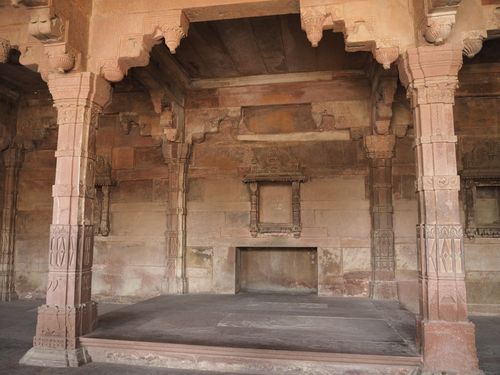
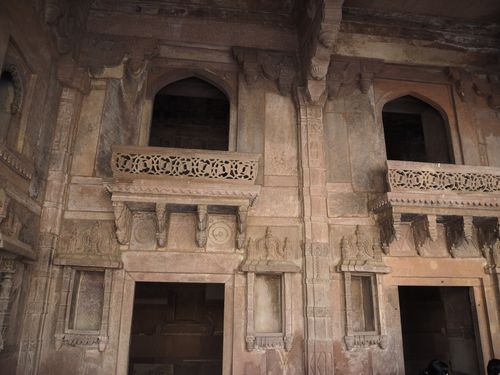
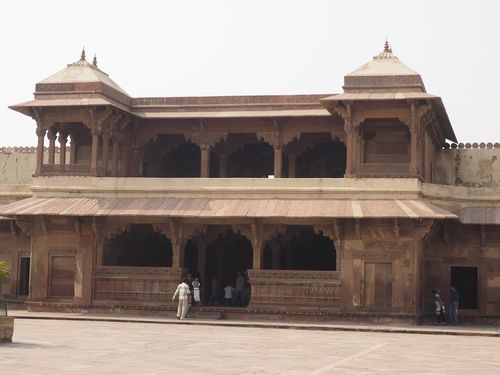
 Jodha Bai Palace, located in Fatehpur Sikri, Uttar Pradesh, India, stands as a significant example of Mughal architecture. Part of a larger complex built by Emperor Akbar, this palace primarily served as a royal residence. The palace's design showcases a blend of Hindu and Islamic influences, reflecting the cultural synthesis of the period. Features of the Jodha Bai Palace include spacious courtyards, elaborately decorated rooms, and grandiose doorways. Today, it attracts visitors from around the globe who are keen to explore the history and architecture of this pivotal era in Indian history.
Monument profile
Jodha Bai Palace
Monument category: Palace
Monument family: Palace and Annexes
Monument genre: Residential
Cultural heritages: Hindu, Islamic
Geographic location: Fatehpur Sikri • Uttar Pradesh • India
Construction period: 16th century AD
This monument in Fatehpur Sikri is inscribed on the UNESCO World Heritage List since 1986 and is part of the serial property "Fatehpur Sikri".See the UNESCO monuments featured on this site
• Links to •
• Dynasties that contributed to the construction of the monument •

• List of videos about Fatehpur Sikri on this site •
Fatehpur Sikri, the ephemeral capital • Uttar Pradesh, India
• References •
UNESCO: Fatehpur Sikri
Jodha Bai Palace in Fatehpur Sikri: Political Motivations, Historical Transformations, and Preservation Challenges
The Jodha Bai Palace, located in Fatehpur Sikri, Uttar Pradesh, India, is a significant architectural and historical landmark of the Mughal era. Built during the reign of Emperor Akbar in the late 16th century, this palace embodies the political and social aspirations of the Mughal dynasty, particularly Akbar's vision of cultural integration and administrative consolidation. Over the centuries, the palace has undergone various transformations reflecting changing political regimes, cultural influences, and conservation challenges. This article explores the motivations behind its construction, its historical importance, global context, and the efforts to preserve its integrity in the modern era.
Political and Social Motivations Behind Its Construction
The construction of Jodha Bai Palace is closely linked to Akbar’s policy of fostering unity among the diverse communities within his empire. Fatehpur Sikri was established as the Mughal capital in 1571, following Akbar's victory over Rajput rulers, and served as a political and administrative hub. The palace, named after Akbar’s Rajput wife, Mariam-uz-Zamani (popularly referred to as Jodha Bai), symbolizes his policy of religious tolerance and his desire to strengthen alliances with the influential Rajput clans.
By incorporating Hindu architectural elements alongside Islamic design principles, the palace exemplified Akbar's ambition to create a harmonious cultural blend within his empire. The establishment of Fatehpur Sikri also aimed to centralize power by bringing administration, governance, and culture together in one location. However, the city's strategic location ultimately proved challenging due to water shortages, leading to its abandonment in 1585 when the capital was moved to Lahore.
Major Historical Events and Their Impact
Fatehpur Sikri served as the capital of the Mughal Empire for approximately 15 years, during which it witnessed significant administrative reforms and cultural advancements. Akbar held court at this site, promoting policies such as Din-i-Ilahi, his syncretic religious philosophy that sought to bridge the gap between various faiths.
Despite its brief period of occupation, the city left a lasting impact on the region. It served as a model for future Mughal architectural and urban planning endeavors, influencing later structures such as the Red Fort in Delhi and Lahore Fort. The city's eventual decline was triggered by logistical challenges, particularly the inadequate water supply, forcing the Mughals to shift their administrative center elsewhere.
Even after its abandonment, Fatehpur Sikri remained a symbol of Mughal grandeur and was revisited by later rulers and the British colonial administration, who recognized its historical significance and initiated preservation efforts.
Global Context and Comparisons with Other Regions
The late 16th century was a period of significant transformations globally. While Akbar was consolidating his rule in India and fostering religious tolerance, Europe was experiencing the Renaissance, characterized by advancements in art, science, and exploration. In the Americas, European colonization was rapidly reshaping the geopolitical landscape, while in China, the Ming Dynasty was at the peak of its power, emphasizing trade and cultural expansion.
Compared to European Renaissance architecture, which focused on symmetry and classical influences, Mughal architecture, as seen in Jodha Bai Palace, emphasized intricate ornamentation, geometric patterns, and harmonious integration of natural elements. The architectural grandeur of Fatehpur Sikri stands in parallel with the opulent palaces of the Ottoman Empire and the palatial complexes of the Safavid dynasty in Persia, showcasing the Mughal Empire's position within a global network of cultural and political exchanges.
Transformations Over the Centuries
Over time, the Jodha Bai Palace has undergone several transformations, reflecting shifts in power and cultural influence. Following the Mughal era, the palace fell into a state of partial neglect during the British colonial period, although some restoration efforts were initiated in the 19th and 20th centuries.
Several elements of the palace, including its intricate stone carvings, frescoes, and courtyards, have experienced wear due to environmental exposure and human activity. Despite these challenges, the core structure remains largely intact, serving as an enduring example of Mughal architectural excellence.
Modern restoration efforts focus on preserving the original sandstone work and preventing further degradation of delicate carvings. Efforts have been made to maintain the palace’s authenticity while making it accessible to visitors, striking a balance between preservation and tourism.
Cultural Significance and UNESCO Recognition
In 1986, Fatehpur Sikri, including Jodha Bai Palace, was designated as a UNESCO World Heritage Site. This recognition has significantly boosted its international standing, attracting researchers, historians, and tourists from around the world.
The UNESCO status has brought increased funding and technical support for conservation efforts, ensuring that the site remains a valuable educational and cultural resource. The global recognition has also encouraged the Indian government to implement policies aimed at sustainable tourism and heritage management.
However, with increased footfall, the palace faces new challenges, such as structural degradation due to human impact and environmental pollution.
Challenges in Preservation and Modern Threats
Despite ongoing conservation efforts, the Jodha Bai Palace faces several modern challenges that threaten its long-term integrity:
Environmental Degradation: Exposure to air pollution, extreme weather conditions, and natural aging processes continue to erode the delicate sandstone carvings and structural elements.
Tourism Pressure: The influx of visitors, although beneficial for the local economy, places strain on the delicate heritage structures. Unregulated tourism can lead to wear and tear of the palace floors, walls, and carvings.
Urban Development: Encroachment and modern development around Fatehpur Sikri pose risks to the site's authenticity and aesthetic integrity.
Maintenance Costs: Ensuring continuous funding for preservation efforts remains a challenge, necessitating international collaborations and sustainable funding models.
Preservation strategies must therefore focus on proactive measures such as controlled visitor access, routine maintenance, and community involvement in safeguarding the monument.
Conclusion
The Jodha Bai Palace stands as a testament to the cultural and political vision of Emperor Akbar, embodying a unique synthesis of architectural styles and ideologies. Its significance transcends regional history, offering valuable insights into the broader context of Mughal rule and its global connections.
Despite facing challenges related to environmental degradation and tourism pressures, continued conservation efforts, supported by its UNESCO World Heritage status, ensure that this architectural masterpiece remains a source of inspiration and education for future generations. The palace not only represents India's rich cultural heritage but also serves as a reminder of the complexities of governance, cultural integration, and artistic expression in the early modern world.
Jodha Bai Palace in Fatehpur Sikri: A Testament to Mughal Technological Advancements and Cultural Synthesis
The Jodha Bai Palace, located within the grand complex of Fatehpur Sikri in Uttar Pradesh, India, stands as an enduring symbol of the architectural brilliance and technological innovation of the Mughal era. Constructed in the late 16th century under the reign of Emperor Akbar, this palace reflects the empire's sophisticated construction techniques, material selection, and a remarkable fusion of indigenous and foreign artistic influences. Its design, structure, and decorations provide valuable insights into the grandeur and forward-thinking vision of the Mughal period.
Technological Advancements and Construction Innovations
The construction of the Jodha Bai Palace was a reflection of the advanced engineering skills and architectural ingenuity of the Mughals. The builders employed a combination of traditional and innovative methods to create a durable and aesthetically pleasing structure.
Materials Used
The primary material used in the construction of the palace is red sandstone, a hallmark of Mughal architecture, sourced locally from the quarries of Rajasthan. This material was chosen not only for its durability but also for its ability to withstand extreme weather conditions. The sandstone was intricately carved with floral and geometric patterns, showcasing the precision of Mughal artisans.
Other materials included:
Lime mortar, used for binding the stones and providing resilience to the structure.
Blue ceramic tiles, which adorned parts of the palace, adding a vibrant contrast to the red sandstone and showcasing Central Asian influences.
Marble inlays, subtly incorporated in decorative elements to enhance the visual appeal.
Construction Techniques
The construction methods reflected the Mughals' emphasis on both aesthetics and functionality. Some notable techniques include:
Natural climate control features, such as ventilated courtyards and jali (perforated stone screens), which regulated airflow and maintained cooler indoor temperatures.
Symmetry and axial planning, ensuring that the layout of the palace adhered to strict geometric principles inspired by Persian and Indian architectural traditions.
Load-bearing arches and vaulted ceilings, which provided structural stability and contributed to the palace’s longevity.
Architectural Elements and Cultural Fusion
The Jodha Bai Palace is an exemplary model of cultural synthesis, blending elements from Rajput, Persian, and Islamic architectural traditions. This fusion was a reflection of Akbar’s policy of religious inclusivity and cultural amalgamation.
Notable Structural Features
The palace follows a quadrangular layout, with a spacious central courtyard surrounded by a series of interconnected rooms and halls. The main entrance, located on the eastern side, features imposing gateways adorned with delicate carvings, indicative of Rajput influence.
Distinctive architectural elements include:
Jharokhas (Overhanging Balconies): Typical of Rajput architecture, these balconies provided views of the surrounding landscape and added elegance to the façade.
Chhatris (Domed Pavilions): Positioned atop the palace, these domes add a distinctive skyline to the complex, embodying elements of both Indian and Persian aesthetics.
Intricate Lattice Work: The fine jali screens allowed for privacy while enabling air circulation, a concept deeply rooted in both Islamic and Hindu architectural traditions.
The decorative motifs blend floral patterns from Persian influences with traditional Indian carvings of animals and mythological figures, highlighting the cross-cultural interactions prevalent during Akbar’s reign.
Symbolism and Historical Significance
The palace's design and decorations not only served an aesthetic purpose but also carried symbolic meanings reflecting Akbar’s governance ideals. The mixture of Hindu and Islamic motifs reinforced his vision of a unified empire, bridging cultural divides through architecture.
It is said that Akbar personally supervised aspects of the construction, ensuring that the design embodied his philosophy of Sulh-i-Kul (universal peace), which sought to harmonize the diverse communities under Mughal rule.
Recognition and UNESCO Heritage Status
The Jodha Bai Palace, as part of the Fatehpur Sikri complex, was inscribed as a UNESCO World Heritage Site in 1986. This recognition has significantly contributed to its global importance, attracting historians, architects, and tourists alike.
Impact of UNESCO Recognition
Conservation Efforts: UNESCO status has led to increased funding and technical expertise for the preservation of the site. Conservation projects have focused on restoring intricate carvings and stabilizing the foundation to counteract environmental degradation.
Tourism Development: International recognition has brought a surge in visitors, leading to improved infrastructure and local economic benefits.
Cultural Promotion: The palace has been featured in various global exhibitions and publications, raising awareness about Mughal architectural achievements.
Challenges in Preservation and Sustainability
Despite its global recognition, the Jodha Bai Palace faces numerous challenges in its preservation:
Environmental Degradation: Air pollution, acid rain, and extreme weather conditions have accelerated the erosion of the delicate stone carvings.
Tourism Pressure: The increasing footfall poses a risk of physical wear and damage to the structure.
Urban Encroachment: The expansion of surrounding settlements threatens the historical ambiance and integrity of the site.
Funding Limitations: Sustaining long-term conservation efforts requires consistent financial support and international collaboration.
To mitigate these challenges, authorities are implementing measures such as controlled visitor access, regular maintenance programs, and public awareness campaigns to promote responsible tourism.
Anecdotes and Interesting Facts
It is believed that the palace was designed to accommodate the personal preferences of Jodha Bai, with dedicated prayer rooms reflecting her Hindu beliefs alongside Islamic architectural elements.
The palace complex includes secret passages and underground tunnels, which were supposedly used for security and communication purposes.
Some historians suggest that the blue-tiled roofs were imported from Persia, highlighting Akbar’s penchant for incorporating exotic influences into his constructions.
Conclusion
The Jodha Bai Palace stands as a brilliant representation of Mughal innovation, cultural inclusivity, and architectural excellence. Its thoughtful design, advanced construction techniques, and harmonious blend of artistic styles reflect the grandeur of the Mughal Empire and its lasting legacy.
With ongoing conservation efforts and global recognition, the palace continues to captivate visitors and scholars alike, serving as a beacon of India's rich architectural heritage and a reminder of the Mughal era’s forward-thinking vision.