Français (France)
  Nederlands (nl-NL)
 Lap An Lagoon is a coastal lagoon located near Da Nang in central Vietnam, at the foot of the Hai Van mountain range and close to the South China Sea. The lagoon extends along the coastline and forms a landscape defined by shallow waters, sandbanks, and wetland environments. It is shaped by the interaction between freshwater inflows and marine influences from the nearby sea. Lap An Lagoon represents an important natural feature of the coastal region and is associated with local economic activities connected to lagoon and marine resources in the surrounding communities.
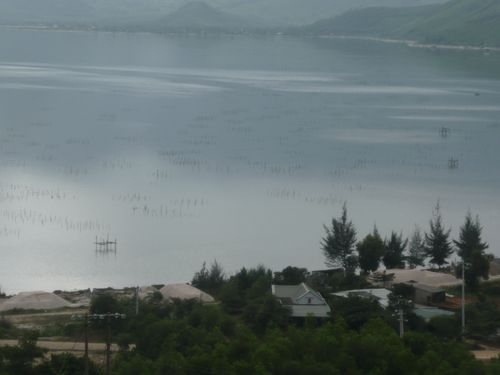
Da Nang • Lap An Bay
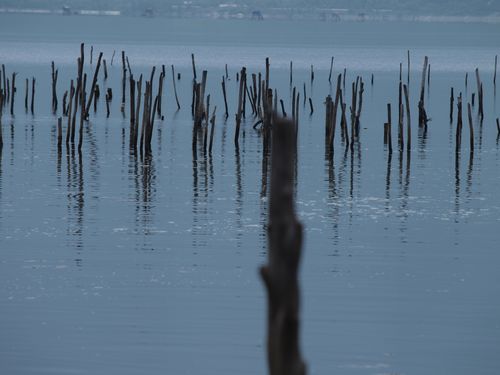
Da Nang • Lap An Bay
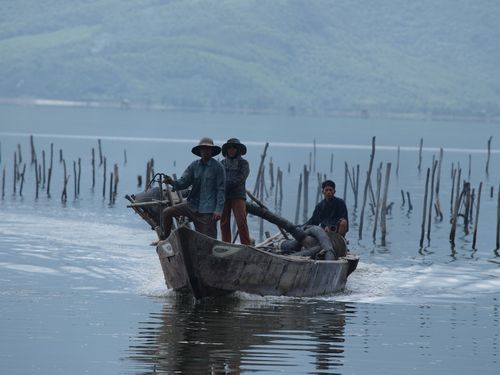
Da Nang • Lap An Bay
Natural site profile
Lap An Bay
Natural site category: Bay
Natural site family: Bays and lagoons
Natural site genre: Aquatic
Geographic location: Da Nang • Vietnam
• Links to •
• List of videos about Da Nang on this site •
Da Nang and surroundings • Vietnam
Lap An Lagoon: Historical Evolution, Cultural Significance, and Conservation Challenges of a Coastal Landscape in Central Vietnam
Lap An Lagoon, located along the central coast of Vietnam between the cities of Da Nang and Hue, forms a distinctive coastal landscape where shallow waters meet mountainous terrain and the nearby South China Sea. The lagoon lies at the foot of the Hai Van mountain range and forms part of a broader system of coastal wetlands and marine environments. Over time, the lagoon has acquired economic, social, and ecological importance for surrounding communities. Its preservation and increasing visibility are the result of long interactions between natural processes, regional history, and modern economic development.
Early economic significance in coastal communities
For centuries, the primary motivation for maintaining the ecological balance of Lap An Lagoon was economic. The lagoon’s brackish waters provided favorable conditions for fishing and for the cultivation of aquatic resources such as shellfish and crustaceans. These activities formed an important part of the livelihood of local communities living along the central Vietnamese coast.
Traditional fishing practices were often adapted to the seasonal rhythms of the lagoon. The balance between freshwater inflows from nearby mountains and saline water from the sea created productive habitats that sustained a variety of aquatic species. Maintaining this environmental equilibrium was essential for local economies, which relied heavily on natural resources rather than large-scale infrastructure.
This pattern resembles the historical use of many coastal lagoons worldwide. In regions such as the Mediterranean or Southeast Asia, lagoon environments often supported communities through fishing, salt production, and small-scale aquaculture long before formal conservation policies were introduced.
Strategic location within regional trade routes
The lagoon’s geographical position contributed to its broader significance. Lap An lies near an important corridor connecting the historic city of Hue with the coastal port of Da Nang. This route passes through the Hai Van Pass, a mountain corridor that has long served as a key link along Vietnam’s central coastline.
During the era of the Vietnamese imperial dynasties, particularly under the Nguyen rulers in the nineteenth century, the region around Hue functioned as the political center of the country. The coastal landscapes near Lap An supported the surrounding population and provided resources that indirectly contributed to the stability of the imperial capital.
Later, during the French colonial period in Indochina, infrastructure improvements strengthened transportation routes between major coastal cities. The lagoon itself was not developed as a major port or military base, but its presence within a strategically important coastal zone increased the visibility and significance of the surrounding landscape.
Globally, similar coastal environments have often played supportive roles in regional economies without becoming large urban centers themselves. Lagoons such as those along the Adriatic coast or in parts of South Asia illustrate how these ecosystems can sustain local livelihoods while remaining relatively intact compared with heavily urbanized ports.
Twentieth-century transformation and resilience
The twentieth century brought major political changes to Vietnam, including colonial administration, wars of independence, and the eventual reunification of the country. Many landscapes across Vietnam experienced significant transformation during these periods.
Lap An Lagoon, however, remained largely a rural and resource-based environment. Fishing, aquaculture, and small-scale agriculture continued to dominate local activities. Because the lagoon was not heavily industrialized, its ecological structure remained relatively stable compared with other coastal areas where urban expansion and port development dramatically altered the landscape.
In the global context, many coastal lagoons experienced similar patterns during the twentieth century. Some, such as those near rapidly expanding cities, were transformed into industrial or urban zones. Others retained their ecological character because geographic constraints or economic priorities limited large-scale development.
Emergence of tourism and landscape appreciation
Beginning in the late twentieth century and accelerating in the early twenty-first century, Vietnam experienced significant economic growth and a rapid expansion of tourism. Cities such as Da Nang became important tourist destinations, attracting visitors with beaches, mountains, and cultural heritage sites.
In this context, the scenic qualities of Lap An Lagoon gained greater recognition. The combination of calm waters, surrounding mountains, and traditional aquaculture landscapes created a distinctive environment that appealed to travelers and photographers. Restaurants and small tourism facilities began to develop along the lagoon’s shores, often highlighting local seafood harvested from its waters.
This shift from purely resource-based use toward landscape appreciation reflects a broader global trend. Many coastal wetlands and lagoons that were once valued primarily for economic production are now recognized for their environmental and scenic significance.
Ecological importance of lagoon environments
Lap An Lagoon also plays a role within the coastal ecosystem of central Vietnam. Lagoons are transitional environments where freshwater from rivers mixes with seawater. These conditions often produce nutrient-rich habitats that support high levels of biological productivity.
The shallow waters of the lagoon provide nursery grounds for fish and other marine organisms. Wetland areas along the shoreline offer habitats for birds and other wildlife associated with coastal ecosystems. In addition, lagoon systems can help regulate water flow and sediment movement along the coast.
Although Lap An Lagoon is not formally listed as a UNESCO World Heritage Site, its ecological functions resemble those of protected lagoon systems elsewhere in the world. Many countries have recognized the importance of coastal wetlands for biodiversity conservation, fisheries, and climate resilience.
Current state of preservation
Compared with heavily urbanized coastal areas, Lap An Lagoon retains much of its natural and rural character. Traditional aquaculture practices continue to shape the landscape, with wooden platforms and oyster farms extending into the shallow waters. These activities maintain a strong link between the lagoon and the surrounding communities.
However, the increasing popularity of tourism in central Vietnam is gradually changing the region. Improved infrastructure, new restaurants, and visitor facilities bring economic opportunities but also create potential pressure on the natural environment.
Contemporary challenges for conservation
The long-term preservation of Lap An Lagoon depends on addressing several emerging challenges. Coastal development in nearby urban areas may affect water quality and sediment flows within the lagoon. Tourism growth, if poorly managed, could alter the landscape and disturb ecological processes.
Climate change also presents significant risks. Rising sea levels and changes in storm patterns may influence the delicate balance between freshwater and seawater that sustains the lagoon ecosystem. Many coastal lagoons worldwide face similar threats, particularly in regions vulnerable to tropical storms and changing ocean conditions.
Effective management therefore requires balancing economic development with environmental protection. Local authorities and communities increasingly recognize the importance of maintaining the lagoon’s ecological integrity while supporting sustainable tourism and traditional livelihoods.
A landscape shaped by nature and society
Lap An Lagoon represents a coastal landscape shaped by both natural processes and human activity. Over centuries, the lagoon has supported local economies, reflected regional history, and gradually gained recognition as a scenic and ecological environment.
Today its significance lies not only in its natural beauty but also in its role as an example of how coastal ecosystems can coexist with traditional economic practices. Preserving this balance will be essential for ensuring that the lagoon continues to function as both a productive environment and a valued natural landscape in central Vietnam.
Lap An Lagoon: Geological Formation and Ecological Significance of a Coastal Lagoon in Central Vietnam
Lap An Lagoon, located along the central coast of Vietnam between Da Nang and the province of Thua Thien Hue, forms one of the most distinctive lagoon landscapes in the region. Positioned at the base of the Hai Van mountain range and close to the South China Sea, the lagoon represents a natural transition zone between mountainous terrain, coastal environments, and shallow inland waters. Its landscape illustrates a combination of geological formation, hydrological dynamics, and biological productivity typical of tropical lagoon systems. These natural characteristics have shaped the ecological identity of the area and contribute to its recognition as an important coastal environment in central Vietnam.
Geological origins of a coastal lagoon
The formation of Lap An Lagoon is closely linked to coastal geomorphological processes that have shaped the shoreline of central Vietnam over thousands of years. Coastal lagoons generally form when sediment transported by rivers and ocean currents accumulates along the coastline, creating barriers that partially separate a body of water from the open sea. In the case of Lap An, sediment carried from the surrounding mountains and nearby river systems gradually formed sandbanks and coastal ridges.
These sediment deposits helped create a semi-enclosed body of shallow water that remained connected to the sea through narrow channels. Over time, the lagoon developed into a brackish water environment where freshwater inflows mix with marine water. The surrounding mountain slopes contribute additional sediment through rainfall and erosion, continuously influencing the lagoon’s structure.
This geological process illustrates how coastal environments evolve through the interaction of marine currents, river systems, and landforms. Similar lagoon systems exist in other parts of the world, including parts of the Mediterranean coast, Southeast Asia, and the Caribbean. Each of these systems demonstrates how coastal sediment dynamics can create productive ecological environments.
Topography shaped by mountains and coastal plains
One of the most striking features of Lap An Lagoon is the contrast between its calm waters and the mountainous terrain surrounding it. The lagoon lies at the foot of the Hai Van mountain range, which forms part of the larger Annamite Range extending along the Vietnam–Laos border. These mountains descend toward the coastline, creating a dramatic landscape where forested slopes overlook the shallow lagoon waters.
The lagoon covers an area of several hundred hectares and remains relatively shallow across most of its surface. During low tide, large sandbanks emerge above the water, creating a shifting landscape where the boundaries between land and water change throughout the day. These tidal variations produce a dynamic environment that influences both the physical appearance of the lagoon and the habitats available to wildlife.
The proximity of mountains also affects rainfall patterns. Moist air from the sea rises against the mountain slopes, contributing to significant rainfall during certain seasons. This hydrological cycle feeds freshwater streams that flow into the lagoon and maintain its brackish character.
Biological productivity of brackish ecosystems
Lap An Lagoon belongs to a class of ecosystems known for their high biological productivity. Brackish environments, where freshwater and seawater mix, often support a wide variety of aquatic organisms. Nutrients carried by rivers accumulate in the lagoon’s shallow waters, creating favorable conditions for plankton growth. These microscopic organisms form the base of the aquatic food chain.
The lagoon supports populations of fish, crustaceans, and mollusks adapted to fluctuating salinity levels. In many coastal regions, lagoons serve as nursery habitats for marine species during early stages of their life cycles. The protected and nutrient-rich waters provide an environment where juvenile organisms can grow before moving into deeper marine habitats.
Local aquaculture activities have taken advantage of these natural conditions. Oyster farming and shellfish cultivation are common practices in the lagoon, demonstrating how human communities have adapted their economic activities to the natural productivity of the ecosystem.
Interaction between local ecosystems and global environmental influences
The environmental dynamics of Lap An Lagoon reflect the interaction between local ecological processes and broader global environmental systems. Seasonal monsoon cycles play a key role in determining water levels, salinity, and sediment flows. During the rainy season, freshwater inflows increase significantly, temporarily lowering the lagoon’s salinity and altering ecological conditions.
At the same time, coastal systems such as Lap An are sensitive to large-scale environmental factors. Changes in sea level, ocean temperature, and storm patterns can influence sediment movement and water exchange between the lagoon and the sea. These influences highlight how local ecosystems are connected to global climatic processes.
Many coastal lagoons worldwide face similar environmental pressures. Rising sea levels and increasing storm intensity associated with climate change are altering lagoon environments in regions ranging from Southeast Asia to Europe and North America.
Landscape recognition and international visibility
Although Lap An Lagoon is not included on the UNESCO World Heritage List, the landscape has gained recognition for its scenic qualities and ecological characteristics. The combination of calm waters, surrounding mountains, and traditional aquaculture structures creates a visually distinctive environment that attracts visitors and photographers.
The lagoon also forms part of a broader coastal landscape that includes nearby natural landmarks such as the Hai Van Pass and the beaches of central Vietnam. Together, these landscapes contribute to the growing reputation of the region as one of the most visually striking coastal areas of the country.
In many parts of the world, lagoon landscapes have gradually become valued not only for their economic productivity but also for their environmental and cultural significance. Increased international attention often leads to greater awareness of the need to protect these ecosystems.
A dynamic ecosystem facing future challenges
Lap An Lagoon remains a dynamic natural environment that continues to evolve under the influence of both natural processes and human activities. Sediment deposition, tidal fluctuations, and freshwater inflows constantly reshape the lagoon’s shallow waters and sandbanks.
At the same time, economic development and tourism growth in central Vietnam may place increasing pressure on the lagoon’s ecosystems. Infrastructure expansion, changes in aquaculture practices, and environmental pollution could affect water quality and biodiversity if not carefully managed.
Climate change also represents a long-term concern. Coastal lagoons are particularly vulnerable to sea level rise and shifts in storm patterns, which can alter the delicate balance between freshwater and marine influences.
Despite these challenges, Lap An Lagoon remains an important example of how geological formation, ecological productivity, and coastal landscapes interact in tropical environments. Its future preservation will depend on maintaining the balance between economic use and environmental protection while recognizing the ecological value of this distinctive lagoon ecosystem.
 Links to the main sections of the site