

 Français (France)
  Nederlands (nl-NL)
 The alleys of Erice, located in the town of Erice in Sicily, present a picturesque maze of narrow, winding cobblestone paths. These slender, winding passages, flanked by ancient stone houses, capture the essence of the medieval charm that defines this historic town. Often shaded and tranquil, the alleys invite visitors to explore a timeless atmosphere where each turn reveals a new perspective on the rustic beauty of the local architecture. They stand as a living testament to the cultural heritage of Erice, preserved through the ages.
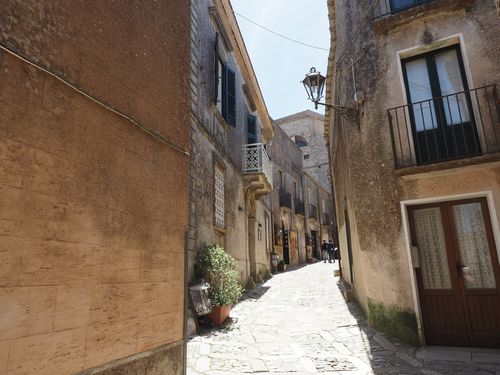
Erice • Alleys of Erice
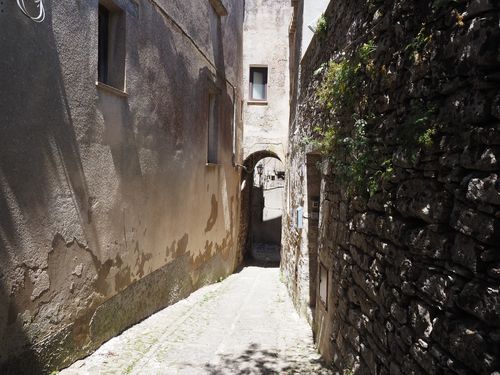
Erice • Alleys of Erice
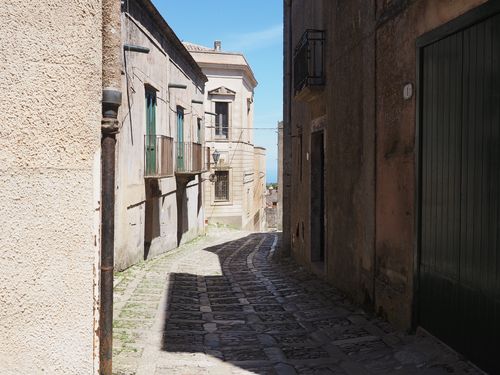
Erice • Alleys of Erice
Monument profile
Alleys of Erice
Monument categories: Fortifications, Traditional house
Monument families: Fort, Fortifications or Citadel • Historic or traditional habitat
Monument genres: Military, Residential
Cultural heritage: Christian
Geographic location: Erice • Sicily • Italy
Construction period: 12th century AD
• Links to •
• List of videos about Erice on this site •
Erice • Streets and Churches of the Medieval City
The Alleys of Erice: Political Motivations, Historical Impact, and Preservation Challenges
Political and Social Motivations Behind the Construction
The alleys of Erice, a small medieval town in Sicily, were developed primarily during the Norman period, around the 11th to 13th centuries. The construction of these narrow, winding streets was driven by both political and social motivations. Politically, Erice held a strategic position on a mountaintop, offering a natural defense against potential invaders. The Normans, having conquered Sicily, sought to fortify their control over the island by reinforcing its key settlements. The labyrinthine design of Erice's alleys was a deliberate choice to complicate the movements of any attacking forces, thus enhancing the town’s defensive capabilities.
Socially, the design of the alleys fostered a close-knit community, where the narrow passages encouraged interaction among the inhabitants. The alleys were not just practical; they were also symbolic of the cohesion and resilience of the local population. The layout reflects a medieval urban planning strategy that prioritized security and social interaction within a confined space, which was essential for survival in a volatile period.
Major Historical Events and Their Impact on Erice
Erice has witnessed several major historical events that have shaped its development over the centuries. The most significant of these include the Norman conquest of Sicily, the subsequent Angevin and Aragonese rule, and the various conflicts that swept through the island. Each of these periods left its mark on Erice, both architecturally and culturally.
During the Angevin and Aragonese periods, modifications were made to the town’s infrastructure, including its alleys. The introduction of Gothic elements, for instance, was a result of the cultural exchange that occurred under these rulers. These changes reflected the broader shifts in power and the integration of new influences into the local culture.
In a global context, this period in Europe was marked by the Crusades, which intensified the interactions between different cultures across the Mediterranean. Meanwhile, in the East, the Song Dynasty in China was advancing in arts and technology, and the pre-Columbian civilizations in the Americas were reaching their zenith. Compared to these regions, the development of Erice’s alleys might seem modest, but they are emblematic of the broader medieval European trend of fortifying towns and fostering close-knit communities in response to external threats.
Transformations and Cultural Influences Over the Centuries
The alleys of Erice have undergone significant transformations over the centuries, each reflecting the changing powers and cultural influences in Sicily. Initially designed as a defensive network, the alleys were later adapted to accommodate the evolving needs of the town’s residents and the aesthetic preferences of successive rulers.
Under the Aragonese, for example, the use of finer stonework and the introduction of decorative elements like Gothic arches added a layer of refinement to the otherwise utilitarian design. This blending of styles—Norman, Arab, and Gothic—highlights Erice’s role as a cultural crossroads, where different traditions met and merged.
These transformations not only enhanced the town's beauty but also reinforced its cultural significance. The alleys became more than just pathways; they became a living museum of the architectural and cultural history of Sicily.
Current State of Conservation and Modern Challenges
Today, the alleys of Erice are remarkably well-preserved, maintaining much of their medieval character. However, they face significant challenges in terms of conservation. The Mediterranean climate, with its extremes of heat and humidity, poses a threat to the ancient stonework. Additionally, the increasing number of tourists visiting Erice adds wear and tear to these historic paths, risking their long-term preservation.
One of the primary challenges in conserving these alleys is balancing the need for modern infrastructure with the preservation of historical authenticity. Restoration efforts must be sensitive to the original materials and construction techniques to maintain the integrity of the site.
Conclusion
The alleys of Erice are a testament to the town’s rich historical and cultural heritage. Their construction was driven by political and social imperatives that reflect the broader medieval context of Sicily. Over the centuries, these alleys have adapted to changing powers and cultural influences, becoming a symbol of Erice’s resilience and cultural fusion. Today, preserving these ancient pathways is crucial, not only for maintaining the historical character of Erice but also for ensuring that this unique cultural monument continues to inspire future generations.
Architectural Innovation and Cultural Fusion in the Alleys of Erice
Technological Advancements and Construction Techniques
The alleys of Erice, a medieval town in Sicily, represent a significant example of the technological advancements and innovations of their time, primarily during the Norman period from the 11th to 13th centuries. The architecture of these alleys was meticulously designed with both practicality and defense in mind, showcasing the ingenuity of medieval urban planning.
The construction of Erice’s alleys involved the use of local limestone, a material chosen for its durability and abundance in the region. The stones were carefully cut and laid to create the narrow, winding paths that characterize the town. These cobblestone streets were designed not only for everyday use but also as a defensive measure; their irregular layout was intended to confuse invaders, making it difficult for them to navigate the town quickly. The use of these materials and techniques reflects the grandeur and strategic importance of Erice during the medieval period, when such innovations were vital for the town’s survival.
Architectural Characteristics and Cultural Fusion
The architectural features of Erice’s alleys illustrate a unique blend of regional artistic traditions and foreign influences. The narrow, winding paths reflect the Arab influence that persisted in Sicily even after the Norman conquest. These design elements were practical, providing shade and channeling cool breezes through the town, which was essential in the hot Mediterranean climate.
Furthermore, the alleys’ stone walls and the occasional arches exhibit a mixture of Norman and Gothic styles, with some traces of Arabic decorative patterns. This fusion of styles is a testament to the cultural exchanges that occurred in Sicily during the Middle Ages, where Norman, Arab, and later Aragonese influences intermingled to create a distinct architectural identity.
Notable Structure and Layout
The structure of the alleys in Erice is particularly noteworthy for its labyrinthine layout, which follows the natural contours of the mountaintop on which the town is perched. This irregular and complex plan was not only a defensive strategy but also a reflection of the town’s adaptation to its rugged environment. The narrowness of the streets, often just wide enough for a single pedestrian or a small cart, contributed to the town’s defense by slowing down potential invaders and providing natural bottlenecks.
An interesting anecdote about these alleys is the use of hidden passageways and dead ends, which were intentionally designed to trap and disorient enemies during an attack. These features, combined with the steep slopes and sharp turns, made Erice a formidable stronghold in its time.
International Recognition and Conservation
The alleys of Erice, while not officially listed as a UNESCO World Heritage site, have gained international recognition for their well-preserved medieval character and historical significance. Their unique blend of architectural styles and the town’s strategic layout have made Erice a subject of interest for historians, architects, and tourists alike.
However, preserving these ancient alleys presents significant challenges. The natural wear and tear from both the elements and the influx of tourists pose a threat to the integrity of the cobblestone paths and stone walls. Conservation efforts must balance the need to maintain the historical authenticity of the alleys with the practical demands of a living town. This includes using traditional materials and methods in restoration projects to ensure that the alleys retain their original character while remaining functional for modern use.
Conclusion
The alleys of Erice are more than just pathways; they are a testament to the technological innovation and cultural fusion that defined medieval Sicily. The use of local materials, combined with strategic design and architectural elements from various cultures, has created a unique urban landscape that continues to captivate and inspire. As efforts to preserve this historical gem continue, the alleys of Erice will remain a symbol of the region’s rich cultural heritage and a living reminder of the ingenuity of its builders.