

 Français (France)
  Nederlands (nl-NL)
 Gurdwara Patna Sahib, located in the city of Patna in the Indian state of Bihar, is one of the most important sacred sites of Sikhism. The shrine is associated with the birth of Guru Gobind Singh, the tenth Sikh Guru, and attracts pilgrims from many parts of India and abroad. The complex holds a central place in the religious memory and spiritual life of the Sikh community. Like other gurdwaras, it welcomes visitors regardless of background or religion and offers communal services such as collective prayer and free meals. Today the site functions as a major pilgrimage destination and an important gathering place for Sikh devotees.
Monument profile
Gurdwara Patna Sahib
Monument categories: Pilgrimage site, Gurdwara, Sikh temple
Monument families: Temple • Pilgrimage site or memorial • Gurdwara
Monument genres: Religious
Cultural heritage: Sikh
Geographic location: Patna • Bihar • India
Construction period: 18th century AD
• Links to •
• This monument illustrates the following theme •
Temples • Gurdwaras : Sikh temples in India
• List of videos about Patna on this site •
Patna, sacred city of Sikhism • Bihar, India
History of Gurdwara Patna Sahib in Patna
Political and Social Context of the Foundation
Gurdwara Patna Sahib, also known as Takht Sri Harmandir Sahib, is located in the historic city of Patna in the Indian state of Bihar. It is one of the five takhts, the principal seats of religious authority within Sikhism. The site holds exceptional significance because it marks the birthplace of Guru Gobind Singh, the tenth Sikh Guru, who was born there in 1666. The transformation of this location into a major Sikh shrine reflects both the historical development of the Sikh community and the political environment of northern India during the seventeenth century.
At the time of Guru Gobind Singh’s birth, Patna formed part of the Mughal Empire, which controlled much of the Indian subcontinent. The city was an important administrative and commercial center situated along the Ganges River. Its prosperity derived from regional trade networks involving textiles, salt, spices, and agricultural products. Patna was therefore a cosmopolitan city inhabited by merchants, artisans, scholars, and diverse religious communities.
Guru Tegh Bahadur, the ninth Sikh Guru and father of Guru Gobind Singh, had traveled widely across northern India, strengthening Sikh congregations and spreading the teachings of the Sikh faith. During one of his journeys he left his family in Patna while he continued traveling in eastern India and Assam. It was during this period that Guru Gobind Singh was born in the city. The house in which the event occurred soon became a place of reverence for early Sikh devotees.
The emergence of the site as a religious monument was closely connected to the growing institutional identity of the Sikh community. Guru Gobind Singh later played a decisive role in shaping Sikh history by founding the Khalsa in 1699, establishing a collective identity that combined spiritual devotion with social and political organization. As his historical importance became increasingly recognized, the preservation of his birthplace acquired deep symbolic significance.
Local Sikh communities and visiting pilgrims began to treat the house of his birth as a sacred location. Over time, this modest residence was gradually transformed into a gurdwara, a Sikh place of worship. The establishment of the shrine reflected both devotional motivations and the desire to preserve a site closely associated with one of the most influential figures in Sikh history.
Major Historical Events and Institutional Development
The development of Gurdwara Patna Sahib took place against a background of political upheaval and regional transformation. During the late seventeenth and early eighteenth centuries the Mughal Empire began to weaken, leading to increasing instability across northern India. Various regional powers emerged, and the Sikh community itself became more politically organized in response to changing conditions.
Although Patna was not directly involved in the major military struggles that occurred in Punjab between Sikhs and Mughal authorities, the shrine nevertheless developed within a broader Sikh religious network that connected important historical locations associated with the Sikh Gurus.
Throughout the eighteenth century Sikh pilgrims continued to visit Patna to commemorate the birth of Guru Gobind Singh. Donations from Sikh communities across northern India helped maintain the site and allowed for gradual improvements to the structure.
A major turning point in the architectural history of the shrine occurred during the nineteenth century when a destructive fire damaged much of the earlier structure. The rebuilding of the gurdwara that followed was supported by Sikh patrons and community leaders who recognized the importance of preserving the birthplace of Guru Gobind Singh. The reconstruction created a more substantial religious complex capable of accommodating growing numbers of pilgrims.
During the period of British colonial rule in India, Patna remained an important urban center. The gurdwara continued to function as a religious institution while Sikh organizations gradually developed more structured systems for the management of sacred sites. Reform movements within the Sikh community during the late nineteenth and early twentieth centuries emphasized community control over gurdwaras and contributed to the institutional stability of the shrine.
Global Context of Monumental Religious Construction
The transformation of Guru Gobind Singh’s birthplace into a major religious monument took place during a historical period in which many societies expressed religious identity through monumental architecture. Between the seventeenth and nineteenth centuries, religious institutions around the world invested in the construction and preservation of sacred buildings.
In Europe, the same era witnessed the building and reconstruction of numerous churches and cathedrals as states consolidated political authority and religious traditions after periods of conflict. In Islamic regions, dynasties continued to construct grand mosques and religious complexes that symbolized both devotion and political legitimacy.
Within the Indian subcontinent, Sikh religious architecture followed a similar trajectory. Locations associated with the lives and travels of the Sikh Gurus were gradually formalized into gurdwaras. These sites formed a network of pilgrimage centers that preserved the memory of key events in Sikh history.
Gurdwara Patna Sahib became one of the most important of these locations because it commemorated the birth of Guru Gobind Singh. Its development into a major shrine reflected the broader effort of the Sikh community to preserve its historical heritage through architecture and religious institutions.
Transformations and Urban Development
Over the centuries, the structure of the gurdwara underwent several phases of transformation and expansion. As the number of visitors increased, additional facilities were constructed to accommodate pilgrims and support religious activities.
The reconstruction following the nineteenth-century fire allowed the shrine to expand its prayer halls and improve its facilities. Later developments during the twentieth century included further architectural improvements, expanded accommodation for visitors, and infrastructure for community services.
Urban growth in Patna also influenced the development of the complex. The city expanded significantly during the colonial period and continued to grow after Indian independence in 1947. As a result, the gurdwara gradually became integrated into a dense urban environment while maintaining its function as a sacred pilgrimage destination.
Transportation improvements and modern infrastructure made the site more accessible to visitors from across India and from Sikh diaspora communities abroad. The increased accessibility contributed to the steady rise in the number of pilgrims visiting the shrine.
Cultural and Religious Significance Today
Today Gurdwara Patna Sahib remains one of the most important religious centers of Sikhism. As one of the five takhts, it holds a position of spiritual authority within the Sikh tradition. The shrine attracts pilgrims from across India as well as from Sikh communities worldwide.
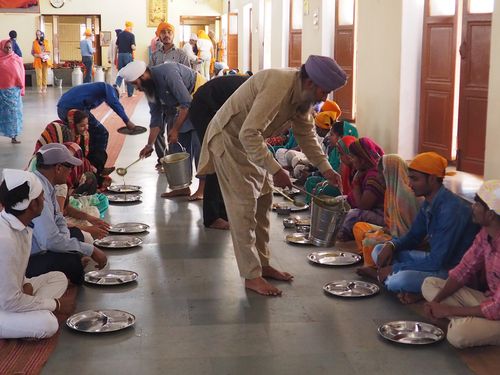
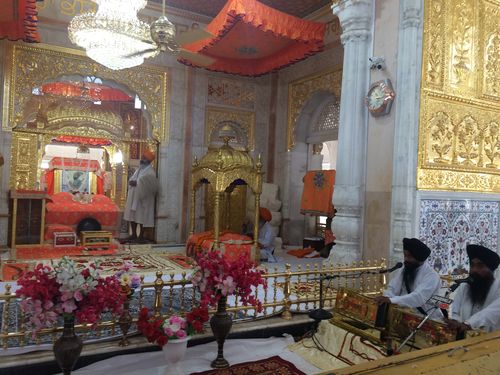
Daily religious practices at the site include the recitation of the Guru Granth Sahib, devotional singing known as kirtan, and communal prayer gatherings. The gurdwara also maintains the tradition of langar, the communal kitchen where free meals are served to visitors regardless of their social or religious background.
The shrine becomes particularly significant during celebrations commemorating the birth anniversary of Guru Gobind Singh. These events attract large numbers of devotees and transform the surrounding area into a major center of religious activity.
Beyond its religious function, the monument also serves as a symbol of Sikh identity and historical continuity. It reinforces the connection between the Sikh community and the life of Guru Gobind Singh, whose leadership profoundly shaped the development of the Sikh faith.
Conservation and Contemporary Challenges
The preservation of Gurdwara Patna Sahib requires continuous maintenance and careful management. Religious authorities oversee restoration efforts to ensure the structural stability of the buildings and the preservation of decorative features.
Modern challenges include the pressures associated with rapid urbanization in Patna. Increasing traffic congestion, environmental pollution, and large numbers of visitors require coordinated management strategies to protect the monument and maintain the dignity of the sacred site.
Although the shrine is not listed as a UNESCO World Heritage Site, it holds international recognition as one of the most important locations in Sikh religious history. Its architectural and spiritual significance ensures that it remains a central destination for Sikh pilgrimage.
Through its historical evolution, Gurdwara Patna Sahib illustrates how religious memory, community devotion, and architectural development have combined to create one of the most important sacred landmarks in Sikhism. The monument continues to embody the historical legacy of Guru Gobind Singh while serving as a living center of worship and cultural identity.
Architecture of Gurdwara Patna Sahib in Patna
Architectural conception and technological principles
Gurdwara Patna Sahib, also known as Takht Sri Harmandir Sahib, is one of the most important architectural and religious monuments of Sikhism. Located in the historic city of Patna in the state of Bihar, the complex reflects the development of Sikh sacred architecture beyond its original geographic core in Punjab. Its architectural form combines structural techniques inherited from northern Indian building traditions with stylistic elements characteristic of Sikh religious monuments.
The central architectural principle of the gurdwara lies in the organization of space around the sanctum that houses the Guru Granth Sahib. The main prayer hall forms the spiritual core of the complex. It is designed as a large open chamber where worshippers gather on the floor facing the sacred scripture, which is placed on an elevated platform beneath a ceremonial canopy. This arrangement ensures visual accessibility and reflects the Sikh emphasis on collective participation and equality among devotees.
The structural composition of the monument is dominated by a large central dome rising above the prayer hall. This dome is both symbolic and structural. Architecturally, it identifies the sacred space from a distance and serves as a defining feature of the monument within the dense urban environment of Patna. Structurally, the dome distributes its weight across a system of arches and load-bearing walls, enabling the construction of a spacious interior without the need for numerous supporting columns.
Secondary domes and decorative kiosks are positioned around the central structure, contributing to the visual balance of the monument. These elements form part of a compositional system that emphasizes verticality while maintaining harmony with the horizontal organization of the surrounding structures.
Materials and construction techniques
The construction of Gurdwara Patna Sahib relies primarily on masonry techniques that have been widely used in northern India for centuries. Fired bricks form the structural framework of the walls, bonded with lime mortar or modern cement compounds. This system provides strength and durability while allowing flexibility in shaping architectural elements such as arches and domes.
The thickness of the masonry walls is essential for both structural stability and thermal performance. Massive walls support the weight of the superstructure and absorb stresses created by the dome and roof structures. At the same time, they act as thermal buffers, slowing the transfer of heat and contributing to interior comfort during the intense seasonal temperature variations typical of the Ganges plain.
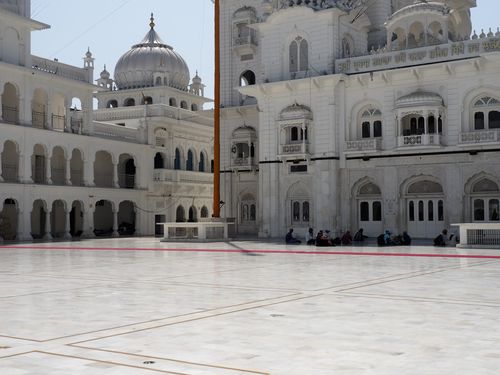
Exterior surfaces are generally finished with plaster or clad with stone. In the most important areas of the complex, particularly the floors and staircases, marble is extensively used. Marble surfaces offer durability and resistance to wear, which is particularly important in a pilgrimage site that receives large numbers of visitors. The reflective quality of polished marble also enhances the brightness of interior spaces.
Decorative elements frequently incorporate carved stone, molded plaster, and occasionally inlaid materials. These components enrich the architectural surfaces while maintaining the structural integrity of the building.
Architectural influences and artistic traditions
The architectural vocabulary of Gurdwara Patna Sahib demonstrates a synthesis of several traditions that developed in the Indian subcontinent. Sikh religious architecture emerged within a cultural environment shaped by Mughal, Indo-Islamic, and regional building traditions. These influences are visible in the structural forms, decorative motifs, and spatial organization of the monument.
Arched openings constitute one of the most prominent architectural features. These arches derive from Islamic architectural traditions introduced to the region during the medieval period and later refined in Mughal architecture. In the gurdwara they serve both structural and aesthetic purposes, supporting upper structures while creating a rhythmic sequence along the façades.
The domes crowning the monument also reflect Mughal architectural influence. However, their interpretation within Sikh architecture differs from that of imperial Mughal monuments. Rather than forming part of a strictly axial composition, the domes in Sikh shrines emphasize symbolic prominence and accessibility.
Decorative ornamentation frequently incorporates floral and geometric motifs characteristic of North Indian artistic traditions. These designs may appear in carved panels, molded plaster details, and painted surfaces. The decorative program enhances the visual richness of the monument while avoiding excessive complexity that might distract from the spiritual function of the space.
The use of light-colored surfaces is another defining feature. White or pale finishes dominate the complex, symbolizing purity and spiritual clarity. These colors also reflect sunlight effectively, reducing heat absorption in the warm climate of Bihar.
Spatial organization and structural layout
The spatial organization of the Gurdwara Patna Sahib complex follows a hierarchical arrangement centered on the main prayer hall. The darbar sahib forms the heart of the complex and serves as the primary space for religious ceremonies. Within this hall, the Guru Granth Sahib is placed on an elevated platform that remains visible to all worshippers.
The interior layout is intentionally unobstructed. The absence of fixed seating allows flexible use of space and accommodates large congregations during major religious events. Structural elements such as arches and thick perimeter walls support the roof and dome without interrupting the open interior.
Around the central hall are circulation areas and verandas that facilitate movement throughout the complex. Covered arcades provide shaded transitional spaces between interior and exterior zones. These spaces allow visitors to gather even when the prayer hall reaches capacity, particularly during festivals and major celebrations.
The complex also includes several auxiliary buildings that support daily religious and community activities. Among the most important are the langar facilities, where communal meals are prepared and served. These kitchens and dining halls are designed to accommodate large numbers of visitors and reflect the Sikh principle of equality through shared meals.
Additional structures include administrative offices, accommodation for pilgrims, and spaces used for educational or religious instruction. Together these buildings create an architectural ensemble that functions not only as a place of worship but also as a center of community life.
Climatic adaptation and environmental considerations
Architectural design at Gurdwara Patna Sahib incorporates strategies adapted to the climatic conditions of the region. Patna experiences hot summers and significant seasonal variation, requiring buildings to address both heat management and ventilation.
High ceilings within the prayer hall allow warm air to rise above the occupied space, improving thermal comfort for worshippers. Large openings and arched windows encourage cross-ventilation, enabling natural airflow through the interior.
Shaded verandas and arcaded corridors reduce direct solar exposure on exterior walls, lowering heat gain within the building. The mass of the masonry walls further moderates indoor temperatures by absorbing heat slowly and releasing it gradually during cooler periods.
These passive climatic strategies reflect traditional architectural practices in northern India and contribute to the long-term sustainability of the structure.
Dimensions, notable features, and associated traditions
The monumental scale of Gurdwara Patna Sahib reflects its importance as a major Sikh pilgrimage destination. The central dome rises prominently above the surrounding urban landscape and serves as a visual landmark within the historic city.
The complex also preserves spaces associated with the early life of Guru Gobind Singh. Certain rooms are traditionally believed to correspond to locations connected with his childhood, and several relics linked to his life are preserved within the shrine. These elements contribute to the symbolic significance of the site and enhance its role as a place of historical remembrance.
The arrangement of courtyards, prayer halls, and auxiliary buildings allows the complex to accommodate large gatherings of pilgrims during major Sikh celebrations, particularly those commemorating the birth of Guru Gobind Singh.
Conservation and contemporary challenges
The preservation of Gurdwara Patna Sahib requires ongoing maintenance due to the monument’s scale and the high number of visitors it receives. Regular restoration projects address structural repairs, cleaning of marble surfaces, and the maintenance of decorative features.
Urban expansion in Patna presents additional challenges for the conservation of the site. Increasing traffic density, air pollution, and the pressures of urban development can affect both the structural materials and the surrounding environment.
Managing large crowds during religious festivals is another important concern. Infrastructure improvements and careful planning are necessary to ensure both visitor safety and the protection of the monument.
Although the shrine is not listed as a UNESCO World Heritage Site, it holds international significance as one of the five takhts of Sikhism. Its architecture embodies the historical evolution of Sikh sacred architecture while demonstrating the integration of regional construction techniques, religious symbolism, and community-oriented spatial organization.
Through its domes, arcades, expansive prayer halls, and communal facilities, Gurdwara Patna Sahib represents a major example of Sikh religious architecture in eastern India. The monument illustrates how sacred architecture can integrate spiritual symbolism, functional requirements, and regional craftsmanship into a coherent and enduring architectural form.