Français (France)
  Nederlands (nl-NL)
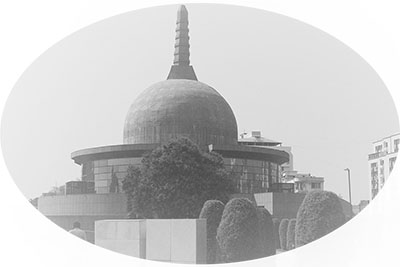
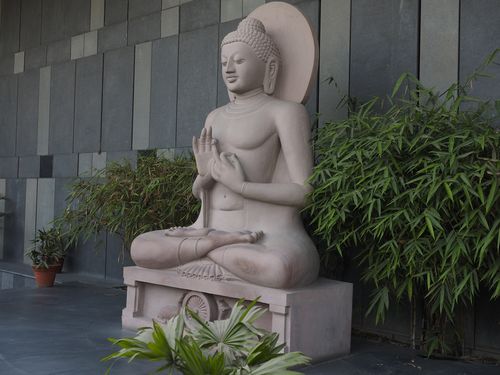
 The Buddha Smriti Park, located in Patna in the state of Bihar, India, is a public space dedicated to the memory and transmission of Buddhism. It combines commemorative, cultural, and educational functions within an environment designed for reflection and learning. The park contributes to the promotion of the region’s spiritual heritage. Today, it serves as an accessible site for visitors, offering organized pathways and areas associated with the legacy of the Buddha.
Monument profile
Buddha Smriti Park
Monument categories: Stupa, Museum
Monument families: Pagoda or stupa • Museum, remarkable architecture or group of buildings
Monument genres: Religious, Cultural or scientific
Cultural heritage: Buddhist
Geographic location: Patna • Bihar • India
Construction period: 21th century AD
• Links to •
• This monument illustrates the following theme •
Buddhist architecture • Stupas : Diversity of Stupas in Asia
• List of videos about Patna on this site •
Patna, sacred city of Sikhism • Bihar, India
Spatial layout and architectural configuration of Buddha Smriti Park in Patna
Site integration and overall layout
The Buddha Smriti Park is established within the urban fabric of Patna, in the state of Bihar, India. The site is organized according to a clearly defined geometric framework that structures circulation and spatial relationships between built elements and open areas. The layout is based on a combination of axial pathways and controlled open spaces, forming a coherent system of movement and orientation.
Primary circulation routes extend across the park in linear directions, connecting the main architectural components. Secondary paths branch from these axes, providing access to peripheral zones and creating alternative movement sequences. The distribution of built volumes and landscaped areas establishes a balance between density and openness, ensuring visual continuity throughout the site.
Organization of principal architectural components
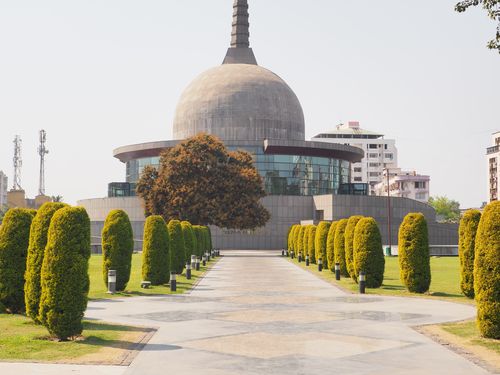
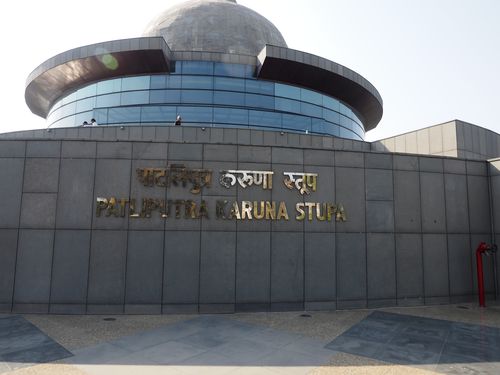
The central element of the park is a monumental stupa, positioned as the focal point of the spatial composition. This structure consists of a cylindrical mass rising from a circular base, forming a compact and vertically dominant volume. Its placement at the core of the site defines the surrounding organization and establishes a reference point for navigation.
Additional architectural components are arranged around this central structure, including pavilions and enclosed spaces dedicated to interpretation and visitor functions. These elements are positioned at measured distances, preserving visual corridors and maintaining the prominence of the stupa. Their relatively low height contrasts with the central volume, reinforcing the hierarchical organization of the site.
The spatial arrangement ensures continuity between the different components, with pathways guiding movement in a sequence that alternates between enclosed and open environments. This organization supports both directed circulation and individual exploration.
Materials and construction systems
The built elements of the park are primarily constructed using reinforced concrete, which provides structural stability and allows for the realization of defined geometric forms. This material is used for the main volumes, including the central stupa and supporting structures, ensuring durability and resistance to environmental conditions.
External surfaces are often finished with stone cladding or other mineral materials, contributing to the visual coherence of the site and enhancing resistance to wear. Circulation areas are designed with durable, non-slip materials, ensuring functionality under continuous use.
Construction techniques emphasize modular assembly and structural efficiency. Load-bearing elements are integrated into continuous frameworks, distributing weight evenly and supporting vertical components. The use of standardized construction methods facilitates maintenance and ensures consistency across the different parts of the park.
Spatial composition and architectural features
The composition of the park relies on the interplay between built masses and open spaces. Large open areas frame the architectural elements, creating clear lines of sight and reinforcing the prominence of the central stupa. The spatial arrangement is characterized by a sequence of transitions between horizontal surfaces and vertical volumes.
Architectural features include raised platforms, stepped access points and defined thresholds that organize movement between different levels. These elements regulate circulation and create a structured progression through the site. Horizontal planes dominate the composition, while vertical accents are concentrated in specific locations to guide visual perception.
Vegetated areas are integrated within the geometric framework, following patterns that align with the overall layout. Their placement contributes to the definition of zones without interrupting the continuity of movement.
Architectural adjustments and conservation conditions
Since its completion, the park has undergone limited architectural modifications, primarily related to improving visitor circulation and accessibility. These interventions include adjustments to pathways and the reinforcement of certain surfaces exposed to intensive use. The original configuration of the main structures has been preserved.
Maintenance operations focus on the conservation of materials and the structural integrity of the built elements. Regular inspection and repair of surfaces ensure the durability of the construction. Environmental exposure, particularly climatic variations, requires ongoing attention to prevent deterioration.
The current state of the park reflects a controlled preservation strategy, maintaining the clarity of its spatial organization. The consistency of materials and the stability of structural elements allow for a continued understanding of the architectural design as originally conceived.
Spatial layout and architectural configuration of Buddha Smriti Park in Patna
Site integration and overall layout
The Buddha Smriti Park is established within the urban fabric of Patna, in the state of Bihar, India. The site is organized according to a clearly defined geometric framework that structures circulation and spatial relationships between built elements and open areas. The layout is based on a combination of axial pathways and controlled open spaces, forming a coherent system of movement and orientation.
Primary circulation routes extend across the park in linear directions, connecting the main architectural components. Secondary paths branch from these axes, providing access to peripheral zones and creating alternative movement sequences. The distribution of built volumes and landscaped areas establishes a balance between density and openness, ensuring visual continuity throughout the site.
Organization of principal architectural components
The central element of the park is a monumental stupa, positioned as the focal point of the spatial composition. This structure consists of a cylindrical mass rising from a circular base, forming a compact and vertically dominant volume. Its placement at the core of the site defines the surrounding organization and establishes a reference point for navigation.
Additional architectural components are arranged around this central structure, including pavilions and enclosed spaces dedicated to interpretation and visitor functions. These elements are positioned at measured distances, preserving visual corridors and maintaining the prominence of the stupa. Their relatively low height contrasts with the central volume, reinforcing the hierarchical organization of the site.
The spatial arrangement ensures continuity between the different components, with pathways guiding movement in a sequence that alternates between enclosed and open environments. This organization supports both directed circulation and individual exploration.
Materials and construction systems
The built elements of the park are primarily constructed using reinforced concrete, which provides structural stability and allows for the realization of defined geometric forms. This material is used for the main volumes, including the central stupa and supporting structures, ensuring durability and resistance to environmental conditions.
External surfaces are often finished with stone cladding or other mineral materials, contributing to the visual coherence of the site and enhancing resistance to wear. Circulation areas are designed with durable, non-slip materials, ensuring functionality under continuous use.
Construction techniques emphasize modular assembly and structural efficiency. Load-bearing elements are integrated into continuous frameworks, distributing weight evenly and supporting vertical components. The use of standardized construction methods facilitates maintenance and ensures consistency across the different parts of the park.
Spatial composition and architectural features
The composition of the park relies on the interplay between built masses and open spaces. Large open areas frame the architectural elements, creating clear lines of sight and reinforcing the prominence of the central stupa. The spatial arrangement is characterized by a sequence of transitions between horizontal surfaces and vertical volumes.
Architectural features include raised platforms, stepped access points and defined thresholds that organize movement between different levels. These elements regulate circulation and create a structured progression through the site. Horizontal planes dominate the composition, while vertical accents are concentrated in specific locations to guide visual perception.
Vegetated areas are integrated within the geometric framework, following patterns that align with the overall layout. Their placement contributes to the definition of zones without interrupting the continuity of movement.
Architectural adjustments and conservation conditions
Since its completion, the park has undergone limited architectural modifications, primarily related to improving visitor circulation and accessibility. These interventions include adjustments to pathways and the reinforcement of certain surfaces exposed to intensive use. The original configuration of the main structures has been preserved.
Maintenance operations focus on the conservation of materials and the structural integrity of the built elements. Regular inspection and repair of surfaces ensure the durability of the construction. Environmental exposure, particularly climatic variations, requires ongoing attention to prevent deterioration.
The current state of the park reflects a controlled preservation strategy, maintaining the clarity of its spatial organization. The consistency of materials and the stability of structural elements allow for a continued understanding of the architectural design as originally conceived.