

 Français (France)
  Nederlands (nl-NL)
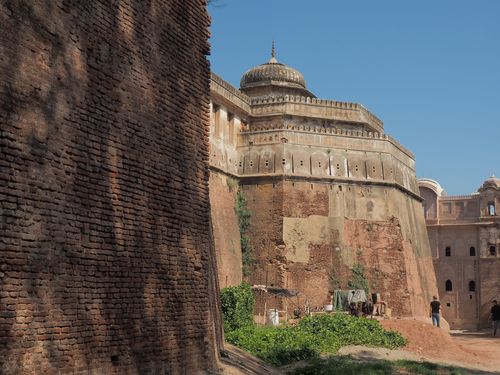
 Qila Mubarak Palace, located in Patiala, Punjab, India, is a fortified complex that served as the royal residence for the Maharajas of Patiala. Built in the 18th century, this palace is an important symbol of the region's cultural and political heritage. The complex includes several buildings, including a main palace, courtyards, reception halls, as well as temples and gardens. Qila Mubarak Palace is a site of significant historical interest, attracting visitors eager to explore the history and culture of Patiala.


Monument profile
Qila Mubarak Palace
Monument categories: Fort, Palace
Monument families: Fort, Fortifications or Citadel • Palace and Annexes
Monument genres: Military, Residential
Cultural heritage: Sikh
Geographic location: Patiala • Punjab • India
Construction period: 18th century AD
• Links to •
• Dynasties that contributed to the construction of the monument •

• List of videos about Patiala on this site •
Patiala, the splendours of the past • Punjab, India
The Political and Social Motivations Behind the Construction of Qila Mubarak Palace in Patiala
Qila Mubarak Palace, located in Patiala, Punjab, India, is a historic fort and palace complex that dates back to the 18th century. Its construction was driven by significant political and social motivations during a period of regional turbulence and power consolidation. This article explores the underlying reasons for its construction, the major historical events that have shaped its legacy, and the current state of the monument within both a regional and global context.
Political and Social Motivations
The construction of Qila Mubarak began in 1763 under the reign of Maharaja Ala Singh, the founder of the Patiala State. At the time, the region was experiencing significant political upheaval due to the decline of the Mughal Empire and the rise of competing powers, such as the Marathas and the Afghans. The need for a fortified palace was both a political statement and a practical necessity. Qila Mubarak was designed to serve as a stronghold that would protect the Maharaja and his court from potential invasions, while also asserting the legitimacy and authority of the Phulkian dynasty in the region.
The palace also served a crucial social role as the center of administration and governance for Patiala. It was a symbol of the Maharaja’s power and the stability he provided to the region, which in turn attracted loyalty from local chiefs and other regional leaders. This consolidation of power was essential for the survival and expansion of the Patiala State during a time of significant regional fragmentation.
Major Historical Events and Their Impact
Qila Mubarak has been at the center of several key historical events that have shaped the political and social development of Patiala and the wider Punjab region. One of the most significant moments was the palace's role during the Anglo-Sikh wars in the mid-19th century. The Maharajas of Patiala sided with the British, which helped secure their position and led to the expansion of their territories under British suzerainty. This alliance with the British marked a turning point for Patiala, allowing it to flourish as one of the most influential princely states in Punjab.
During the British Raj, Qila Mubarak continued to serve as a political hub where important decisions regarding the administration of the state were made. The palace witnessed numerous diplomatic engagements and became a symbol of Patiala’s semi-autonomous status within the British Empire.
Global Context and Comparison
The 18th century, when Qila Mubarak was constructed, was a period of significant global change. In Europe, the construction of palaces and fortresses, such as the Palace of Versailles in France or the Winter Palace in Russia, served similar purposes of displaying power and securing territorial control. Meanwhile, in Asia, other regional powers were also constructing monumental structures to assert their dominance and secure their realms. The construction of Qila Mubarak reflects a similar strategy of using architecture to consolidate power and influence in a time of political uncertainty.
Transformations and Cultural Influences
Over the centuries, Qila Mubarak has undergone numerous transformations that reflect changes in power and the influence of external cultures. Initially constructed with a strong focus on defense, the palace was later expanded and embellished to include more elaborate decorative elements, influenced by Mughal, Persian, and European styles. These changes were not merely aesthetic; they symbolized the evolving identity of the Patiala State as it navigated its relationships with both neighboring powers and the British Empire.
The architectural evolution of Qila Mubarak also mirrors the broader cultural shifts in Punjab during this period. The integration of foreign artistic elements with traditional Indian craftsmanship is evident in the intricate frescoes, the ornate woodwork, and the design of the palace's gardens.
Cultural Significance and Current State of Conservation
Today, Qila Mubarak remains a significant cultural landmark in Patiala. It stands as a testament to the city’s rich history and the legacy of the Phulkian dynasty. However, the palace faces numerous challenges in terms of preservation. The natural wear and tear over centuries, combined with environmental factors and urban encroachment, have led to the deterioration of some of its structures. Preservation efforts are ongoing, but they require significant resources and expertise to ensure the palace is protected for future generations.
Preservation Challenges
The preservation of Qila Mubarak is complicated by the need to balance historical integrity with modern conservation techniques. The palace’s large size and the complexity of its architectural elements make restoration a challenging task. Additionally, the pressures of urban development in Patiala pose a threat to the palace’s surroundings, potentially compromising its historical context. Addressing these challenges requires a coordinated effort between local authorities, historians, and conservationists to develop sustainable strategies that will safeguard the palace’s future.
Conclusion
Qila Mubarak Palace is not just a historical monument; it is a symbol of the political and cultural resilience of the Patiala State. Its construction was motivated by the need to assert power and provide stability during a turbulent period in Indian history. Over the centuries, it has adapted to changing political landscapes, reflecting both the strength and adaptability of the Phulkian dynasty. Preserving this monument is essential not only for maintaining a connection to the past but also for celebrating the rich heritage of Punjab and India as a whole.
Technological Advancements and Architectural Innovation at Qila Mubarak Palace in Patiala
Qila Mubarak Palace, located in Patiala, Punjab, India, is an architectural marvel that reflects the technological advancements and innovations of the Sidhu Jats during the 18th century. This fortified complex, which served as the royal residence for the Maharajas of Patiala, exemplifies a unique blend of regional artistic traditions and foreign influences. The palace's construction materials, techniques, and design elements highlight the grandeur of the era in which it was built and continue to be a testament to the rich cultural heritage of the region.
Technological Advancements and Construction Techniques
The construction of Qila Mubarak Palace utilized a variety of materials and techniques that were advanced for the time. The primary building materials included locally sourced brick and stone, which provided the necessary strength and durability for the palace's defensive walls and towers. These materials were chosen not only for their availability but also for their ability to withstand the harsh climate of Punjab.
One of the most notable technological advancements in the construction of Qila Mubarak was the use of lime mortar, which enhanced the structural integrity of the palace. The use of arches, vaults, and domes in the design also demonstrates a sophisticated understanding of weight distribution and load-bearing capacities, allowing the palace to support its massive structures without compromising on stability. The inclusion of underground water channels and reservoirs within the complex ensured a steady supply of water, a crucial feature for a fortress intended to withstand sieges.
Architectural Features and Cultural Influences
Qila Mubarak Palace is a striking example of the fusion of various architectural styles, combining elements of Mughal, Rajput, and European designs. The arches, often pointed or cusped, reflect the influence of Mughal architecture, while the robust fortifications and bastions are reminiscent of Rajput military architecture. The palace's courtyards and gardens, which are designed with meticulous attention to symmetry and aesthetics, draw from both Persian and Mughal garden traditions.
The decorative motifs found throughout the palace, including intricate floral patterns, geometric designs, and frescoes, showcase the skills of local artisans who were influenced by Persian and European styles. The wooden carvings and the use of marble inlay work further emphasize the cross-cultural exchange that was prevalent during the period. These features not only enhanced the visual appeal of the palace but also served to symbolize the wealth and power of the Maharajas of Patiala.
Notable Structures and Layout
The layout of Qila Mubarak Palace is organized around several courtyards, each serving specific functions, from administrative activities to ceremonial gatherings. The central structure, known as the Darbar Hall, is particularly noteworthy. This grand hall was used for royal audiences and official ceremonies and is characterized by its high ceilings, large chandeliers, and elaborate mirror work. The hall’s design ensures that it remains cool during the hot summers, utilizing natural ventilation techniques that were innovative for the time.
Another notable feature of the palace is the Sheesh Mahal, or "Palace of Mirrors," which is adorned with intricate mirror work and frescoes. This room was used for private gatherings and reflects the opulence of the royal lifestyle. The attention to detail in the Sheesh Mahal, with its complex mirror mosaics and delicate paintings, highlights the high level of craftsmanship and artistic sophistication present in the construction of the palace.
Historical Anecdotes and Construction Facts
It is said that the construction of Qila Mubarak involved craftsmen from across the Indian subcontinent, each contributing their expertise to create a palace that was both functional and aesthetically impressive. The construction took several years to complete, with each phase of the project overseen by the Maharaja himself to ensure that the palace met the highest standards of design and durability.
International Recognition and UNESCO World Heritage Status
While Qila Mubarak Palace is not currently listed as a UNESCO World Heritage Site, its architectural and historical significance has garnered attention from historians, architects, and tourists worldwide. The palace’s unique blend of styles and its role in the history of Punjab make it an important cultural landmark. Efforts to conserve the palace are ongoing, though they face challenges related to funding, environmental factors, and the need for specialized restoration techniques.
Conclusion
Qila Mubarak Palace stands as a symbol of the technological innovation and architectural prowess of the Sidhu Jats. Its combination of local and foreign influences, grand design, and historical significance make it a crucial part of India's cultural heritage. Preserving this monument is essential not only for maintaining its historical integrity but also for continuing to inspire future generations with the rich history and architectural achievements of Patiala.