

 Français (France)
  Nederlands (nl-NL)
 The Ahilyabai Temple is located in Maheshwar, in the Indian state of Madhya Pradesh, along the banks of the Narmada River. It is associated with Queen Ahilyabai Holkar, an eighteenth-century ruler known for her patronage of religious institutions and for commissioning numerous temples across India. The shrine forms part of the historic complex of Maheshwar, which served as the capital of the Holkar dynasty. Today the temple remains an active place of worship and an important landmark in the religious landscape of the town, connected with the ghats and ritual spaces along the river.
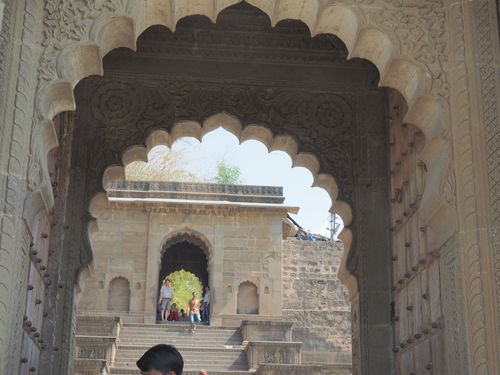
Maheshwar • Ahilyabai Temple
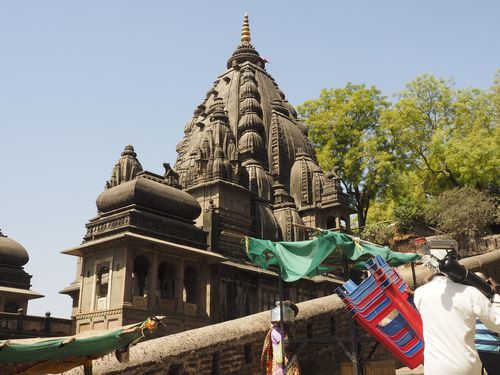
Maheshwar • Ahilyabai Temple
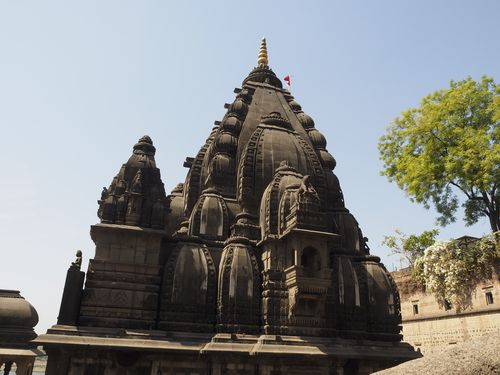
Maheshwar • Ahilyabai Temple
Monument profile
Ahilyabai Temple
Monument category: Hindu Temple
Monument family: Temple
Monument genre: Religious
Cultural heritage: Hindu
Geographic location: Maheshwar • Madhya Pradesh • India
Construction period: 18th century AD
• Links to •
• Dynasties that contributed to the construction of the monument •

• List of videos about Maheshwar on this site •
Maheshwar, former capital of Malwa • Madhya Pradesh, India
History of the Ahilyabai Temple in Maheshwar
Political and Social Context of the Construction
The Ahilyabai Temple in Maheshwar, located in the present-day Indian state of Madhya Pradesh, is closely associated with the reign of Queen Ahilyabai Holkar (1725–1795), one of the most respected rulers of the Maratha period in central India. Its construction formed part of a broader program of religious patronage undertaken during a period of significant political transformation across the Indian subcontinent.
In the eighteenth century the Mughal Empire, which had dominated northern India for more than a century, was experiencing a progressive decline. Regional powers increasingly asserted their autonomy, among them the Maratha Confederacy, which expanded its influence across large parts of central and northern India. The Holkar dynasty emerged as one of the most prominent Maratha ruling houses in the Malwa region. Founded by Malhar Rao Holkar, a military commander in the Maratha armies, the dynasty gradually consolidated control over territories in central India.
After the death of her husband Khanderao Holkar and later her father-in-law Malhar Rao Holkar, Ahilyabai assumed power in 1767. Her accession occurred during a period marked by political instability and the need to strengthen the legitimacy of Holkar authority. Unlike many rulers of the time who focused primarily on military expansion, Ahilyabai sought to consolidate her rule through administrative reform, economic stability, and extensive religious patronage.
Maheshwar, located on the banks of the Narmada River, was chosen as the capital of her kingdom. The city already possessed religious significance in Hindu tradition due to its location along one of India’s most sacred rivers. By constructing temples, ghats, and other religious institutions, Ahilyabai aimed to transform Maheshwar into both a political and spiritual center of her realm.
The Ahilyabai Temple was part of this wider strategy. Religious construction in eighteenth-century India often served multiple purposes. It reinforced royal legitimacy, supported religious communities, and created networks of pilgrimage that strengthened cultural and political ties across regions. Ahilyabai’s patronage extended far beyond Maheshwar: she financed the restoration or construction of temples at several major pilgrimage centers including Varanasi, Somnath, Gaya, and Dwarka.
These projects demonstrated the ruler’s ambition to position the Holkar dynasty as a guardian of Hindu sacred geography. At a time when many historic temples had suffered neglect or destruction during earlier conflicts, Ahilyabai’s initiatives contributed to the revival of numerous religious sites across India.
Major Historical Events and Evolution of the Site
During Ahilyabai Holkar’s reign, Maheshwar experienced a period of relative stability and prosperity. The city developed into an administrative and cultural center where religious institutions played an important role in daily life. The temple formed part of a broader architectural complex that included the royal fort, residential quarters, and the monumental riverfront ghats descending toward the Narmada.
Unlike many monuments whose histories were shaped by wars or repeated dynastic changes, the Ahilyabai Temple was largely spared major destruction. Its continued religious use ensured a degree of maintenance and protection even during periods of political change.
After Ahilyabai’s death in 1795, the Holkar dynasty continued to rule parts of central India, although the political center gradually shifted toward Indore. Maheshwar lost its position as the principal capital, but it retained religious importance and remained closely associated with the memory of the queen.
The nineteenth century brought significant changes to the political landscape of India. The expansion of British colonial power reshaped the structure of regional states. After a series of Anglo-Maratha conflicts, the Holkar kingdom became one of the princely states under indirect British control. Although political authority shifted toward colonial administration, the temple continued to function as a religious institution serving local communities.
Throughout the colonial period the sacred landscape of Maheshwar remained largely intact. Pilgrimage, ritual bathing along the Narmada, and temple worship continued without major interruption. In contrast to several historic temples in northern India that experienced episodes of destruction or conversion, the Ahilyabai Temple benefited from relative continuity of religious practice.
Following India’s independence in 1947, Maheshwar was incorporated into the state of Madhya Pradesh. The temple remained active as a place of worship while gradually gaining recognition as part of the historical heritage of the region.
Global Context at the Time of Construction
The construction of the Ahilyabai Temple occurred during the late eighteenth century, a period characterized by major political and cultural transformations around the world. In Europe, this era corresponded to the Enlightenment and the rise of neoclassical architecture inspired by Greco-Roman antiquity. Monumental construction projects reflected both intellectual developments and expanding imperial ambitions.
Across Asia, powerful regional states also sponsored religious architecture as a way to express authority and reinforce cultural identity. In Southeast Asia and China, temples, monasteries, and ceremonial complexes continued to receive imperial patronage. These buildings often functioned not only as religious institutions but also as symbols of political legitimacy.
Within this global context, the architectural patronage of rulers such as Ahilyabai Holkar illustrates how monumental religious construction remained an important means of expressing sovereignty and cultural continuity. In India particularly, temple patronage played a key role in maintaining networks of pilgrimage and reinforcing the symbolic geography of sacred landscapes.
Transformations and Urban Evolution
Over the centuries the Ahilyabai Temple has undergone relatively modest architectural alterations compared with many historic monuments. Its essential structure has remained intact, largely due to continuous religious use and periodic maintenance carried out by temple authorities and local communities.
The surrounding urban environment of Maheshwar has evolved significantly. The expansion of residential areas, commercial activity, and tourism has gradually transformed the town’s spatial organization. Nevertheless, the historic riverfront—including the temples, ghats, and the Holkar fort—continues to define the visual identity of the city.
Restoration efforts in the twentieth and twenty-first centuries have focused primarily on structural conservation and the preservation of decorative elements. Maintenance programs have sought to stabilize stone surfaces, repair weathered sculptures, and protect architectural features from environmental degradation.
Contemporary Role and Cultural Significance
Today the Ahilyabai Temple remains an active center of Hindu worship and an important landmark in Maheshwar’s cultural landscape. Devotees visit the temple regularly to perform prayers, rituals, and offerings. Religious festivals associated with the Hindu calendar continue to attract pilgrims and local participants.
The monument is also closely linked to the historical memory of Ahilyabai Holkar, who is widely revered as a model ruler known for justice, piety, and public welfare. Her legacy remains particularly strong in the Malwa region, where numerous monuments and institutions bear her name.
Maheshwar itself has become an increasingly popular destination for visitors interested in history, architecture, and traditional crafts. The temple contributes to this cultural appeal by forming part of a wider historical ensemble that includes the riverfront ghats and the Holkar fort complex.
Conservation and Modern Challenges
Despite its historical importance, the Ahilyabai Temple faces several challenges related to conservation. Environmental conditions, particularly fluctuations in humidity and seasonal monsoon rains, can affect stone structures over time. The proximity of the Narmada River also exposes parts of the site to erosion and water-related deterioration.
Tourism represents both an opportunity and a challenge. Increased visitor numbers contribute to the local economy but also create pressures on historic infrastructure. Managing visitor flows while preserving the integrity of the site requires careful planning and ongoing conservation work.
Although the temple is not listed as a UNESCO World Heritage Site, it forms part of a historically significant urban landscape that is widely recognized for its architectural and cultural value. Local authorities and heritage organizations continue to support maintenance and restoration initiatives aimed at preserving the monument for future generations.
The Ahilyabai Temple therefore stands not only as a religious sanctuary but also as an enduring symbol of the political vision and cultural patronage of one of India’s most remarkable eighteenth-century rulers. Through its continued use and preservation, the monument reflects the long historical relationship between sacred architecture, political authority, and the evolving urban landscape of Maheshwar.
Architecture of the Ahilyabai Temple in Maheshwar
Architectural Context and Technical Innovations
The Ahilyabai Temple in Maheshwar forms part of the broader monumental landscape created along the banks of the Narmada River during the reign of Queen Ahilyabai Holkar in the eighteenth century. Its architecture reflects the characteristics of religious construction in central India during the Maratha period while integrating earlier regional traditions associated with the Malwa plateau and the sacred geography of the Narmada valley.
Temple construction in this period relied on a well-developed tradition of stone masonry practiced by guilds of artisans operating across central and western India. Builders employed precise stone-cutting techniques that allowed large blocks to be assembled with minimal mortar, ensuring structural stability and durability. The monument reflects this mastery of masonry through its carefully balanced proportions and its capacity to withstand climatic conditions typical of the region, including monsoon rainfall, seasonal humidity, and strong temperature variations.
The temple’s placement within the fortified urban complex of Maheshwar demonstrates an integrated architectural vision linking sacred, civic, and hydraulic infrastructure. The alignment between temples, palatial structures, and riverfront ghats creates a coherent urban composition. Such planning reflects an understanding of how religious architecture could structure the spatial organization of a riverfront city while reinforcing its symbolic connection with sacred water.
Engineering solutions were also employed to ensure stability on the sloping terrain descending toward the Narmada. Elevated plinths and carefully layered foundations protect the structure from seasonal variations in water level and from erosion caused by riverbank conditions. This architectural adaptation to topography is a recurring feature of the monuments built during Ahilyabai Holkar’s reign.
Materials and Construction Methods
The Ahilyabai Temple is constructed primarily from locally sourced stone, particularly sandstone and basaltic rock available in the Malwa region. These materials offered both structural strength and sculptural versatility. Sandstone, relatively easy to carve while maintaining durability, allowed artisans to produce decorative elements directly within the stone surfaces.
Stone blocks were cut with precision and assembled using interlocking joints that distribute weight evenly across load-bearing walls and columns. This system minimized reliance on thick mortar layers and enhanced the longevity of the structure. Such methods were typical of temple architecture across central India but reached a particularly refined expression in the buildings commissioned by the Holkar dynasty.
The temple rests on a raised platform that protects the sanctuary from ground moisture and minor flooding associated with the nearby river. This plinth also provides a visual base for the building, emphasizing its sacred character and separating the ritual space from the surrounding urban environment.
Roofing systems rely primarily on stone slabs supported by pillars and transverse beams. This method allowed the creation of covered halls while maintaining structural stability without extensive timber frameworks. The weight of the superstructure is distributed through a network of columns and supporting walls, forming a resilient structural skeleton.
Doors, thresholds, and certain interior elements incorporate carved wood, though these features remain secondary to the stone construction. Wooden components often include detailed carvings reflecting local artistic traditions and provide visual contrast to the stone architecture.
Architectural and Artistic Influences
The architectural language of the Ahilyabai Temple reflects the synthesis of several traditions that characterized religious architecture in eighteenth-century central India. The overall design follows classical Hindu temple principles, particularly those associated with the Nagara architectural style prevalent across northern India.
One of the defining features of this tradition is the presence of the shikhara, the tower rising above the sanctum. The vertical composition of this structure symbolizes the cosmic axis connecting the earthly realm with the divine. In the Ahilyabai Temple, the shikhara rises above the central sanctuary and forms the visual focal point of the building.
At the same time, the temple reflects stylistic elements associated with Maratha architecture, including relatively restrained ornamentation and balanced proportions. Compared with earlier medieval temples known for elaborate sculptural programs, eighteenth-century Maratha temples often favored a more measured decorative approach emphasizing structural clarity.
Regional influences from the Malwa and Deccan regions are also evident in the column forms, brackets, and decorative panels. Some motifs show affinities with architectural traditions of western India, where stone temples frequently incorporate geometric patterns, stylized floral designs, and symbolic religious imagery.
The ornamentation of the temple includes sculpted representations of deities, sacred symbols, and vegetal motifs arranged in carefully structured decorative zones. These carvings emphasize entrances, lintels, and the upper sections of the superstructure, highlighting the hierarchy of sacred space within the building.
The temple’s architectural vocabulary also reflects the broader cultural interactions of the period. While essentially rooted in Hindu architectural traditions, certain structural solutions—such as the arrangement of colonnaded halls and open transitional spaces—demonstrate awareness of architectural developments across the Indian subcontinent during the early modern period.
Spatial Organization and Structural Composition
The spatial organization of the Ahilyabai Temple follows the traditional sequence of spaces typical of Hindu temple architecture. The central component is the garbhagriha, or sanctum, which houses the principal deity. This chamber represents the most sacred part of the temple and is deliberately compact and dimly lit to reinforce its spiritual significance.
In front of the sanctum lies the mandapa, a pillared hall that serves as the principal gathering space for worshippers. The hall is supported by carved stone columns arranged in symmetrical rows. These columns not only provide structural support but also contribute to the visual rhythm of the interior.
The transition between exterior and interior space is carefully articulated through entrance porches and thresholds. These architectural elements mark the gradual movement from the secular world into the sacred interior of the temple.
Orientation plays an important role in the design. The temple entrance generally faces east, aligning the structure with the rising sun. This alignment corresponds with traditional cosmological principles in Hindu temple planning.
Beyond the temple itself, the surrounding architectural environment forms an integrated sacred landscape. The ghats descending toward the Narmada provide access for ritual bathing and ceremonial activities, linking the temple directly to the river’s spiritual significance. The nearby fort and palace structures further reinforce the relationship between religious and political architecture within the city.
Dimensions and Notable Architectural Features
Although not the largest structure within the Maheshwar complex, the Ahilyabai Temple displays proportions carefully calibrated to harmonize with its surroundings. Its height, base dimensions, and tower proportions contribute to a balanced silhouette within the riverfront skyline.
The temple’s elevated platform enhances its visibility from the ghats and from the river itself. Visitors approaching from the riverfront encounter a sequence of ascending steps that frame the temple within the broader architectural composition of the ghats.
One notable feature is the continuity between temple architecture and the stepped riverfront structures. The stone used for the ghats corresponds closely with that of the temple, creating visual unity across the riverfront landscape.
Local traditions often associate the temple’s construction with the personal devotion of Ahilyabai Holkar. Oral narratives emphasize the ruler’s commitment to religious architecture and describe how artisans from different regions contributed their skills to the development of Maheshwar’s sacred complex.
Architectural Significance and Conservation Challenges
The architectural importance of the Ahilyabai Temple lies partly in its role within the larger urban ensemble of Maheshwar. Together with the Holkar fort and the extensive ghats along the Narmada, the temple forms part of a coherent historical landscape illustrating eighteenth-century urban planning under Maratha rule.
Although the monument is not currently included on the UNESCO World Heritage List, it is widely recognized as a significant example of central Indian temple architecture from the late pre-colonial period. Its preservation contributes to the understanding of how regional dynasties integrated religious architecture into administrative and residential urban environments.
Conservation challenges arise primarily from environmental and urban factors. The proximity of the Narmada exposes stone surfaces to moisture fluctuations, biological growth, and gradual erosion. Seasonal monsoon rains accelerate weathering processes affecting both structural and decorative elements.
Urban expansion and increased tourism also place pressure on historic structures. Maintaining the integrity of the temple requires careful management of visitor access, as well as ongoing maintenance programs aimed at stabilizing stone surfaces and preserving sculptural details.
Conservation efforts carried out by local authorities and heritage organizations focus on structural monitoring, periodic restoration of damaged stonework, and the preservation of the broader riverfront setting. Protecting the architectural coherence of the Maheshwar complex remains essential to maintaining the historical significance of the Ahilyabai Temple.
Through its architectural composition, material craftsmanship, and integration within the sacred landscape of the Narmada, the temple represents a notable example of eighteenth-century religious architecture in central India. Its design reflects the convergence of political patronage, regional artistic traditions, and technical expertise that shaped the architectural heritage of the Holkar period.