

 Français (France)
  Nederlands (nl-NL)
 The Virupaksha Temple is one of the most significant religious monuments in Hampi, located in the Indian state of Karnataka. Standing on the southern bank of the Tungabhadra River, it forms a central element of the sacred and historical landscape of the former capital of the Vijayanagara Empire. Dedicated to Virupaksha, a form of Shiva, the temple remains an active place of worship visited by pilgrims and travellers. Its long continuity of religious use and its cultural importance give the monument a prominent role in the historical identity of Hampi and the surrounding region. The temple is part of the wider archaeological complex recognized as a World Heritage site.
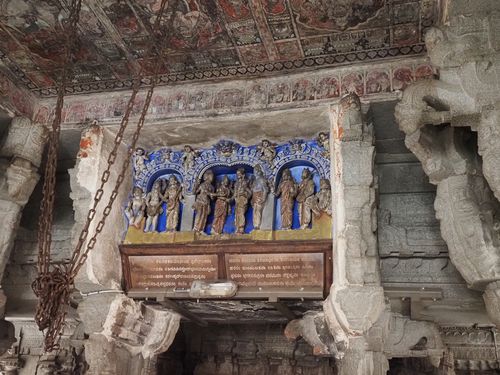
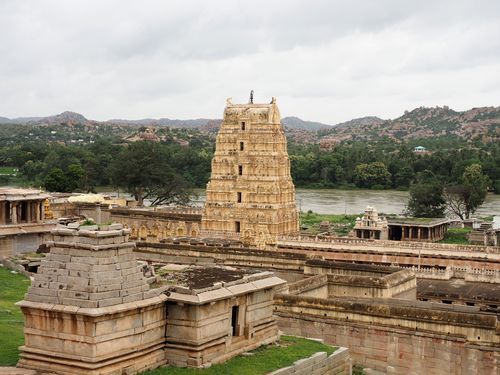
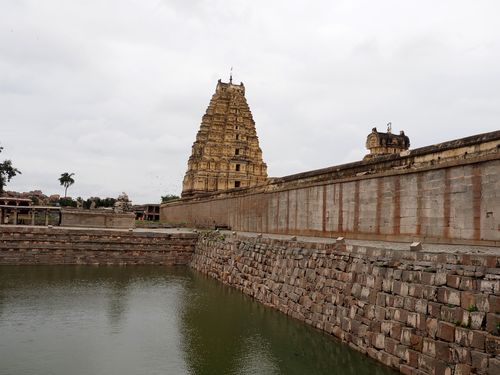
Virupaksha temple


History of the Virupaksha Temple in Hampi
Political and Religious Context of the Foundation
The Virupaksha Temple, located in Hampi in the Indian state of Karnataka, represents one of the oldest continuously functioning Hindu temples in southern India. Dedicated to Virupaksha, a form of the god Shiva, the temple forms part of a sacred landscape that long predates the establishment of the Vijayanagara Empire. The region was historically known as Pampakshetra, a pilgrimage center associated with the goddess Pampa, regarded as a local manifestation of Parvati, the consort of Shiva.
Archaeological evidence and historical inscriptions indicate that the origins of the temple complex likely date back to the early medieval period, possibly during the rule of the Chalukya and later the Hoysala dynasties between the ninth and thirteenth centuries. These dynasties actively supported temple construction as part of broader political strategies designed to reinforce religious legitimacy and regional authority. Temples served not only as religious centers but also as hubs of social organization, economic exchange, and cultural patronage.
The transformation of the temple into a major religious institution occurred during the fourteenth century with the rise of the Vijayanagara Empire. Founded by the brothers Harihara and Bukka in the 1330s, the empire emerged in response to political upheavals following military incursions from northern India. The establishment of Vijayanagara as a capital at Hampi was both a strategic and symbolic decision, and the patronage of the Virupaksha Temple played a central role in consolidating the new dynasty’s legitimacy.
Royal sponsorship of the temple emphasized the rulers’ identity as protectors of Hindu religious traditions. Donations, expansions, and ceremonial rituals linked the monarchy with the cult of Shiva, strengthening the ideological foundation of the empire. The temple thus became both a spiritual center and a political symbol within the imperial capital.
Major Historical Events Affecting the Temple
During the height of the Vijayanagara Empire between the fourteenth and early sixteenth centuries, Hampi developed into one of the largest urban centers in the world. Contemporary accounts from foreign travelers, including merchants and diplomats from Persia and Europe, describe a prosperous city characterized by vast markets, monumental temples, and elaborate royal architecture.
Within this thriving urban environment, the Virupaksha Temple served as a major ceremonial and religious institution. Royal processions and festivals frequently took place within its precincts, reinforcing the association between divine authority and imperial power. Inscriptions from the Vijayanagara period record numerous royal endowments granted to the temple, including land, agricultural revenue, and resources intended to support daily rituals and religious festivals.
The political fortunes of Vijayanagara changed dramatically in the mid-sixteenth century. In 1565, the empire suffered a decisive defeat at the Battle of Talikota against a coalition of Deccan Sultanates. Following the battle, the victorious armies advanced toward the capital and subjected the city to widespread destruction and plunder.
Many of the monumental structures of Vijayanagara were damaged or abandoned during this catastrophic event. However, the Virupaksha Temple survived largely intact. Its continued function as a place of worship allowed it to remain active even as the surrounding urban landscape fell into ruin. This continuity distinguishes the temple from most other monuments in Hampi, which gradually became archaeological remnants rather than living religious institutions.
In the centuries that followed, the temple continued to serve the spiritual needs of local communities. Although the political importance of the city had vanished, the religious significance of the site endured.
Global Context During the Period of Development
The development and expansion of the Virupaksha Temple occurred during a period of significant transformation across many parts of the world. Between the fourteenth and sixteenth centuries, powerful states in different regions expressed their authority through monumental architecture and urban development.
In Europe, late medieval and early Renaissance rulers invested heavily in the construction of cathedrals, fortifications, and royal palaces. These structures symbolized political authority as well as religious devotion. At the same time, the Ottoman Empire was transforming Istanbul into a major imperial capital marked by monumental mosques and palatial complexes.
In East Asia, the Ming dynasty oversaw extensive building programs, including the development of large-scale palace complexes in Beijing. Similarly, various kingdoms across Southeast Asia constructed monumental religious structures and royal capitals that reflected their political ambitions and cultural identities.
Within this broader global context, the capital of Vijayanagara represented one of the most impressive urban and architectural achievements of its time. The expansion of the Virupaksha Temple formed part of a wider program of religious and ceremonial architecture intended to reinforce the ideological and political authority of the empire.
Transformations Through the Centuries
Following the fall of Vijayanagara in the sixteenth century, the city gradually declined and much of its urban infrastructure was abandoned. Palaces, administrative buildings, and many temples fell into disrepair. Nevertheless, the Virupaksha Temple continued to function as an active religious center.
Local communities played an important role in maintaining the temple and preserving its ritual traditions. Periodic repairs and additions ensured that the temple remained structurally viable and suitable for religious ceremonies.
During the nineteenth century, the ruins of Hampi attracted the attention of European scholars and colonial administrators. Early surveys and descriptions documented the historical significance of the site and contributed to growing scholarly interest in the architecture and history of the Vijayanagara Empire.
In the twentieth century, systematic archaeological investigations and conservation programs were undertaken by Indian heritage authorities. These initiatives aimed to stabilize structures, preserve historical features, and promote the study of the site’s cultural and historical significance.
The temple’s dual status as both an archaeological monument and an active place of worship required careful management. Preservation efforts sought to protect the historical fabric of the building while allowing the continuation of traditional religious practices.
Contemporary Cultural Significance
Today, the Virupaksha Temple remains one of the most important religious centers in the region of Hampi. Pilgrims and devotees visit the temple daily to participate in rituals dedicated to Shiva. This continuous religious activity distinguishes the temple from many other monuments within the archaeological landscape of Hampi.
The temple also serves as the focal point for several major religious festivals associated with the Hindu calendar. These celebrations attract large numbers of participants and contribute to the cultural vitality of the region. The temple therefore continues to play an essential role in the spiritual life of local communities.
Beyond its religious importance, the Virupaksha Temple has become an emblematic symbol of the historical legacy of the Vijayanagara Empire. It represents the cultural achievements of a powerful South Indian kingdom and stands as a reminder of the region’s historical importance.
Preservation and Modern Challenges
The temple forms part of the wider archaeological site of Hampi, which has been designated as a UNESCO World Heritage Site. This international recognition highlights the exceptional historical and cultural value of the former imperial capital.
Conservation of the Virupaksha Temple involves ongoing efforts to preserve the structural integrity of the monument while maintaining its role as an active religious institution. Heritage authorities collaborate with local communities to ensure that preservation measures respect both historical authenticity and religious traditions.
Several challenges affect the long-term preservation of the monument. Environmental factors such as weathering, erosion, and biological growth can gradually damage stone structures. In addition, the increasing popularity of Hampi as a tourist destination creates pressure on the site’s infrastructure and surrounding environment.
Despite these challenges, the Virupaksha Temple continues to stand as one of the most significant monuments of medieval South India. Its uninterrupted religious function, combined with its historical importance, makes it a unique testimony to the cultural and political history of the Vijayanagara Empire and the enduring traditions of Hindu worship in the region.
Architecture of the Virupaksha Temple in Hampi
Technological and Architectural Innovations
The Virupaksha Temple complex represents one of the most significant examples of Dravidian temple architecture in southern India. Developed over several centuries and expanded during the Vijayanagara period, the monument reflects both the continuity of earlier architectural traditions and the technical capabilities of medieval South Indian builders.
One of the most notable architectural innovations visible in the complex is the sophisticated system used to support large vertical structures, particularly the monumental gateway towers known as gopurams. These towers required advanced knowledge of weight distribution and structural balance. Builders achieved stability through a progressive reduction in mass toward the upper levels, creating a pyramidal form that allowed tall structures to remain stable despite their considerable height.
The temple also demonstrates a careful adaptation to environmental conditions. The region of Hampi experiences intense heat during much of the year, and the architectural design incorporates features that facilitate air circulation. Open pillared halls, wide courtyards, and shaded corridors allow airflow to move through the complex, helping to moderate temperatures inside ceremonial spaces.
Another technological aspect of the temple is its integration with the natural terrain. The builders took advantage of the granitic landscape surrounding Hampi to establish stable foundations. The temple’s base rests on solid rock formations, which minimized structural settlement and ensured long-term stability.
The alignment of the temple complex along a principal east–west axis also reflects architectural planning informed by both ritual symbolism and spatial organization. The entrance from the east allows the rising sun to illuminate the gateway and inner courtyards, reinforcing cosmological associations embedded within Hindu temple architecture.
Materials and Construction Methods
The primary building material used in the construction of the Virupaksha Temple is granite, which is abundant in the rocky terrain surrounding Hampi. Granite was selected because of its durability and resistance to weathering. Large blocks of this stone were quarried locally and transported to the construction site, where they were carefully shaped and assembled.
Granite was particularly suitable for the lower structural components of the temple, including foundations, pillars, and walls. These elements required strong materials capable of supporting significant loads. The use of massive stone blocks allowed the builders to create stable structures that have survived for centuries.
For upper architectural elements, including portions of the gopurams and decorative superstructures, lighter materials such as brick and lime mortar were often employed. This combination reduced the weight exerted on the lower stone structures while allowing greater flexibility in shaping ornamental forms.
Mortar made from lime and organic additives was commonly used to bind bricks and stone elements. This traditional material possessed a certain elasticity, enabling structures to withstand minor movements caused by temperature changes or ground vibrations.
Surface finishes frequently included layers of lime plaster, which protected the underlying materials from erosion while providing a smooth surface for painted decorations and sculptural embellishments.
Artistic Influences and Stylistic Characteristics
The architecture of the Virupaksha Temple reflects the development of the Dravidian architectural tradition, which had evolved over many centuries in southern India. The temple incorporates elements inherited from earlier dynasties such as the Chalukyas and Hoysalas, while later expansions introduced stylistic features associated with the Vijayanagara period.
The most prominent architectural feature of the complex is the eastern gopuram, a towering gateway structure that marks the entrance to the temple precinct. These towers are composed of multiple tiers adorned with sculptural decorations representing deities, mythological scenes, and symbolic motifs.
The sculptural program of the temple illustrates an extensive iconographic repertoire associated with Shaivite traditions. Carvings depict forms of Shiva, divine attendants, celestial beings, and scenes drawn from Hindu mythology. These sculptures serve both decorative and symbolic purposes, transforming the architecture into a visual representation of religious narratives.
While the temple remains firmly rooted in the Dravidian architectural tradition, certain stylistic influences from other cultural contexts can be observed. The Vijayanagara Empire maintained extensive political and commercial connections across the Indian subcontinent and beyond, and artistic ideas circulated through these networks.
The ornamental richness of the temple reflects the flourishing artistic environment of the Vijayanagara capital. Sculptors and craftsmen working within royal patronage developed a distinctive style characterized by detailed carvings and dynamic compositions.
Spatial Organization and Structural Layout
The Virupaksha Temple complex follows the conventional layout of a large South Indian temple, consisting of multiple enclosures arranged concentrically around the main sanctum. This spatial organization reflects both ritual symbolism and functional considerations.
The outer enclosure is defined by high walls punctuated by monumental gateways. These gateways regulate the movement of visitors and mark transitions between different levels of sacred space.
Within the enclosure lies a series of courtyards that provide access to various parts of the complex. These open spaces serve as gathering areas for devotees and as venues for religious ceremonies and festivals.
At the center of the temple complex stands the garbhagriha, or sanctum, which houses the principal deity. This inner chamber represents the most sacred space of the temple and is typically accessible only to priests.
Surrounding the sanctum are several mandapas, or pillared halls. These halls function as spaces for ritual performances, processions, and congregational activities. The pillars supporting these structures are often elaborately carved, demonstrating the artistic skill of the craftsmen who created them.
The temple complex also includes subsidiary shrines, administrative structures, and ceremonial platforms. Together, these elements form an integrated architectural environment designed to accommodate both daily worship and large-scale religious events.
Dimensions, Notable Features, and Architectural Curiosities
One of the most striking architectural features of the Virupaksha Temple is the eastern gopuram, which dominates the skyline of Hampi. Rising several stories above the surrounding structures, this tower serves as both a ceremonial gateway and a visual landmark.
The temple complex extends across a large area and includes multiple courtyards and halls of varying sizes. The spatial arrangement allows for large processional movements during religious festivals while maintaining distinct zones for ritual activity.
Among the unusual architectural features of the temple is an optical phenomenon observed within one of the halls. Through a small aperture in the wall, an inverted image of the main tower can be projected onto an interior surface, a result of the principles of light passing through a narrow opening. This feature illustrates the empirical understanding of optical effects possessed by the builders.
Numerous legends and traditional narratives are associated with the temple. These stories often relate to the divine presence of Shiva at the site and to the sacred landscape surrounding the Tungabhadra River. Such narratives reinforce the spiritual significance of the temple within local cultural traditions.
International Recognition and Conservation Challenges
The architectural significance of the Virupaksha Temple contributes greatly to the global recognition of the archaeological site of Hampi. The site has been inscribed on the UNESCO World Heritage List because of its outstanding historical and architectural value.
The temple is one of the few monuments within the Hampi complex that has remained in continuous religious use. This living tradition presents unique conservation challenges, as preservation efforts must balance the protection of historical structures with the ongoing needs of religious practice.
Environmental factors also pose risks to the monument. Weathering caused by seasonal rains, temperature fluctuations, and biological growth can gradually affect the stone surfaces and decorative elements.
In addition, the increasing popularity of Hampi as a tourist destination places pressure on the infrastructure of the archaeological site. Managing visitor access while safeguarding fragile architectural features requires careful planning and monitoring.
Despite these challenges, conservation programs implemented by heritage authorities aim to preserve the structural integrity and historical character of the temple. Through ongoing restoration and protective measures, the Virupaksha Temple continues to stand as one of the most significant architectural achievements of medieval South India and a lasting symbol of the cultural legacy of the Vijayanagara Empire.