

 Français (France)
  Nederlands (nl-NL)
 Cave No. 4 at Ajanta, located in the Indian state of Maharashtra, is one of the largest viharas in the Ajanta Buddhist complex. Designed as a monastery, it contains numerous monk cells and a central shrine housing an imposing Buddha statue. Although Cave No. 4 remains unfinished, it features sculptures and frescoes that highlight the spiritual and artistic significance of the site. This monument is part of the UNESCO World Heritage Site, underscoring its exceptional historical and cultural value.
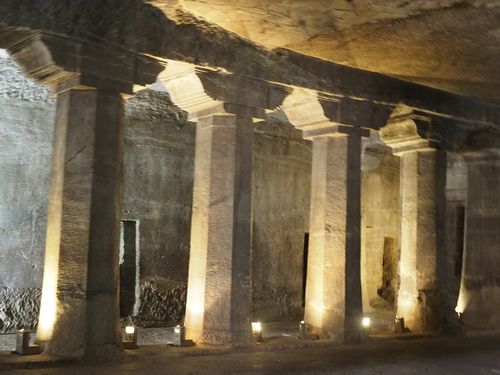
Ajanta • Cave No.4
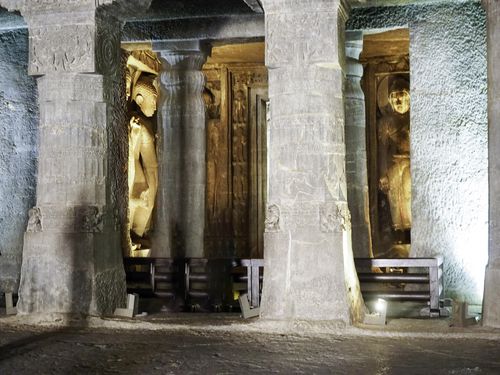
Ajanta • Cave No.4
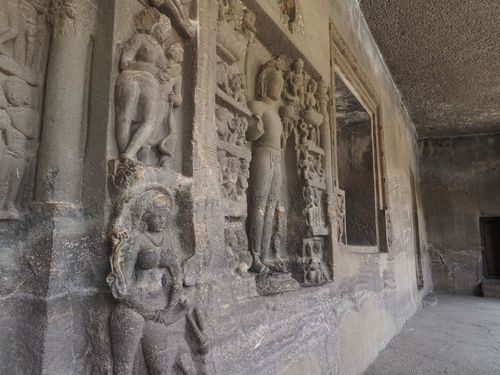
Ajanta • Cave No.4
Monument profile
Cave No.4
Monument categories: Monastery, Rock Sanctuary
Monument families: Monastery • Rock Sanctuary and Monumental Bas-reliefs
Monument genres: Religious
Cultural heritage: Buddhist
Geographic location: Ajanta • Maharashtra • India
Construction period: 5th century AD
This monument in Ajanta is inscribed on the UNESCO World Heritage List since 1983 and is part of the serial property "Ajanta Caves".See the UNESCO monuments featured on this site
• Links to •
• Dynasties that contributed to the construction of the monument •

• List of videos about Ajanta on this site •
Ajanta Caves • Maharashtra, India
• References •
UNESCO: Grottes d'Ajanta
Wikipedia EN: Ajanta Caves
Political and Social Motivations Behind the Construction of Cave No. 4 at Ajanta: Historical Significance and Global Context
Political and Social Motivations and Construction Period
Cave No. 4 at Ajanta, constructed in the 6th century during the late Vakataka dynasty, was one of the most ambitious monastic projects of its time. The motivations for its construction were both political and social. The Vakataka rulers, particularly those who were patrons of Mahayana Buddhism, sought to strengthen their political influence by promoting the Buddhist faith. By sponsoring monumental cave complexes like Ajanta, they aimed to legitimize their rule and form alliances with the Buddhist monastic community, which played a key role in the region's social and educational structure.
On a social level, Cave No. 4 was intended as a vihara, or monastery, where monks could reside, meditate, and teach. The construction of such a large monastic space was a reflection of the importance of religious patronage in fostering social stability and spiritual growth. The cave's design, which includes numerous cells for monks and a central shrine, emphasizes the role of communal living and spiritual devotion in the Buddhist tradition of the time.
Major Historical Events and Regional Impact
The construction of Cave No. 4 occurred during a period of political transition in India. The Vakatakas were the dominant power in the Deccan region, and their rule marked a high point in the patronage of Buddhist art and architecture. However, as the dynasty began to decline in the late 6th century, the rise of new political entities and the resurgence of Hinduism began to diminish the influence of Buddhism in the region.
This shift in political and religious dynamics led to the gradual abandonment of Ajanta, including Cave No. 4. The cave itself was left incomplete, a reflection of the turbulent political climate and the changing religious landscape. As Hinduism regained prominence, Buddhist patronage in the region waned, and Ajanta ceased to be an active center of religious life by the 7th century.
Global Context and Comparisons
In the broader global context, the 6th century was a time of significant transformation across many regions. In Europe, the Western Roman Empire had fallen, and the Byzantine Empire was consolidating its power under Emperor Justinian I. In China, the Northern Wei dynasty was also supporting large-scale Buddhist projects, such as the Yungang and Longmen cave complexes, which, like Ajanta, were dedicated to religious and artistic expression.
Ajanta was part of a wider network of cultural exchange along the Silk Road, through which ideas, art, and religious practices were shared between India, Central Asia, and China. The architectural and artistic features of Cave No. 4, such as the depiction of the Buddha and the narrative frescoes, illustrate the influence of these global interactions, similar to the artistic developments in other Buddhist centers across Asia.
Major Transformations of Cave No. 4 Over the Centuries
After its abandonment, Cave No. 4, like the rest of Ajanta, was engulfed by vegetation and largely forgotten. It was not until the 19th century that British officers rediscovered the caves, sparking renewed interest in their historical and artistic significance. Archaeological excavations revealed that although Cave No. 4 remained unfinished, it was intended to be one of the largest and most significant viharas at Ajanta.
The transformations the cave has undergone reflect broader shifts in political power and cultural influence. While the Vakatakas initiated the project, their decline and the rise of Hindu dynasties left the cave incomplete. The absence of finishing touches, such as some sculptural details and frescoes, highlights the interruptions caused by these political changes.
Cultural Importance and Current State of Conservation
Today, Cave No. 4 is recognized as a monument of great cultural and historical importance. Despite being unfinished, it offers valuable insight into the architectural and religious ambitions of the Vakataka rulers. The cave is part of the Ajanta complex, a UNESCO World Heritage Site since 1983, which has helped preserve its integrity and highlight its significance on the global stage.
The cave’s current state of conservation reflects the challenges it faces. Erosion, humidity, and the impact of tourism threaten the delicate structures and unfinished artwork. Preservation efforts have been undertaken to stabilize the cave’s walls and protect its remaining sculptures and frescoes, but the incomplete nature of the cave presents unique challenges for restoration.
Challenges in Preservation
One of the primary challenges in preserving Cave No. 4 lies in its unfinished condition. The cave’s structural integrity has been compromised by centuries of exposure to natural elements, including monsoon rains and humidity, which have accelerated the erosion of its rock surfaces. Additionally, the influx of visitors has put pressure on the site, requiring careful management to balance public access with preservation.
Efforts to conserve the cave include climate control measures to protect the interior from further moisture damage, as well as limiting the number of visitors to reduce wear and tear on the site. The incomplete frescoes and sculptures pose additional difficulties, as conservators must decide how best to preserve these unfinished elements without altering the historical integrity of the cave.
Conclusion
Cave No. 4 at Ajanta stands as a testament to the political and social ambitions of the Vakataka dynasty and the profound influence of Mahayana Buddhism in 6th-century India. Its grand, albeit incomplete, design reflects the advanced architectural skills and spiritual aspirations of the period. Although left unfinished due to shifting political powers and religious changes, the cave remains a culturally significant monument that continues to inspire scholars and visitors alike. As part of the UNESCO World Heritage Site, ongoing conservation efforts are crucial to preserving this invaluable link to India’s Buddhist heritage for future generations.
Technological Advancements and Architectural Innovation in Cave No. 4 at Ajanta: A Reflection of the Vakataka Era
Technological Advancements and Innovation During the Vakataka Period
Cave No. 4 at Ajanta, constructed during the 6th century under the patronage of the Vakataka dynasty, stands as a testament to the technological advancements and architectural innovations of the era. The cave, although incomplete, is one of the largest viharas at Ajanta, showcasing the engineering prowess and vision of its creators. The cave was carved directly into the basalt cliffs, a material that required significant skill and precision to work with. Basalt, a hard volcanic rock, was challenging to cut, but it provided durability, ensuring that the structures would stand the test of time.
The Vakatakas employed advanced rock-cutting techniques, excavating from the top down to prevent collapse and ensure structural stability. This method allowed for the creation of vast interior spaces with flat ceilings, massive pillars, and intricate carvings. The scale of Cave No. 4, designed to house a large monastic community, illustrates the ambition of the era, as it was intended to serve as a significant religious center for Buddhist monks.
Materials and Construction Techniques
The primary material used for the construction of Cave No. 4 was basalt, a durable volcanic rock found in abundance in the Deccan Plateau. The artisans used iron tools to carve the rock, a process that required immense precision and labor over several decades. The rock’s hardness allowed for the creation of grand, stable spaces, though it demanded advanced knowledge of structural engineering to ensure the safety and longevity of the cave’s interior.
The construction technique involved creating a large central hall supported by rows of finely carved columns. The ceilings were made flat, which was an architectural innovation for the time, as it required careful calculation of load-bearing capacities. This design provided a vast open space for meditation and religious gatherings, making the cave functional as well as monumental.
Fusion of Regional Traditions and Foreign Influences
Cave No. 4 reflects a unique blend of local Indian artistic traditions and foreign influences that arrived through the extensive trade routes of the time. The Ajanta caves were influenced by the Mahayana Buddhist tradition, which emphasized grand depictions of the Buddha and other deities. The art in Cave No. 4, although incomplete, includes elements that showcase this fusion of styles.
The architectural elements and motifs found in the cave combine indigenous Indian techniques with influences from Gandhara (modern-day Pakistan and Afghanistan), which was known for its Greco-Buddhist art. The depiction of human figures in naturalistic poses, the detailed carving of floral patterns, and the iconography of the Buddha reflect this cultural exchange, creating a synthesis of Indian and Hellenistic styles.
Notable Structure and Layout of Cave No. 4
Cave No. 4 is notable for its grand scale and ambitious layout. Designed as a vihara, or monastic hall, the cave was meant to serve as a residential and spiritual space for monks. The central hall is surrounded by cells for monks, with a large central shrine dedicated to the Buddha. The shrine was intended to be the focal point of the cave, providing a space for meditation and worship.
The cave’s layout is symmetrical, with a large, open hall supported by 28 columns, each intricately carved with decorative motifs. The ceiling is flat, a remarkable architectural achievement considering the size of the space. The cave’s design emphasizes both functionality and grandeur, reflecting the spiritual and cultural importance of the space.
Statistics and Notable Anecdotes
Cave No. 4 is one of the largest viharas in the Ajanta complex, measuring approximately 35 meters in length and 20 meters in width. Despite its grand scale, the cave was left incomplete due to the decline of the Vakataka dynasty and the changing political landscape of the region. This interruption in construction left portions of the cave, particularly the sculptures and frescoes, unfinished.
An interesting anecdote about Cave No. 4 is that it was intended to be one of the most important monastic halls at Ajanta, reflecting the Vakatakas' ambition to create a grand center of Buddhist learning. However, the cessation of work due to political instability means that parts of the cave remain in their early stages, providing a glimpse into the construction process of these monumental rock-cut structures.
International Recognition and Impact of UNESCO World Heritage Status
Cave No. 4, along with the rest of the Ajanta complex, was inscribed as a UNESCO World Heritage Site in 1983. This designation has brought global attention to the site’s historical, cultural, and artistic significance. The recognition of Ajanta as a World Heritage Site has led to increased efforts to preserve and protect these caves from further deterioration. Cave No. 4, despite being unfinished, contributes to the understanding of India’s rich architectural and religious history, highlighting the importance of the site on a global scale.
The UNESCO status has also encouraged international collaboration on conservation efforts, ensuring that the delicate sculptures and frescoes, as well as the architectural integrity of the caves, are maintained for future generations. Tourism has increased significantly due to this recognition, bringing global visitors to witness the unique cultural heritage of Ajanta.
Challenges in Preservation
The preservation of Cave No. 4 faces several challenges. The cave’s unfinished state makes it particularly vulnerable to natural degradation, including erosion, humidity, and temperature fluctuations, all of which can damage the rock surfaces and the remaining artwork. Additionally, the increasing number of visitors poses a risk to the cave’s delicate interior.
Conservation efforts have included the installation of climate control systems to protect the caves from moisture and the regulation of tourist numbers to prevent overcrowding. However, ongoing efforts are needed to address the long-term preservation of the site, particularly given the cave’s unfinished and fragile nature.
Conclusion
Cave No. 4 at Ajanta exemplifies the technological and architectural innovations of the Vakataka period. Its grand design, use of durable materials, and fusion of regional and foreign artistic influences highlight the cultural and religious significance of the era. Despite being incomplete, the cave stands as a monument to the ambition and spiritual devotion of its creators. The inscription of the Ajanta caves as a UNESCO World Heritage Site has ensured the global recognition of Cave No. 4, though challenges in preservation remain. Ongoing conservation efforts are essential to protect this invaluable link to India’s ancient Buddhist heritage for future generations.