

 Français (France)
  Nederlands (nl-NL)
 Map of places or practices featured in a video published on this site
• Use the markers to explore the content •
Thailand Between Kingdoms, Empires and Modernity: The Historical Evolution of a Southeast Asian Nation
The Earliest Human Settlements and Prehistoric Cultures
The territory of present-day Thailand has been inhabited for hundreds of thousands of years and contains some of the most important archaeological sites in Southeast Asia. Stone tools discovered in northern and central Thailand indicate human presence during the Lower Paleolithic period, while caves and river valleys provided favourable environments for early hunter-gatherer communities.
During the Neolithic period, beginning around 4000 BCE, agriculture gradually spread throughout the region. Communities cultivated rice, domesticated animals and established permanent settlements along rivers and fertile plains. These developments transformed social structures and laid the foundations for increasingly complex societies.
One of the most important prehistoric sites in Southeast Asia is Ban Chiang in northeastern Thailand. Occupied from approximately the third millennium BCE, the site became famous for evidence of early bronze metallurgy and advanced pottery production. Ban Chiang demonstrates that the peoples of mainland Southeast Asia developed sophisticated technologies and trading networks earlier than was once believed.
During the Bronze Age and Iron Age, local communities expanded trade connections with southern China, the Indian subcontinent and neighbouring regions of Southeast Asia. These exchanges introduced new technologies, agricultural techniques and cultural influences that would shape the future development of the region.
Indian Influence and the Emergence of Early States
From the first centuries of the Common Era, maritime trade between India and China transformed mainland Southeast Asia. Merchants, monks and scholars travelling through the Bay of Bengal brought with them religions, political concepts, artistic traditions and writing systems originating in India.
Rather than direct colonisation, this process involved the selective adoption of foreign ideas by local elites. Sanskrit became an important language of religion and administration, while Hindu concepts of kingship influenced political institutions throughout the region.
Buddhism and Hinduism spread alongside trade networks and gradually became central elements of local culture. Indian epics such as the Ramayana entered regional traditions and continue to influence Thai literature, theatre and visual arts today.
Mon Kingdoms and the Spread of Buddhism
Between the sixth and eleventh centuries, much of central Thailand was dominated by Mon-speaking populations associated with the civilization known as Dvaravati.
The Dvaravati Cultural Sphere
Dvaravati was probably not a unified kingdom but rather a network of city-states linked by shared religious and cultural traditions. These urban centres prospered through trade between India, China and neighbouring regions.
Theravada Buddhism became firmly established during this period and shaped artistic and architectural developments. Buddhist stupas, sculptures and inscriptions reveal close cultural ties with Sri Lanka and other Buddhist centres in South Asia.
The Mon contribution to the religious landscape of Thailand was profound, as Theravada Buddhism would later become one of the defining features of Thai identity.
The Khmer Expansion
Beginning in the ninth century, the rise of the Khmer Empire centred at Angkor transformed the political geography of mainland Southeast Asia.
Large parts of modern Thailand, particularly the central plains and northeastern plateau, came under Khmer political influence or direct control. Khmer rulers constructed roads, reservoirs, temples and administrative centres throughout the region.
The temples of Phimai, Phanom Rung and Muang Tam remain among the most important surviving examples of Khmer architecture in Thailand.
The Khmer period also influenced systems of administration, royal ceremonial traditions and urban planning that later Thai kingdoms would adopt and adapt.
The Migration of Tai Peoples
Between the tenth and thirteenth centuries, populations speaking Tai languages gradually migrated southward from areas of southern China into mainland Southeast Asia.
This movement was not a single invasion but a long process involving settlement, assimilation and interaction with existing Mon and Khmer populations. The Tai groups established themselves in fertile valleys and plains where rice cultivation supported population growth and political organisation.
Over time, these communities developed their own regional centres of power that would eventually replace older political structures.
The Kingdom of Sukhothai and the Emergence of Thai Identity
Independence from Khmer Rule
The year 1238 traditionally marks the foundation of the Kingdom of Sukhothai, when local Tai leaders established independence from Khmer authority.
Sukhothai is often regarded as the first major Thai kingdom and occupies a central place in national historical memory. Under King Ramkhamhaeng in the late thirteenth century, the kingdom expanded its influence across much of northern and central Thailand.
Although later historical interpretations sometimes exaggerated its territorial extent, Sukhothai played a crucial role in the formation of Thai political and cultural traditions.
The Development of the Thai Script
King Ramkhamhaeng is traditionally credited with creating the Thai alphabet around 1283. Derived from Khmer scripts that ultimately originated in India, the new writing system became an important symbol of cultural identity.
The development of a written Thai language strengthened political cohesion and encouraged the growth of local literature and administration.
Theravada Buddhism and Royal Authority
During the Sukhothai period, Theravada Buddhism from Sri Lanka became firmly established as the dominant religion of the kingdom.
The close relationship between the monarchy and Buddhism emerged during this period and remains a defining characteristic of Thai society. Kings increasingly presented themselves as righteous Buddhist rulers whose legitimacy derived from both political authority and religious virtue.
The Rise and Expansion of Ayutthaya
The Foundation of a New Capital
In 1351, a new kingdom was established in the fertile Chao Phraya basin with its capital at Ayutthaya. The strategic location of the city allowed it to control river trade and agricultural production.
Over the following four centuries, Ayutthaya became one of the most powerful states in Southeast Asia and gradually absorbed or subordinated neighbouring Thai principalities, including Sukhothai.
A Cosmopolitan Trading Empire
Ayutthaya's prosperity depended heavily on international trade. Merchants from China, India, Persia, Japan and the Malay world frequented the city, while European traders began arriving in the sixteenth century.
The kingdom exported rice, forest products and luxury goods while importing textiles, metals and manufactured products. This commercial success transformed Ayutthaya into one of the largest and wealthiest cities in Asia.
Foreign observers often compared its size and wealth to the great capitals of Europe and China.
Contacts with European Powers
The Portuguese were the first Europeans to establish relations with Ayutthaya following their arrival in Southeast Asia in the early sixteenth century. They were later joined by Dutch, English and French merchants and diplomats.
Under King Narai in the seventeenth century, diplomatic and commercial relations with France expanded considerably. Siamese embassies visited the court of Louis XIV, while French advisors and missionaries became active in the kingdom.
However, concerns over foreign influence eventually led to political reactions that reduced European involvement in domestic affairs.
Conflict with Burma
Throughout its history, Ayutthaya fought numerous wars against Burmese kingdoms to the west.
These conflicts became central to the political history of mainland Southeast Asia and profoundly shaped regional identities.
In 1767, after a prolonged siege, Burmese forces captured and destroyed Ayutthaya. The city was burned, many historical records were lost and the kingdom collapsed.
The fall of Ayutthaya remains one of the most significant events in Thai historical memory.
The Thonburi Restoration
Following the destruction of Ayutthaya, the military leader Taksin succeeded in reunifying much of the kingdom and established a new capital at Thonburi on the western bank of the Chao Phraya River.
King Taksin restored political stability, revived trade and expelled Burmese forces from much of the territory.
His reign prevented the permanent fragmentation of Siam, but political tensions eventually led to his removal from power in 1782.
The Chakri Dynasty and the Foundation of Bangkok
In 1782, General Chakri became King Rama I and founded the Chakri dynasty, which continues to rule Thailand today.
The new king moved the capital across the river to Bangkok, officially known as Krung Thep. The city rapidly developed into the political, economic and religious centre of the kingdom.
The early Chakri rulers rebuilt state institutions, restored Buddhist monasteries and consolidated Siamese authority over surrounding territories.
Siam and the Age of European Imperialism
Preserving Independence
During the nineteenth century, Siam found itself positioned between British expansion in Burma and Malaya and French colonisation in Indochina.
Unlike nearly all of its neighbours, Siam succeeded in maintaining its independence through careful diplomacy and internal reform.
Kings Mongkut (Rama IV) and Chulalongkorn (Rama V) negotiated treaties with European powers while accepting territorial concessions in Laos, Cambodia and parts of the Malay Peninsula.
Although Siam lost substantial territories, it preserved its sovereignty and emerged as a buffer state between rival colonial empires.
Modernisation and Reform
The threat of colonial domination encouraged extensive reforms inspired by European models.
Slavery was gradually abolished, government administration was centralised and modern education systems were introduced. Railways, telegraph lines and modern legal institutions transformed the kingdom.
These reforms strengthened the state and allowed Siam to present itself as a modern nation capable of participating in international diplomacy on equal terms.
The 1932 Revolution and Constitutional Monarchy
On 24 June 1932, a group of military officers and civilian officials carried out a largely bloodless revolution that ended absolute monarchy.
Siam became a constitutional monarchy with elected institutions and a modern bureaucracy. Although the monarchy retained symbolic importance, political power increasingly shifted toward military and civilian governments.
In 1939, the country officially adopted the name Thailand, meaning "land of the Thai people."
Thailand During the Second World War
In 1941, Japanese forces entered Thailand during their campaign across Southeast Asia. The Thai government chose to cooperate with Japan and formally allied itself with the Axis powers.
At the same time, elements of the Thai elite established the Seri Thai movement, which secretly cooperated with the Allies.
Following Japan's defeat, Thailand quickly re-established relations with Western countries and avoided the severe consequences faced by some wartime allies of Japan.
The Cold War and Economic Transformation
During the Cold War, Thailand became one of the principal allies of the United States in Southeast Asia.
American military and economic assistance contributed significantly to infrastructure development and industrial growth. Thailand hosted military facilities that supported operations during the Vietnam War.
Beginning in the 1960s, rapid industrialisation and urbanisation transformed the country. Bangkok developed into one of Asia's major metropolitan centres, while manufacturing and exports became increasingly important to the economy.
Political Instability and Democratic Development
Since the late twentieth century, Thailand has experienced repeated periods of political instability involving tensions between elected governments, the military, traditional elites and popular movements.
Several military coups, including those of 2006 and 2014, demonstrated the continuing political influence of the armed forces.
At the same time, democratic institutions, civil society and political participation have continued to develop, creating an ongoing debate over the future balance between military influence, monarchy and electoral politics.
The Monarchy in Contemporary Thailand
The monarchy remains one of the most important institutions in Thai society.
King Bhumibol Adulyadej, Rama IX, who ruled from 1946 to 2016, became one of the longest-reigning monarchs in modern history and played a major role in national stability and development.
Since 2016, King Maha Vajiralongkorn has reigned as Rama X, continuing the Chakri dynasty established more than two centuries earlier.
Historical Legacies and National Identity
Modern Thailand emerged from centuries of interaction between indigenous traditions, Indian cultural influences, Khmer political models, Chinese migration and Western modernisation.
Theravada Buddhism, the Thai language and the monarchy remain the three principal pillars of national identity.
Thailand's ability to avoid formal colonisation also occupies a central place in national memory and distinguishes it from many neighbouring states in Southeast Asia.
Today, the country continues to combine strong historical traditions with economic modernisation and international integration, maintaining its position as one of the most influential nations in Southeast Asia.

Contemporary Thailand: A Southeast Asian Kingdom Between Tradition, Industry and Global Connectivity
A Strategic Position in Mainland Southeast Asia
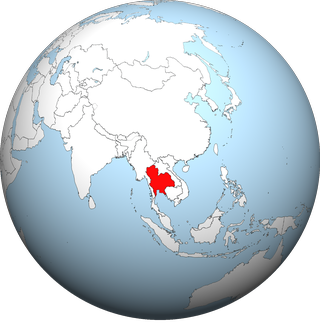
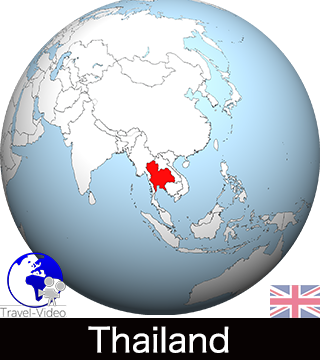
Thailand occupies a central position in mainland Southeast Asia and serves as an important bridge between the Indian Ocean and the Pacific world. The country shares borders with Myanmar to the west and northwest, Laos to the north and northeast, Cambodia to the east and Malaysia to the south. Its coastlines extend along both the Andaman Sea and the Gulf of Thailand, giving the country access to major maritime trade routes.
Covering approximately 513,000 square kilometres, Thailand is one of the largest countries in Southeast Asia. Its location has contributed significantly to its historical role as a regional trading centre and today supports its position as an economic and logistical hub within the Association of Southeast Asian Nations (ASEAN).
Diverse Landscapes and Natural Regions
Thailand possesses a remarkable diversity of landscapes and ecosystems.
The northern region is dominated by mountain ranges and forested hills that extend toward Myanmar and Laos. The country's highest peak, Doi Inthanon, rises to 2,565 metres above sea level. These mountainous areas are home to numerous ethnic minority communities and important watersheds.
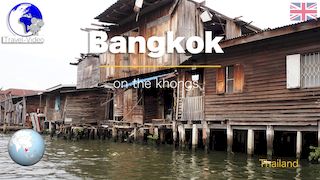
Central Thailand consists largely of the fertile Chao Phraya basin, often referred to as the country's rice bowl. The Chao Phraya River has played a crucial role in Thailand's economic and political development and remains one of the nation's principal waterways.
The northeastern region, known as Isan, is largely occupied by the Khorat Plateau. Although generally drier than central Thailand, it supports a large rural population and maintains close cultural links with neighbouring Laos.
Southern Thailand forms a long peninsula bordered by tropical coastlines, islands and mangrove forests. The beaches and marine environments of both the Andaman Sea and the Gulf of Thailand are among the country's most internationally recognised landscapes.
Climate and Environmental Conditions
Thailand has a tropical climate strongly influenced by seasonal monsoon systems.
Most of the country experiences three main seasons: a relatively cool and dry season from November to February, a hot season from March to May and a rainy season from May to October. Climatic conditions vary significantly according to altitude and location.
The southern peninsula receives rainfall throughout much of the year, while northeastern regions may experience prolonged periods of drought.
Environmental challenges have become increasingly important in recent decades. Flooding in low-lying areas, coastal erosion, air pollution in major cities and deforestation remain significant concerns. Climate change is expected to increase pressure on water resources and agricultural production.
Population and Demographic Composition
Thailand's population is estimated at approximately 66 million inhabitants in the mid-2020s. Population growth has slowed considerably, and the country is experiencing one of the fastest demographic transitions in Southeast Asia.
Ethnic Thais constitute the majority of the population, but the country also includes a large community of Chinese origin as well as Malay, Khmer, Mon and numerous mountain peoples living primarily in the north.
Urbanisation has accelerated rapidly during recent decades, with Bangkok becoming one of the largest metropolitan areas in Southeast Asia. Nevertheless, agriculture and rural communities continue to play an important role in national life.
Thailand is increasingly facing the challenges associated with an ageing population, including rising healthcare costs and labour shortages in certain sectors.
Languages and Religious Life
Thai is the official language and serves as the language of government, education, media and national administration. The Thai writing system, derived from older Khmer and Indian scripts, remains a central element of national identity.
Several regional languages and dialects continue to be widely spoken. The Isan language in northeastern Thailand is closely related to Lao, while Malay is spoken in the southern provinces near the Malaysian border. Numerous minority languages survive among mountain communities.
Theravada Buddhism is the dominant religion and profoundly influences Thai society, culture and daily life. Buddhist temples remain central institutions in communities throughout the country, and many Thai men traditionally spend a period of time as monks during their lives.
Islam is concentrated mainly in the southern provinces, while Christianity, Hinduism and Sikhism are represented by smaller communities.
The monarchy, Buddhism and the Thai language continue to serve as major pillars of national identity.
Major Cities and Administrative Organization
Bangkok is the political, economic and cultural centre of Thailand. The capital dominates the national urban network and contains the country's principal government institutions, financial centres, universities and transportation hubs.
Chiang Mai, the largest city in northern Thailand, is an important centre for education, tourism and regional commerce. It also serves as a gateway to the mountainous north and its ethnic communities.
Pattaya and Phuket are internationally known tourist destinations, while Khon Kaen and Nakhon Ratchasima play significant roles in the development of northeastern Thailand.
Thailand is administratively divided into 76 provinces, in addition to the special administrative area of Bangkok.
Transportation and Infrastructure
Thailand possesses one of the most developed transport systems in Southeast Asia.
An extensive road network connects major cities and industrial zones, while modern highways support domestic trade and tourism. Bangkok functions as the country's main transportation hub.
The railway system, historically centred on the capital, is undergoing modernisation and expansion. High-speed rail projects aim to improve connections with neighbouring countries and strengthen Thailand's position within regional trade corridors.
Suvarnabhumi Airport in Bangkok is one of the busiest airports in Southeast Asia and serves as an important international aviation hub.
Major ports, particularly Laem Chabang and Bangkok Port, play essential roles in international trade and manufacturing exports.
A Diversified and Industrial Economy
Thailand has one of the largest and most diversified economies in Southeast Asia.
Agriculture remains important despite employing a smaller proportion of the workforce than in previous decades. Thailand is one of the world's leading exporters of rice and also produces significant quantities of rubber, sugar, cassava, tropical fruits and seafood products.
Industry has become a major pillar of the national economy. The automotive sector is particularly important, with Thailand often described as the automotive manufacturing centre of Southeast Asia. Electronics, petrochemicals, food processing and textiles are also major industrial sectors.
The service sector contributes the largest share of national economic output and includes banking, telecommunications, retail trade and healthcare.
Tourism as an Economic Driver
Tourism represents one of Thailand's most important sources of income and employment.
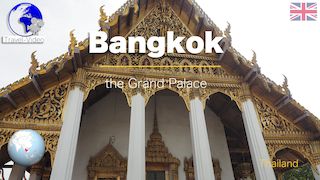
Historical cities such as Ayutthaya and Sukhothai attract visitors interested in cultural heritage, while Bangkok's temples and palaces remain major attractions.
The country's beaches, islands and marine parks have established Thailand as one of the world's leading tourism destinations. Medical tourism and wellness services have also grown significantly during recent decades.
The economic importance of tourism, however, makes Thailand vulnerable to international crises that affect global travel patterns.
Culture and Contemporary Society
Thai culture combines Buddhist traditions, royal institutions and influences from neighbouring countries and globalisation.
Festivals remain central to social life. Songkran, the traditional Thai New Year celebrated in April, and Loy Krathong, the festival of lights held during the rainy season, are among the country's best-known celebrations.
Traditional dance, music, theatre and handicrafts continue to coexist with modern cultural expressions. Silk production, wood carving and ceramics remain important artisanal traditions in several regions.
Thai cuisine has become internationally renowned and represents one of the country's most influential forms of cultural diplomacy.
Education, Research and Innovation
Thailand has invested heavily in education and higher learning during recent decades.
Leading institutions such as Chulalongkorn University and Mahidol University rank among the most respected universities in Southeast Asia. Research activities are expanding in fields such as medicine, biotechnology, engineering and digital technologies.
Improving educational quality and reducing regional disparities remain important national priorities.
Contemporary Challenges and Regional Influence
Thailand faces several major challenges, including population ageing, regional inequalities, environmental degradation and dependence on imported energy resources.
Political instability has periodically affected the country since the late twentieth century, with tensions between elected governments, military institutions and various political movements continuing to shape public life.
At the same time, Thailand remains one of Southeast Asia's leading economies and an influential member of ASEAN. Its strategic location, industrial capacity and cultural influence provide it with a significant role in regional affairs.
Combining a strong historical identity with economic modernisation and international openness, contemporary Thailand continues to occupy a central place in the political, economic and cultural landscape of Southeast Asia.