

 Français (France)
  Nederlands (nl-NL)
 Map of places or practices featured in a video published on this site
• Use the markers to explore the content •
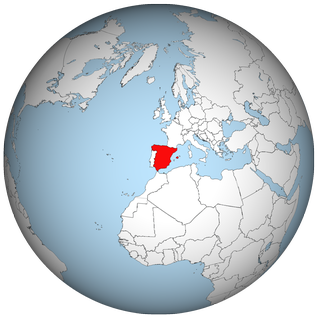
From Prehistoric Iberia to a Modern European State: The Historical Development of Spain
The First Human Settlements and Prehistoric Cultures
The territory of present-day Spain possesses one of the oldest records of human occupation in Western Europe. Archaeological discoveries at Atapuerca in Castile and León have revealed evidence of human presence dating back more than one million years, making the site one of the most important locations for the study of early human evolution in Europe.
During the Upper Paleolithic period, hunter-gatherer communities occupied much of the Iberian Peninsula. Their artistic achievements are preserved in numerous cave paintings, the most famous of which are found in the Cave of Altamira in Cantabria. These paintings rank among the finest examples of prehistoric art anywhere in the world.
The Neolithic period brought profound changes to Iberian societies. Agriculture and animal husbandry spread gradually across the peninsula from the Mediterranean basin between the sixth and fourth millennia BCE. Permanent settlements became increasingly common, and more complex social structures emerged.
During the Bronze Age, regional cultures developed across the peninsula. Among the most notable was the El Argar culture in southeastern Iberia, which displayed advanced forms of political organization, trade networks and social hierarchy. Metalworking and mining became important economic activities, laying the foundations for later prosperity.
Iberian Peoples and Mediterranean Influences
Before Roman conquest, the Iberian Peninsula was inhabited by a diverse collection of peoples and cultures. The Iberians occupied much of the Mediterranean coast, while Celtic peoples settled across large areas of the interior and northwestern regions. In central areas, interaction between these populations produced mixed communities known as Celtiberians.
Beginning in the first millennium BCE, maritime trade connected Iberia with the great civilizations of the Mediterranean world. Phoenician merchants established trading colonies along the southern coast, including Gades, modern Cádiz, one of the oldest continuously inhabited cities in Western Europe.
Greek traders and settlers founded colonies along the eastern coast, most notably Emporion, now Empúries in Catalonia. Carthage later inherited much of the Phoenician commercial network and expanded its political influence across southern Iberia.
The kingdom of Tartessos, flourishing in southwestern Iberia between the ninth and sixth centuries BCE, became renowned for its mineral wealth and commercial links with Mediterranean civilizations. Although much about Tartessos remains uncertain, it represents one of the earliest complex societies in the peninsula.
Roman Conquest and the Formation of Hispania
Roman involvement in Iberia began during the Second Punic War between Rome and Carthage. In 218 BCE, Roman forces landed on the peninsula in order to cut Carthaginian supply routes and challenge the military campaigns of Hannibal.
The conquest of Iberia took nearly two centuries and encountered fierce resistance from local peoples, particularly the Lusitanians and Celtiberians. The siege and destruction of Numantia in 133 BCE became one of the defining episodes of Roman expansion in the peninsula.
Under Roman rule, the territory became known as Hispania and was eventually divided into several provinces for administrative purposes. Romanization transformed Iberian society profoundly. Latin gradually replaced local languages and eventually gave rise to the Romance languages that developed in the region, including Castilian, Catalan and Galician.
Roman authorities built roads, bridges, aqueducts, amphitheatres and urban centres throughout the territory. Cities such as Mérida, Tarragona and Zaragoza retain much of their Roman heritage today.
Hispania became one of the most prosperous regions of the Roman Empire. The peninsula's mines supplied gold, silver, copper and other valuable resources, while agriculture flourished through the cultivation of wheat, olives and grapes.
Several Roman emperors, including Trajan, Hadrian and Theodosius I, originated from Hispania, demonstrating the integration of the region into imperial political life.
Christianity spread gradually from the third century onward and became dominant following its official recognition throughout the empire.
The Visigothic Kingdom and Post-Roman Iberia
The gradual collapse of the Western Roman Empire during the fifth century opened the peninsula to migrations by Germanic peoples. Vandals, Suebi and Alans entered Iberia, although most were eventually displaced or absorbed by the Visigoths.
The Visigothic Kingdom, with its capital at Toledo, emerged as the dominant political power across most of the peninsula during the sixth and seventh centuries. The Visigoths established a relatively unified state that combined Germanic ruling elites with Hispano-Roman traditions.
One of the most important developments of this period was the conversion of King Reccared I to Catholic Christianity in 589. This decision ended the religious division between the Arian Visigothic elite and the Catholic Hispano-Roman population.
The Visigoths also produced important legal innovations, including the Liber Iudiciorum, which influenced Spanish law for centuries.
The Muslim Conquest and the Rise of Al-Andalus
In 711, Muslim armies from North Africa crossed the Strait of Gibraltar and defeated Visigothic forces at the Battle of Guadalete. Within only a few years, most of the Iberian Peninsula came under Muslim control.
The conquered territory became known as Al-Andalus. Initially governed as a province of the Umayyad Caliphate of Damascus, it later evolved into an independent emirate under the Umayyad dynasty that established itself in Córdoba.
In 929, Abd al-Rahman III proclaimed the Caliphate of Córdoba, initiating one of the most prosperous periods in Iberian history. Córdoba became one of the largest and most sophisticated cities in Europe and a major centre of philosophy, medicine, mathematics, astronomy and literature.
A Multicultural Society
Al-Andalus brought together Muslims, Christians and Jews within a complex social system that alternated between periods of coexistence and periods of conflict or discrimination.
The interaction of Arabic, Jewish and Christian intellectual traditions played a crucial role in transmitting scientific and philosophical knowledge from the ancient and Islamic worlds to medieval Europe.
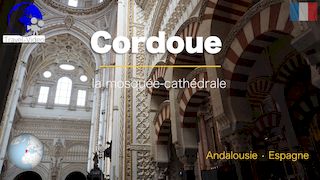
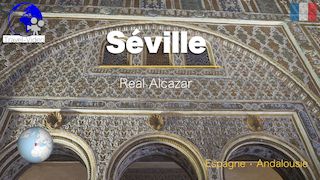
Architectural achievements such as the Great Mosque of Córdoba, the Alhambra in Granada and the Alcázar of Seville remain among the most significant monuments of Spanish cultural heritage.
Fragmentation and Decline
Beginning in the eleventh century, the caliphate fragmented into numerous smaller kingdoms known as taifas. Political division weakened Muslim power and facilitated the expansion of the Christian kingdoms of northern Iberia.
The Christian Kingdoms and the Reconquista
Christian resistance emerged in the mountainous regions of northern Iberia with the establishment of the Kingdom of Asturias, traditionally regarded as the starting point of the Reconquista.
Over the following centuries, several Christian kingdoms expanded southward, including León, Castile, Navarre, Aragon and Portugal. Their territorial growth was accompanied by the settlement of Christian populations in newly conquered lands.
The capture of Toledo in 1085 marked a major turning point in Christian expansion. Another decisive moment came with the Battle of Las Navas de Tolosa in 1212, which significantly weakened Muslim political authority in Iberia.
By the thirteenth century, only the Emirate of Granada remained under Muslim rule. Granada survived for more than two centuries as a tributary state under Castilian influence.
Dynastic Union and the Emergence of Spain
The marriage of Isabella of Castile and Ferdinand of Aragon in 1469, followed by the dynastic union of their crowns in 1479, laid the foundations for the emergence of Spain as a unified political entity.
The year 1492 represented a turning point in Spanish history. The conquest of Granada ended nearly eight centuries of Muslim political rule in Iberia, while Christopher Columbus reached the Americas under the sponsorship of the Spanish Crown.
1492 also witnessed the expulsion of Jews who refused conversion to Christianity. In later decades, converted Muslims known as Moriscos experienced increasing restrictions before eventually being expelled as well.
The Spanish Inquisition became an important instrument for enforcing religious conformity and political unity within the kingdom.
Empire and the Spanish Golden Age
During the sixteenth and seventeenth centuries, Spain emerged as the dominant global power under the Habsburg dynasty.
Under Charles I and Philip II, Spanish authority extended across Europe, the Americas, Africa and Asia. The empire became one of the largest in history and transformed Spain into the centre of a vast global network of trade and administration.
The influx of silver and gold from the Americas generated immense wealth but also contributed to inflation and economic dependence on colonial resources.
This era also witnessed the Spanish Golden Age, a period of extraordinary artistic and literary achievement associated with figures such as Miguel de Cervantes, Diego Velázquez, El Greco and Lope de Vega.
However, continuous military conflicts, financial crises and demographic decline gradually weakened Spanish power during the seventeenth century.
The Bourbons and Eighteenth-Century Reforms
The death of Charles II without an heir triggered the War of the Spanish Succession between 1701 and 1714. The conflict ended with the accession of Philip V, the first Bourbon monarch of Spain.
The Bourbon rulers introduced major administrative reforms aimed at strengthening central authority. The Nueva Planta decrees abolished many institutions associated with the former Crown of Aragon and promoted political centralization.
The eighteenth century also witnessed reforms inspired by Enlightenment ideas. Economic development, educational initiatives and administrative modernization transformed many aspects of Spanish society.
Napoleonic Invasion and Liberal Revolution
French occupation during the Napoleonic Wars profoundly disrupted Spanish political life. The invasion of 1808 triggered a brutal war of resistance that became one of the earliest examples of modern guerrilla warfare.
During the conflict, Spanish representatives meeting in Cádiz adopted the Constitution of 1812, one of Europe's earliest liberal constitutions.
Throughout the nineteenth century, Spain experienced repeated struggles between liberals and conservatives, monarchists and republicans, centralists and regionalists. Political instability became a defining feature of the period.
At the same time, Spain gradually lost most of its American colonies as independence movements spread across Latin America.
Industrialization and National Crisis
Industrialization developed unevenly during the nineteenth century. Catalonia became a major textile centre, while the Basque Country emerged as an important industrial and mining region. Other parts of the country remained predominantly agricultural.
Social tensions increased with the growth of socialist, anarchist and labour movements. Regional identities also gained greater political significance.
The loss of Cuba, Puerto Rico and the Philippines in 1898 marked the final collapse of Spain's overseas empire and generated a profound national crisis that stimulated debates about modernization and national identity.
The Second Republic and the Civil War
The monarchy was replaced by the Second Spanish Republic in 1931. The new regime introduced ambitious reforms concerning education, land ownership, labour rights and regional autonomy.
Political polarization intensified rapidly between left-wing and conservative forces. Social unrest and ideological divisions destabilized the country.
In 1936, a military uprising led by General Francisco Franco triggered the Spanish Civil War. The conflict quickly became an international symbol of the ideological struggles that characterized Europe during the 1930s.
The victory of Franco's Nationalist forces in 1939 marked the beginning of nearly four decades of dictatorship.
Franco's Regime
Franco's government established an authoritarian political system characterized by political repression, centralized administration and restrictions on regional identities and languages.
Catalan, Basque and Galician were marginalized in public life, while the Catholic Church occupied a privileged position within the regime.
From the 1960s onward, however, Spain experienced rapid economic growth driven by industrialization, urbanization and the expansion of tourism. These developments transformed Spanish society despite the persistence of authoritarian rule.
Democratic Transition and Contemporary Spain
The death of Franco in 1975 initiated Spain's transition to democracy under King Juan Carlos I.
The Constitution of 1978 established a parliamentary monarchy and created a highly decentralized system based on seventeen autonomous communities.
Spain joined the European Economic Community in 1986, accelerating economic modernization and infrastructure development.
In recent decades, Spain has become one of Europe's largest economies and one of the world's leading tourist destinations. Democratic institutions have consolidated, while Spanish society has become increasingly diverse and globalized.
Nevertheless, debates surrounding regional autonomy, particularly in Catalonia and the Basque Country, continue to shape political life.
A Historical Identity Shaped by Diversity and Exchange
The history of Spain is distinguished by the interaction of multiple civilizations, religions and languages. Iberian, Roman, Visigothic, Islamic, Jewish and Christian influences all contributed to the formation of the country's historical identity.
Modern Spain remains deeply marked by this heritage of cultural exchange, coexistence and conflict. Its languages, traditions, architecture and institutions reflect a long historical process that transformed the Iberian Peninsula into one of Europe's most diverse and influential nations.




Contemporary Spain: Territorial Diversity, Economic Strength and Cultural Richness in Southern Europe
A Country Between the Atlantic, the Mediterranean and Africa
Spain occupies most of the Iberian Peninsula in southwestern Europe. It shares land borders with Portugal to the west, France and the Principality of Andorra to the northeast, and the British Overseas Territory of Gibraltar to the south. The Spanish state also includes the autonomous cities of Ceuta and Melilla on the North African coast, as well as several small islands and territories in the Mediterranean Sea.
The country also comprises two major archipelagos: the Balearic Islands in the Mediterranean and the Canary Islands in the Atlantic Ocean off the coast of northwestern Africa. This geographical position has long made Spain a meeting point between Europe, the Mediterranean world and Africa, contributing significantly to its historical and economic development.
Covering approximately 506,000 square kilometres, Spain is one of the largest countries in the European Union. Its landscape is dominated by the Meseta Central, a vast plateau occupying much of the interior of the peninsula and surrounded by mountain ranges including the Pyrenees, the Cantabrian Mountains, the Iberian System, the Sierra Morena and the Sierra Nevada. The highest peak on the mainland is Mulhacén, while the country's highest summit overall is Mount Teide, a volcano located on Tenerife in the Canary Islands.
Spain's principal rivers include the Tagus, the Ebro, the Guadalquivir, the Guadiana and the Douro. Several of these rivers continue into Portugal before reaching the Atlantic Ocean. The country also contains numerous protected natural areas, including the national parks of Doñana, Picos de Europa, Sierra Nevada and Teide.
Climate and Environmental Characteristics
Spain displays remarkable climatic diversity. The Mediterranean coast experiences hot, dry summers and relatively mild winters, while the northern regions facing the Atlantic Ocean enjoy a cooler and wetter maritime climate. The interior plateau experiences more continental conditions with significant temperature variations between seasons.
The Canary Islands benefit from a subtropical climate that supports tourism throughout the year and contributes to unique ecosystems and agricultural production.
Environmental concerns have become increasingly important in Spanish public policy. Prolonged droughts, water shortages, forest fires and the effects of climate change represent major challenges, particularly in southern and eastern Spain. Water management has become a strategic issue for agriculture, urban development and tourism.
Spain has invested heavily in renewable energy and environmental protection, becoming one of Europe's leading producers of wind and solar energy.
Population and Demographic Trends
Spain has a population approaching fifty million inhabitants, making it one of the most populous countries in the European Union. Population density is concentrated primarily in major metropolitan areas and coastal regions, particularly around Madrid, Barcelona, Valencia, Málaga and Bilbao.
Large parts of the interior, however, are experiencing population decline and ageing. This phenomenon, commonly referred to as "empty Spain" or *España vaciada*, has become a significant political and social issue.
Immigration has played an increasingly important role in Spanish society since the late twentieth century. Communities originating from Latin America, North Africa, Eastern Europe and Sub-Saharan Africa contribute substantially to the country's economy and cultural diversity.
Languages, Regional Identities and Cultural Diversity
Spanish, also known as Castilian, is the official language of the state and is spoken throughout the country. However, several regional languages also enjoy official status within their respective autonomous communities.
Catalan is widely spoken in Catalonia, the Balearic Islands and the Valencian Community, where the local variant is officially known as Valencian. Galician is spoken in Galicia, while Basque remains an important language in the Basque Country and parts of Navarre. Aranese, a variety of Occitan, also enjoys official recognition in the Val d'Aran.
These languages are used in education, public administration, media and cultural life. Linguistic diversity plays a central role in regional identities and remains closely connected to discussions about autonomy and decentralisation.
Political Organisation and Territorial Structure
Spain is a parliamentary monarchy established under the Constitution of 1978 following the democratic transition that succeeded the Franco dictatorship. The king serves primarily as head of state and performs representative and constitutional functions, while executive power is exercised by the government headed by the Prime Minister.
The country is divided into seventeen autonomous communities and two autonomous cities. These regions possess varying degrees of authority in fields such as education, healthcare, transportation and culture.
Some territories, particularly Catalonia, the Basque Country and Galicia, possess strong historical and linguistic identities and enjoy extensive self-government. Relations between the central government and certain autonomous communities continue to influence Spanish political life.
Major Cities and Transport Infrastructure
Madrid serves as Spain's political, administrative and financial capital. Located near the geographical centre of the peninsula, it hosts the country's principal national institutions as well as major financial and business centres.
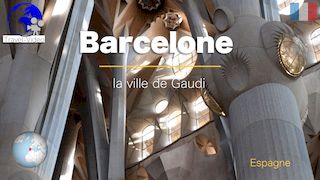
Barcelona is the leading economic city on the Mediterranean coast and one of southern Europe's principal industrial, technological and cultural hubs. Valencia, Seville, Bilbao, Málaga, Zaragoza and Murcia also play important regional and economic roles.
Spain possesses one of Europe's most developed transport infrastructures. Its motorway network connects virtually all regions of the country, while the high-speed rail system, known as AVE, is among the largest in the world and links Madrid with most major cities.
Madrid-Barajas and Barcelona-El Prat rank among Europe's busiest airports, while the ports of Valencia, Algeciras and Barcelona occupy strategic positions in Mediterranean and international trade.
A Diversified Economy
Spain is one of the largest economies in the European Union. The service sector accounts for the majority of economic activity, particularly through tourism, finance, telecommunications and commerce.
The country ranks among the world's leading tourist destinations. Mediterranean beaches, the Balearic and Canary Islands, historic cities and exceptional architectural heritage attract tens of millions of international visitors each year.
Industry remains an important component of the economy, particularly in automobile manufacturing, chemicals, pharmaceuticals, aerospace engineering and renewable energy technologies. Spain has become one of Europe's leading producers of wind and solar energy.
Agriculture also retains significant importance in several regions. Spain is among the world's largest producers of olive oil, wine, citrus fruits, almonds and vegetables exported throughout Europe. Products such as Iberian ham, regional cheeses and seafood contribute to the country's international reputation.
Cultural Life and Contemporary Society
Modern Spanish culture reflects the historical influence of Iberian, Roman, Islamic, Jewish and Christian civilizations. This cultural diversity remains visible in architecture, cuisine, festivals and regional traditions.
Among the country's most famous celebrations are the Fallas of Valencia, the Feria of Seville, the San Fermín festival in Pamplona and the Holy Week processions of Andalusia. These events continue to attract both local participants and international visitors.
Spanish gastronomy occupies an important place in everyday life and social interaction. Regional cuisines differ considerably, reflecting local history, climate and agricultural traditions.
Spain also maintains an extensive higher education system that includes internationally recognised institutions such as the universities of Madrid, Barcelona, Salamanca, Valencia and Granada. Research centres are active in medicine, biotechnology, astronomy, engineering and renewable energy.
Religion and Social Change
Catholicism remains Spain's historically dominant religion and continues to influence many cultural traditions and public celebrations. However, religious practice has declined considerably over recent decades, and Spanish society has become increasingly secular.
Islam is now the country's second-largest religion, largely as a result of recent immigration, while Protestant, Orthodox and Jewish communities are also present. A growing proportion of the population identifies as non-religious or unaffiliated.
These developments reflect broader social transformations that have accompanied Spain's democratic consolidation and integration into contemporary European society.
Spain's Challenges in the Twenty-First Century
Spain faces a number of significant challenges, including demographic ageing, low birth rates, regional inequalities and housing shortages in major urban centres and tourist destinations.
Climate adaptation and water management remain national priorities, while economic policy increasingly focuses on technological innovation, renewable energy and digital transformation.
As a member of the European Union, the eurozone and NATO, Spain plays an important role in relations between Europe, the Mediterranean region and Latin America. Its geographical position, cultural influence and the global importance of the Spanish language provide the country with an international presence that extends far beyond the Iberian Peninsula.
Modern Spain combines strong regional identities with national institutions, historical traditions with technological innovation, and European integration with a distinct cultural personality shaped by centuries of interaction between different peoples and civilizations.